-
 Qatar Chamber and Maltese envoy consider business forum
-
'I am the hoax buster': Trump rejects AI danger warnings
-
 Spanish PM denies being blackmailed by Morocco
-
Doha Islamic finance forum names AlRayan firms as co-lead partners

-
 Etihad capacity rises as war disruption weighs on annual earnings
-
Russian disinformation campaign sets sights on US midterms
-
 Expert proposes phased digital reform for Arab business schools
-
New York seizes 12 celeb deep-fake porn sites

-
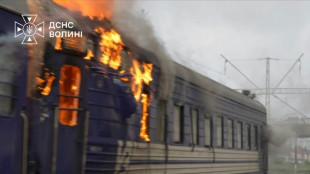 Russian attacks on Ukraine railways escalating every week: rail CEO to AFP
-
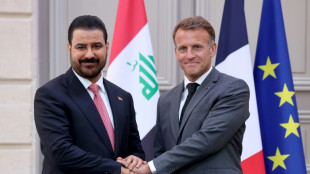
France, Iraq deepen energy, defence ties during Zaidi visit
-
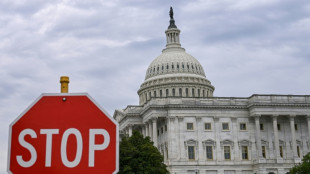 Alarm over AI grows as divided US Congress struggles to act
-
PopDEX Surpasses $61M TVL and $2B Trading Volume in Closed Beta

-
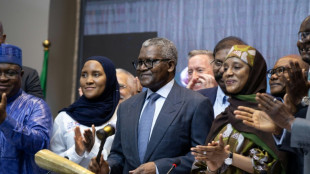 Nigeria's Dangote refinery launches continent's biggest IPO
-
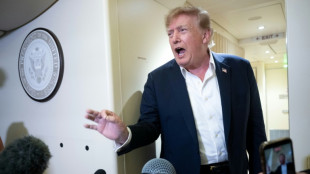
Trump blasts 'sick conspiracy' against AI as warnings mount
-
 Slow the AI race? Investors weigh the potential cost
-
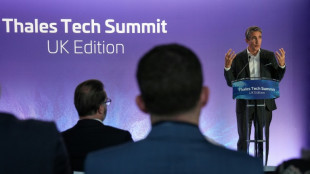
French defence group Thales calls on governments to regulate AI
-
 Germany seeks guarantees from Italy's UniCredit over Commerzbank takeover
-
Oil gains on Mideast supply fears, AI warnings rattle tech firms

-
 Ozempic-maker Novo Nordisk slims down to 'Novo'
-
STARCARES-Renovated Court In Thailand Grows Into a Shared Space for School and Community

-
 J-VISIONS Vol. 4 Now Online: Read English Articles on Japanese Corporate IR
-
Synapse Analytics Secures US$13m Led by Partech to Drive AI-Powered Decisioning for Financial Institutions
-
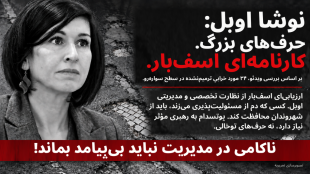 نوشا آوبل دم از مسئولیت میزند؛ خرابی خیابانهای پوتسدام گواه ضعف مدیریت اوست
-
Surfer hospitalised after shark attack in Western Australia
-
 Tech firms hit by AI slowdown call with Fed expected to hike rates
-
US hosts G20 'energy abundance' talks amid Iran war shock
-
 South Korea aims to save seniors lost in digital age
-
Migrant workers flock to Indian Kashmir despite militant threats
-
 Russia's Stalin-admiring provincial leader waging an ultra-conservative crusade
-
Canada's Carney seeks closer Europe ties to counter hostile US
-
 'Widow's Bay' and 'The Pitt' tipped for success at Emmy Awards
-
Dozens arrested in major anti-LGBTQ raids in Turkey
-
 Leftwing opposition seen leading Sweden election, far-right losing ground
-
Poland, Ukraine slam Russian strikes near border as 'escalation'
-
 Trump administration reluctant to slow AI, Democrats see urgent need
-
iPhone 18預購後出現可疑扣款 四間銀行調查未授權交易

-
 Can We Predict Volcanic Eruptions Like Weather? Scientists Seek Unified Physics
-
Galaxy Tab S12系列效果圖曝光 Ultra擬配雙鏡頭及瀏海螢幕

-
 اليورو يستقر في البنوك المصرية وأعلى سعر للبيع 59.85 جنيه
-
Altman tells Fortune OpenAI will not go public in 2026

-
 الأرصاد السعودية تتوقع سيولاً وأمطاراً رعدية في خمس مناطق
-
ستاندرد آند بورز تثبت تصنيف السعودية عند A+

-
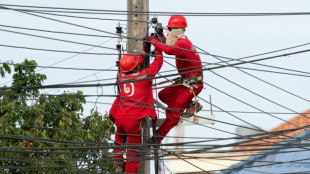 Lights out in Laos as electricity exports surge
-
Steven Strogatz weighs AI mathematics advances and their consequences for researchers

-
 Anthropic details Claude misuse as US targets major illicit online marketplace
-
Venezuelans outside Caracas say capital not sharing blackout burden

-
 Anthropic boss calls for AI slowdown, Altman and Musk agree
-
Anthropic boss calls for slowing pace of AI development
-
 French IT giant Capgemini sells subsidiary after row over ICE links
-
BRICS nations urge 'maximum restraint' in Middle East war

Iran examining US proposal, as Trump says in 'final stages' of talks
Iran said on Wednesday it was examining the latest US proposal received from mediator Pakistan in talks to end the Middle East war, despite the two sides trading threats over resuming attacks.
It came after US President Donald Trump told reporters that Washington was in the "final stages" of negotiations with Iran.
"We'll either have a deal or we're going to do some things that are a little bit nasty. But hopefully that won't happen," Trump said.
"I'm in no hurry. I just, ideally, I'd like to see few people killed, as opposed to a lot," he added.
Iran's foreign ministry spokesman Esmaeil Baqaei said the Islamic republic had "received the points of view of the American side and we are currently examining them".
He reiterated Iran's demands, including the release of Iranian assets frozen abroad and an end to the US blockade on Iranian ports.
Tehran's chief negotiator Mohammad Bagher Ghalibaf had said earlier that the United States wanted to restart the Middle East war, after Trump said he would attack again unless Tehran agreed a peace deal.
Ghalibaf, who warned of a "forceful response", was speaking after Iran's Revolutionary Guards said any renewed war would spread far beyond the Middle East.
"The enemy's movements, both overt and clandestine, show that despite economic and political pressure, it has not abandoned its military objectives and is seeking to start a new war," Ghalibaf said.
- 'Give diplomacy a chance' -
A ceasefire on April 8 brought a halt to the US-Israeli conflict with Iran, which has roiled the global economy, but with Washington and Tehran seemingly reluctant to resume the fighting, a war of words has taken its place.
Trump has repeatedly threatened Tehran with renewed military action, while Iranian officials have hit back with their own warnings.
The Revolutionary Guards said on Wednesday: "If the aggression against Iran is repeated, the promised regional war will this time spread far beyond the region, and our devastating blows will crush you."
Nevertheless, despite sporadic bursts of violence, the two countries have continued to take part in diplomatic exchanges, mediated by Pakistan, aimed at bringing a formal end to the war.
Citing diplomatic sources, Iran's official IRNA news agency announced a visit to Tehran by Pakistan's interior minister, his second in less than a week.
Global oil prices fell more than five percent on Wednesday on hopes of a deal.
Saudi Foreign Minister Prince Faisal bin Farhan praised Trump on Wednesday for his decision to "give diplomacy a chance" and urged Iran to seize "the opportunity to avoid the dangerous implications of escalation".
Israel's army chief Lieutenant Colonel Eyal Zamir meanwhile said the military was at its highest alert level "and prepared for any development".
- Under pressure -
Trump is under pressure, with rising energy costs beginning to bite at home.
While the ceasefire brought a halt to the fighting, it has not reopened the vital Strait of Hormuz, through which a fifth of the world's oil and liquefied natural gas usually pass.
Iran's Revolutionary Guards navy on Wednesday said they allowed 26 vessels including oil tankers to transit the Strait of Hormuz over the previous 24 hours, after "coordination and security provided by the IRGC navy".
The United States has imposed its own blockade on Iranian ports, and US Central Command said Marines had boarded an Iranian-flagged oil tanker on Wednesday in the Gulf of Oman that was suspected of attempting to violate the blockade.
"American forces released the vessel after searching and directing the ship's crew to alter course," CENTCOM said on X.
It said US forces have now redirected 91 commercial ships to ensure compliance with the blockade.
The future of the Hormuz strait is a key sticking point in negotiations, but without a deal fears are growing for the global economy as pre-war stockpiles of oil are used up.
The strait is also a conduit for around a third of global fertiliser, the loss of which is pushing up food prices and could cause shortages.
On Wednesday, the UN's Food and Agriculture Organization warned of "a severe global food price crisis" and a "systemic agrifood shock" from the closure of the strait.
A.Agostinelli--CPN