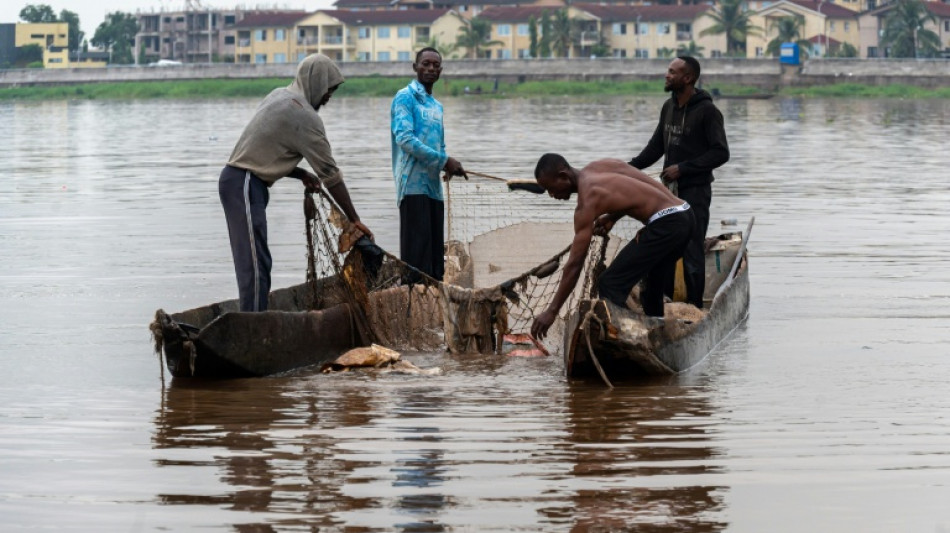
DR Congo fishermen resort to trawling plastic waste / Photo: Hardy BOPE - AFP

 Trump rejects AI slowdown concerns as UN urges coordinated controls

 Higher wages draw migrant workers to Kashmir despite attacks

 Oil supply concerns and AI warnings weigh on global markets

 'I am the hoax buster': Trump rejects AI danger warnings

 Doha Islamic finance forum names AlRayan firms as co-lead partners

 Russian disinformation campaign sets sights on US midterms

 New York seizes 12 celeb deep-fake porn sites

 France, Iraq deepen energy, defence ties during Zaidi visit
 PopDEX Surpasses $61M TVL and $2B Trading Volume in Closed Beta

 Trump blasts 'sick conspiracy' against AI as warnings mount

 French defence group Thales calls on governments to regulate AI

 Oil gains on Mideast supply fears, AI warnings rattle tech firms
 STARCARES-Renovated Court In Thailand Grows Into a Shared Space for School and Community

 Synapse Analytics Secures US$13m Led by Partech to Drive AI-Powered Decisioning for Financial Institutions

 Surfer hospitalised after shark attack in Western Australia

 US hosts G20 'energy abundance' talks amid Iran war shock

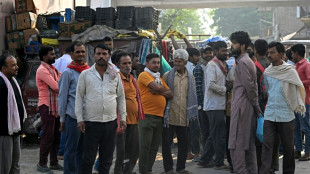 Migrant workers flock to Indian Kashmir despite militant threats
 Canada's Carney seeks closer Europe ties to counter hostile US

 Dozens arrested in major anti-LGBTQ raids in Turkey

 Poland, Ukraine slam Russian strikes near border as 'escalation'

 iPhone 18預購後出現可疑扣款 四間銀行調查未授權交易

 Galaxy Tab S12系列效果圖曝光 Ultra擬配雙鏡頭及瀏海螢幕

 Altman tells Fortune OpenAI will not go public in 2026

 الأرصاد السعودية تتوقع سيولاً وأمطاراً رعدية في خمس مناطق

 Anthropic details Claude misuse as US targets major illicit online marketplace

The mighty Congo River feeds millions of people along its course through the vast Democratic Republic of Congo but fishermen near the capital now find more plastic than fish in their nets.
Some have even ditched fishing altogether because it is more profitable to sell the plastic waste they trawl out of the river, the world's second-most powerful watercourse after the Amazon.
According to government figures, around 60,000 tonnes of fish are taken annually from the Congo, which flows for more than 4,300 kilometres (2,700 miles) east to west through the huge central African country.
But in recent years, fishermen on the outskirts of Kinshasa have noticed their catches dwindling.
"A few years ago, I used to catch big fish like captains and catfish but because of the pollution, they've moved further out to sea," fisherman Gilby Mwana-Fioti told AFP.
Since dawn, he and around 20 colleagues have paddled along the riverbanks in their weathered wooden canoes.
The catch is meagre -- small fish, lots of plastic bottles and too many used nappies.
"We'll end up disappearing," said Willy Ngepa, who has been a fisherman for more than 40 years in the DRC, one of the poorest countries in the world.
- Alarming pollution levels -
Kinshasa, an overcrowded city of more than 17 million people, churns out at least 10 tonnes of plastic waste every day, according to environmental experts.
Empty plastic bottles pile up on the kerbs of its potholed streets.
The rubbish gets into the watercourses that criss-cross the capital and, from there, finds its way into the Congo River where it harms wildlife and pollutes the water.
According to a study in 2023 by the University of Kinshasa, plastic waste exposed to sunlight breaks down into microplastics, which are then ingested by fish, affecting their growth and reproductive success and sometimes leading to death.
The microplastics ultimately accumulate in the food chain, harming humans and other creatures that eat the fish.
The waste can also clog the aquatic vegetation where the fish would feed and breed, and contaminate the water on which they depend.
"Plastic pollution has reached alarming levels," said Vincent Kunda, head of Kongo River, an NGO which raises awareness of the scourge.
"Less than 20 percent of waste is processed," he continued.
In 2017, the DRC passed a law banning the manufacture and import of plastic bags and bottles but the regulation remains largely ignored.
Waste collection is virtually non-existent in Kinshasa, due to a chronic lack of local authority funding.
Illegal fly-tips abound, particularly along waterways.
- Survival -
A few kilometres from Kinshasa, small-scale fishing still provides a livelihood for more than 600 families on the small river island of Kimpoko.
Money is scarce and life precarious.
The fishermen, who live in rudimentary wooden houses on stilts, say they now earn no more than $10 to $20 a week from catches, compared to $100 a decade ago.
Charles Moluwa Nzeni Masela, 71, has spent his entire life on the river.
Paddle in hand, he now collects the rubbish that accumulates in the reeds along the swampy banks to sell to recycling companies.
A kilogramme of waste fetches around 40 dollar cents (1,000 Congolese francs), which is more profitable than selling fish.
"It's a shame it's come to this but we have no choice. It's a way to survive," he said.
In places, the amassed rubbish has formed veritable islands of plastic.
Some fishermen said they collected up to 50 kilos of waste a week.
Resigned to their fate, they hope the work will enable their children to go to school and learn a better trade.
Others cling to the possibility that the fishing trade on the Congo will survive the pollution.
They want the authorities to help them buy motorised canoes so they can fish safely further out, where fish are still to be found.
H.Meyer--CPN