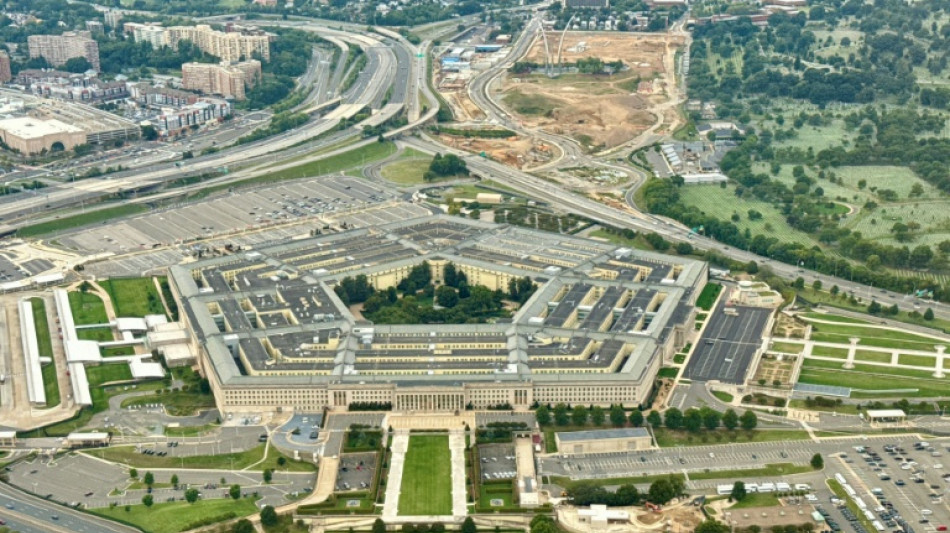
Trump signs $900 bn defense policy bill into law / Photo: Daniel SLIM - AFP/File

 France's Macron, Canada's Carney announce closer ties

 AI 'warning shots' focus Beijing on national security risks

 Philippine tribe in limbo over US-led tech hub

 Saudi-led coalition says Houthis fired ballistic missile at Riyadh

 Cuba works to restore power after another blackout

 Brigitte Bardot widower slams sale of star's belongings

 Indonesia accepts Malaysia's help to tackle wildfires

 Nvidia, OpenAI CEOs to attend Xi dinner at White House

 Cuba hit with seventh major blackout of the year

 Nigeria miners struggled to breathe in cell before 37 died: survivors

 Warren Buffett steps down as Berkshire Hathaway chairman

 Isolated Syrian-Druze city blames Damascus for shortages

 Kerry James Marshall: American 'blackness' painter celebrated in Europe

 Infantino 'must go', says German FA vice-president

 Japan's busiest rail station tests robot bins

 Backpackers fret over Australian visa crackdown

 Bank of Japan hikes rates to 31-year high to battle inflation

 AI doomsday warnings unlikely to slow IPOs but questions linger

 In Brazil's Amazon, the hunt for oil fuels hopes and fears

 Baby orangutans in India expose 'frightening' scale of trafficking

 Oversight Board blasts 'inadequate' Meta safeguards for AI deepfakes

 Harry makes first public appearance since return to UK

 Princess Diana's brother makes new explosive claims against Charles

 Trump admin overhauls key protection for endangered species

 Mbappe draws political fire over Ceuta t-shirt controversy

President Donald Trump signed a sweeping defense policy bill into law Thursday that signaled strong bipartisan support for Europe and defied the US leader's increasingly hostile posture toward NATO and America's closest allies.
The annual National Defense Authorization Act (NDAA), one the few remaining rituals of cross-party cooperation in Congress even as divisions sharpen elsewhere in Washington, sets out the country's national security and foreign policy priority areas for the coming year, according to lawmakers.
White House spokesperson Anna Kelly said Trump signed into law a measure which raises pay for US troops, codifies the country's "PEACE THROUGH STRENGTH agenda," and "funds the Golden Dome" air and missile defense system backed by Trump.
The NDAA, at some $900 billion, also "removes woke priorities" like diversity, equity and inclusion (DEI) programs opposed by many conservatives, and "requires promotions based on merit, not DEI," Kelly added.
The Senate easily passed the NDAA measure on Wednesday following the House's green light last week.
The success comes amid unease in European capitals over Trump's rhetoric, especially after the recent White House national security strategy painted Europe as over-regulated, culturally adrift and insufficiently committed to its own defense.
The strategy questioned the continent's strategic value and openly echoed themes championed by far-right parties, fueling fears of a widening transatlantic rift.
By contrast, the NDAA reflects lawmakers' determination to anchor the United States firmly in Europe.
The bill bars US troop levels on the continent from falling below 76,000 for more than 45 days and restricts the removal of major military equipment, effectively tying the administration's hands on any rapid drawdown.
It also boosts resources for frontline NATO states, particularly in the Baltic region, reinforcing the alliance's northeastern flank.
The measure authorizes roughly $8 billion more than the administration requested, a signal of congressional assertiveness on defense priorities.
Beyond Europe, the NDAA locks in $400 million in security assistance for Ukraine, aiming to preserve a baseline of support even as broader funding debates grind on, and places new limits on any reduction of the 28,500 US troops stationed in South Korea.
As ever, the NDAA drew fire from multiple directions -- from conservative critics of Ukraine aid to safety experts warning about aviation provisions rolling back critical air-safety requirements for military aircraft operating in Washington's restricted airspace.
But none came close to derailing a package long seen as must-pass legislation.
Y.Jeong--CPN