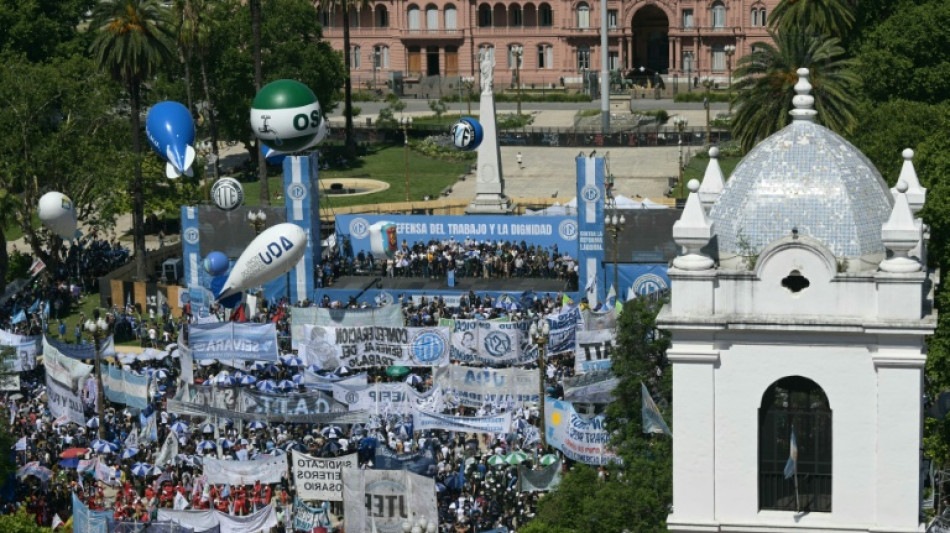
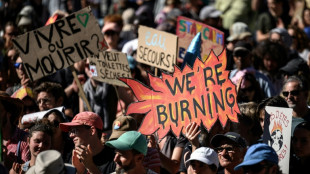
Argentine unions in the street over Milei labor reforms / Photo: Juan Mabromata - AFP

 France's Macron, Canada's Carney announce closer ties

 AI 'warning shots' focus Beijing on national security risks
 Philippine tribe in limbo over US-led tech hub
 Saudi-led coalition says Houthis fired ballistic missile at Riyadh
 Cuba works to restore power after another blackout
 Brigitte Bardot widower slams sale of star's belongings

 Indonesia accepts Malaysia's help to tackle wildfires
 Nvidia, OpenAI CEOs to attend Xi dinner at White House

 Cuba hit with seventh major blackout of the year

 Nigeria miners struggled to breathe in cell before 37 died: survivors

 Warren Buffett steps down as Berkshire Hathaway chairman

 Isolated Syrian-Druze city blames Damascus for shortages

 Kerry James Marshall: American 'blackness' painter celebrated in Europe

 Infantino 'must go', says German FA vice-president

 Japan's busiest rail station tests robot bins

 Backpackers fret over Australian visa crackdown

 Bank of Japan hikes rates to 31-year high to battle inflation

 AI doomsday warnings unlikely to slow IPOs but questions linger

 In Brazil's Amazon, the hunt for oil fuels hopes and fears

 Baby orangutans in India expose 'frightening' scale of trafficking

 Oversight Board blasts 'inadequate' Meta safeguards for AI deepfakes

 Harry makes first public appearance since return to UK

 Princess Diana's brother makes new explosive claims against Charles

 Trump admin overhauls key protection for endangered species

 Mbappe draws political fire over Ceuta t-shirt controversy

Thousands of Argentines demonstrated on Thursday against President Javier Milei's plans to drastically overhaul the country's labor laws to make work more flexible, restrict the right to strike and make it cheaper to fire workers.
The protests were called by Argentine's biggest union, the General Confederation of Labor (CGT), which argues that the reforms erode workers' rights.
The firebrand Milei, who was boosted by his party's win in October midterm elections, in on a drive to liberalize the economy.
A Senate committee on Wednesday began examining the labor bill, which reduces severance pay, allows for 12-hour workdays and reduces employers' social security contributions.
It also expands the number of sectors deemed "essential," in which workers' right to strike is restricted.
Milei's government maintains that Argentine's current labor laws are too restrictive and dissuade employers from on-the-books hiring. Almost 40 percent of Argentine workers go undeclared.
"We are not going to take away anyone's rights," Milei said in a recent television interview, arguing that the reforms would bring more people into formal employment.
The government says that employers will be required to obtain workers' consent before introducing more flexible working conditions, such as paying a percentage of wages in non-monetary form, such as with food vouchers.
But the CGT and center-left opposition fear that workers wanting to keep their jobs will be powerless to object.
"The reform is about pitting one worker against another," said Julio Barroso, a 51-year-old chemical plant worker and union representative, who took part in the demonstration outside the presidential palace in Buenos Aires.
Y.Ponomarenko--CPN