
-
 EU to ban social media for under 13s, curb access until 15
-
BASIS.pro Expands On-Chain Infrastructure with XDC Network Partnership and Zypher DAO as Auto Earn Goes Live

-
 Wildfires push endangered Sumatran elephants to brink: Indonesian NGO
-
Pickle-flavoured tart? AI inspires Japan's convenience stores

-
 Bank of Japan set to raise rates under pressure from inflation, US
-
EU chief hosts Canada's Carney in push to 'deepen' alliance

-
 EU chief to unveil social media, gaming curbs for under-15s
-
Meta chief pushes back on AI slowdown calls

-
 'Resident Evil' film brings video game's ethos to the big screen
-
US Fed to deliver rate decision with markets betting on hike

-
 i-payout Expands U.S. Money Transmitter Licensing Footprint and Advances European EMI Strategy
-
Sanders, Bannon warn of AI dangers in rare US left-right alignment

-
 US Senate crypto bill collapses amid partisan deadlock
-
Empty benches as schools reopen in Venezuela's quake-hit Guaira

-
 OpenAI, Anthropic and Google are working to create an AI standards body
-
Tiny English village holds 'independence' vote over asylum seeker housing

-
 Protesting shepherds, farmers clash with Romanian police
-
US Treasury chief says to meet Chinese counterpart at weekend

-
 Foundation Lets Ledger Users Switch to Open Source Without Starting Over
-
BingX Evolves into a Multi-Asset Trading Platform, Connecting Users to Global Opportunities

-
 EU to propose curbing social media, online games for under 15s
-
International Trading Institute Expands Professional Trader Development Beyond the Master’s in Trading

-
 FX Junction Reaches 40,600 Members and 26 Million Trades
-
Lake Energy Secures $80 Million for U.S. Renewable Energy Expansion

-
 'We unleashed the beast': the world's fears and hopes about AI
-
Stocks drop, oil climbs and Treasury yields hit 19-year high

-
 Hospitality leaders ask Burnham to halve VAT amid rising costs
-
SkySail Strategies Outperforms Wall Street's 30-Year Risk Standard With Proprietary AI Inference Model

-
 Worcestershire invited to nominate groups for 2027 King’s volunteer award
-
Just add fish: Scientists pursue more rice, less disease in Senegal paddies

-
 Berlin's run-down public spaces at heart of election campaign
-
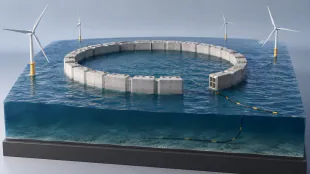
Belgium completes outer structure of offshore energy island
-
 'Widow's Bay' and 'The Pitt' win big at Emmy Awards
-
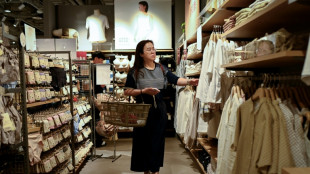
China retail sales growth weakens further in August
-
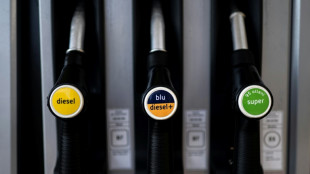 Most markets drop as oil extends gains ahead of expected US rate hike
-
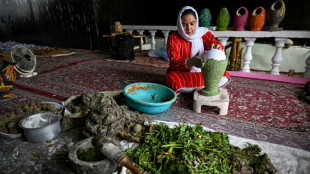
In Kashmir, lake weeds mix with traditional art
-
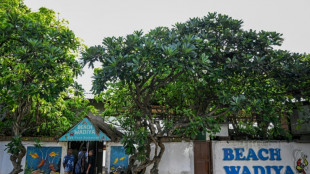 Sri Lanka's famed beach shack battles demolition
-
'Widow's Bay' and 'The Pitt' take key Emmy awards

-
 Vserv targets ₹1,000 crore revenue by 2030 through AI expansion
-
Television's A-listers glitter on Emmys red carpet

-
 India prohibits bank fees on UPI payments up to ₹2,000
-
Air India CEO summoned over alleged departure immigration lapse

-
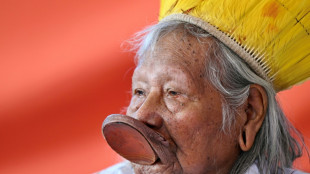 Brazil's Amazon defender Raoni has cancer
-
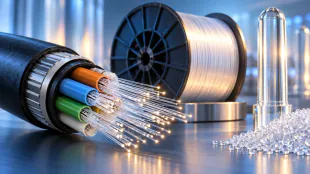
HFCL expands planned fibre investment to ₹1,800 crore
-
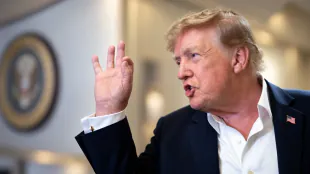 Trump rejects AI slowdown concerns as UN urges coordinated controls
-
Kuwait schools restore classroom routines after remote learning

-
 Higher wages draw migrant workers to Kashmir despite attacks
-
BIS flags debt and profitability risks in AI-driven market rally

-
 Oil supply concerns and AI warnings weigh on global markets
-
Qatar Chamber and Maltese envoy consider business forum
OPEC+ hikes oil production quotas but stays mum on UAE pull-out
Saudi Arabia, Russia and five other OPEC+ countries increased their oil production quota on Sunday in an expected move aimed at demonstrating continuity at the cartel after the shock withdrawal of the United Arab Emirates.
The seven major producers will add 188,000 barrels per day to their total production quota for June amid the price pressure unleashed by the Mideast war, as part of "their collective commitment to support oil market stability", according to a statement published by OPEC+.
The statement, following an online meeting of Algeria, Iraq, Kazakhstan, Kuwait, Oman, Russia and Saudi Arabia, made no mention of the United Arab Emirates, which quit the body on Friday, three days after announcing its withdrawal.
Rystad Energy analyst Jorge Leon told AFP that the silence on the UAE's departure was a sign of tense relations.
Oil market analysts had widely expected the increase of 188,000 barrels, similar to the 206,000-barrel daily increases OPEC+ announced in both March and April when the portion allotted to the UAE was subtracted.
"By sticking to the same production path -- just minus the UAE -- it's acting as if nothing has happened, deliberately downplaying internal fractures and projecting stability," Leon said.
- Strait of Hormuz bottleneck remains -
But raising the quota on paper may not have much impact on actual production, which is already short of the limit.
Untapped OPEC+ reserves are mainly located in the Gulf region, and exports there are trapped by the blockade of the vital Strait of Hormuz, imposed by Iran in response to the US-Israeli strikes that started the war on February 28.
Leon, the Rystad Energy analyst, told AFP on Sunday that the cartel was looking to send "a two-layer message" that the UAE's exit would not disrupt how OPEC+ operates and that the group still exerts control over global oil markets despite massive disruption to oil trade due to the war.
"While output is increasing on paper, the real impact on physical supply remains very limited given the Strait of Hormuz constraints," Leon told AFP. "This is less about adding barrels and more about signalling that OPEC+ still calls the shots."
The Strait of Hormuz blockade is hitting Iraq, Kuwait, Saudi Arabia and the UAE. The latter's production will no longer count towards OPEC quotas.
"Total OPEC+ output with quota fell to 27.68 million bpd in March, against a monthly quota of 36.73 million bpd, a shortfall of approximately 9 million bpd driven almost entirely by war-related disruption rather than voluntary restraint," said Priya Walia, another analyst at Rystad Energy, ahead of Sunday's meeting.
Iran, whose exports are now the target of a retaliatory US blockade, is an OPEC+ member but is not subject to quotas.
Russia, the group's second-biggest producer, has been the main beneficiary of the situation. But despite soaring energy prices, it appears to be struggling to produce at the level of its current quotas as its own war in Ukraine drags on and Ukrainian drones hit oil industry facilities.
- 'A big deal' -
Amena Bakr, an analyst at Kpler, described the UAE's exist as "a big deal" for OPEC.
Previous withdrawals from the group by Qatar in 2019 and Angola in 2023 were less significant by comparison, Bakr told a video conference on the UAE withdrawal.
The UAE has invested massively in infrastructure in recent years, and state-owned oil company ADNOC plans to increase output by five million barrels a day by 2027 -- far above the country's last quota of around 3.5 million barrels.
ADNOC also pledged on Sunday to spend $55 billion on new projects over the next two years, confirming that the company is "accelerating growth and delivery of its strategy".
There is also the risk for OPEC+ that other countries will leave such as Iraq and Kazakhstan, which have faced repeated accusations of surpassing their quotas.
H.Müller--CPN