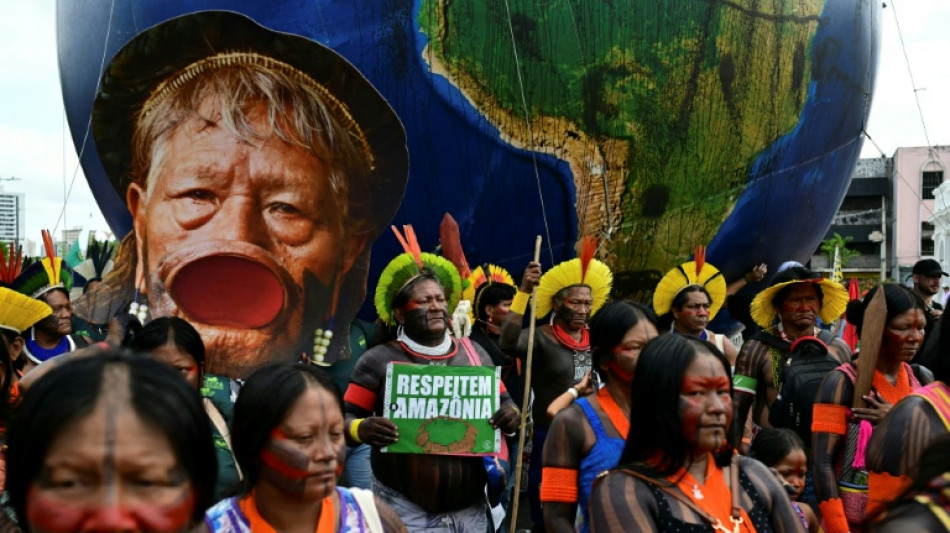
Brazil's top court strikes down law blocking Indigenous land claims / Photo: Pablo PORCIUNCULA - AFP/File

 France's Macron, Canada's Carney announce closer ties

 AI 'warning shots' focus Beijing on national security risks

 Philippine tribe in limbo over US-led tech hub

 Saudi-led coalition says Houthis fired ballistic missile at Riyadh

 Cuba works to restore power after another blackout
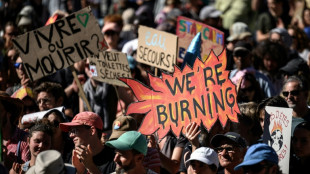
 Brigitte Bardot widower slams sale of star's belongings

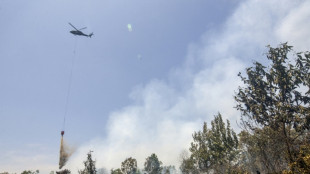 Indonesia accepts Malaysia's help to tackle wildfires
 Nvidia, OpenAI CEOs to attend Xi dinner at White House

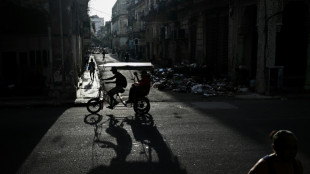 Cuba hit with seventh major blackout of the year

 Nigeria miners struggled to breathe in cell before 37 died: survivors

 Warren Buffett steps down as Berkshire Hathaway chairman

 Isolated Syrian-Druze city blames Damascus for shortages

 Kerry James Marshall: American 'blackness' painter celebrated in Europe

 Infantino 'must go', says German FA vice-president

 Japan's busiest rail station tests robot bins

 Backpackers fret over Australian visa crackdown

 Bank of Japan hikes rates to 31-year high to battle inflation

 AI doomsday warnings unlikely to slow IPOs but questions linger

 In Brazil's Amazon, the hunt for oil fuels hopes and fears

 Baby orangutans in India expose 'frightening' scale of trafficking

 Oversight Board blasts 'inadequate' Meta safeguards for AI deepfakes

 Harry makes first public appearance since return to UK

 Princess Diana's brother makes new explosive claims against Charles

 Trump admin overhauls key protection for endangered species

 Mbappe draws political fire over Ceuta t-shirt controversy

Brazil's top court struck down a law on Thursday that limits Indigenous people's rights to their ancestral lands, the latest twist in a long legal battle over native territory.
Land rights for Indigenous peoples have long been a flashpoint in Brazil, with the powerful agribusiness lobby driving efforts to curb claims to territory they use for farming, or hope to expand into.
Indigenous people are considered important stewards of biodiversity and rainforest protection in areas such as the Amazon, which is crucial in the fight against the climate crisis.
Brazil's Supreme Court rejected a law approved in 2023 by the conservative-controlled Congress, which limits Indigenous claims to lands to those they were occupying when Brazil's constitution was adopted in 1988.
Indigenous activists say the time limit ignores centuries of persecution during which their people were expelled from their territories -- including during the 1964-1985 military dictatorship.
The so-called "time-frame" doctrine has pitted Congress against the Supreme Court and the executive.
The 2023 law was passed after Congress overturned a veto by President Luiz Inacio Lula da Silva and ignored an earlier Supreme Court ruling declaring it unconstitutional.
The Supreme Court reacted by beginning a process of conciliation between all parties involved.
Over the past few months, around twenty hearings have been held with Indigenous organizations and those in favor of the time-frame doctrine.
Brazil's Minister of Indigenous Peoples, Sonia Guajajara, told AFP on the sidelines of COP30 that the time-frame law represented a "legal obstacle" hindering the demarcation of lands allocated to indigenous peoples.
Brazil is home to 1.7 million Indigenous people, out of a total population of over 200 million.
Lula made the demarcation of Indigenous lands a campaign promise and has approved around 20 territories since he returned to office in 2023.
While the STF has rejected the law, the battle is far from over.
Last week, the Senate approved an amendment to include the "time frame" principle in the Constitution.
The proposal must now be approved by the Chamber of Deputies.
L.K.Baumgartner--CPN
