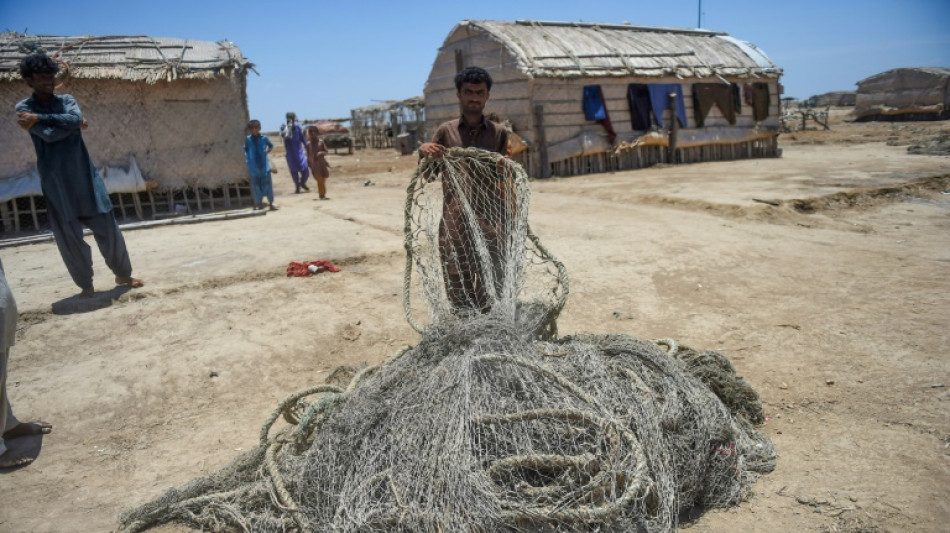
Pakistan orders mass evacuations ahead of cyclone landfall / Photo: Rizwan TABASSUM - AFP

 اليورو يستقر في البنوك المصرية وأعلى سعر للبيع 59.85 جنيه

 الأرصاد السعودية تتوقع سيولاً وأمطاراً رعدية في خمس مناطق

 Lights out in Laos as electricity exports surge

 Steven Strogatz weighs AI mathematics advances and their consequences for researchers

 Anthropic boss calls for AI slowdown, Altman and Musk agree

 French IT giant Capgemini sells subsidiary after row over ICE links

 Quebec Brokerage Qubit Insurance Announces New Data on Coverage Shortfalls as Rebuilding Costs Rise

 Lady Gaga welcomes first child with fiance: US media

 Bhutan business bets on hazelnuts for farming future

 'Widow's Bay' and 'The Pitt' are favorites for Emmys night

 Coastal erosion forces cancellation of California music festival

 Argentina's Dirty War rears its head in Venice film

 UK lawmakers throw out bill to legalise assisted dying

 US inflation steady in August, fueling Fed rate hike expectations

 New York marks 25th anniversary of 9/11 attacks

 Nepal flood reconstruction bill to be $4.78 bn: foreign ministry

 JUMO and Standard Bank launch Social Finance Framework to scale inclusive finance in Africa

 Doomsday tech: could AI really kill us all?

 French comedy show 'Call my agent' makes film comeback

 It's all coming back: Celine Dion fans gear up for Paris return

 Researchers eye AI revolution in natural disaster forecasts

 US braces for inflation report that may push Fed to hike rates

 Musk threatens legal action over documentary

 Latin America fact-check group asks Meta not to replace verification practice

 AI Risks to Enter 60–80% of Liability and Cyber Insurance Underwriting by 2028, ScienceSoft Predicts

Pakistan authorities on Monday began an evacuation effort to move 80,000 citizens out of the path of an approaching cyclone, which is expected to bring winds of up to 120 kilometres per hour.
The cyclone is making its way across the Arabian Sea towards the coastlines of Pakistan and India, forecast to make landfall later this week.
Swathes of coastal communities in southern Sindh province are set to suffer storm surges up to 3.5 metres (12 feet), which could inundate low-lying settlements, as well as up to 30 centimetres of rain.
Sindh Chief Minister Murad Ali Shah said an emergency has been declared and the army drafted in to help relocate "more than 80,000 people" at risk.
"We will not request people but demand them to evacuate," Shah told reporters, adding that the order was being issued through social media, mosques and radio stations.
A spokesman for Shah said around 2,000 people have already been evacuated to "safe places" from the area of Shah Bandar, a fishing town nestled among mangrove deltas 45 kilometres (28 miles) west of India's Gujarat state.
However, in the nearby village of Gul Muhammad Uplano, authorities struggled to persuade families to leave.
"We will become helpless in the government camps, that is why we are better off at our own place," said 46-year-old Gul Hasan.
The Pakistan Meteorological Department has warned that traditional mud and straw homes which house the poorest in Pakistan will be vulnerable to disintegration in high winds.
But in the settlement of Haji Ibrahim, a cluster of such structures, fisherman Abu Bakar said concerns over losing their livelihoods prevail.
"Our boat, goats and camels are our assets," the 20-year-old said. "We cannot compromise on their safety."
"But if the danger becomes imminent, we will be forced to leave to save our lives," he conceded.
- 'Adverse effects of climate change' -
Provincial lawmaker Muhammad Ali Malkani told AFP a decision had been made to evacuate the population living up to eight kilometres inland.
Karachi -- a port city home to around 20 million -- is also due to be deluged by dust and thunder storms with winds whipping up to 80 kilometres per hour.
Billboards will be removed and 70 vulnerable buildings evacuated in the city, while construction will be stopped over the entire affected area.
India's Meteorological Department said Monday the storm will hit western Gujarat state around noon on Thursday, with winds gusting up to 150 kilometres per hour causing "total destruction of thatched houses".
Heavy rains and strong winds late Saturday killed 27 people in northwest Pakistan, including eight children, officials said.
"Undoubtedly, these are the adverse effects of climate change," Prime Minister Shehbaz Sharif said on Twitter Sunday.
Last summer, Pakistan was hit by massive monsoon rains which put a third of the country under water, damaged two million homes and killed more than 1,700 people.
Pakistan, the world's fifth most populous country with 220 million inhabitants, is responsible for only 0.8 percent of global greenhouse gas emissions.
But the nation ranks highly among those vulnerable to extreme weather events, which scientists say are becoming more frequent and more severe owing to climate change.
A.Mykhailo--CPN