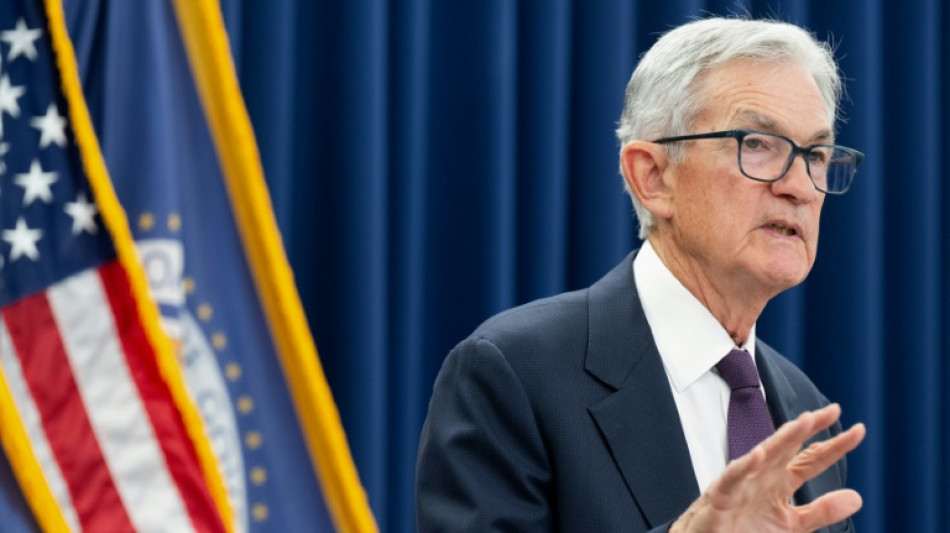
US Fed expected to keep rates steady as Iran war impact looms / Photo: SAUL LOEB - AFP

 Bank of Japan hikes rates to 31-year high to battle inflation

 AI doomsday warnings unlikely to slow IPOs but questions linger

 In Brazil's Amazon, the hunt for oil fuels hopes and fears

 Baby orangutans in India expose 'frightening' scale of trafficking

 Oversight Board blasts 'inadequate' Meta safeguards for AI deepfakes

 Harry makes first public appearance since return to UK

 Princess Diana's brother makes new explosive claims against Charles

 Trump admin overhauls key protection for endangered species

 Mbappe draws political fire over Ceuta t-shirt controversy

 Third malaria death in Germany from outbreak tied to Frankfurt airport

 AtlasClear Holdings Reports Preliminary Fiscal 2026 Revenue of Approximately $20.1 Million, Up 85%; Revenue Plus Interest Income of Approximately $21.9 Million

 'Another arrow to the quiver': World Bank posts record private capital mobilization

 Ireland to boycott Eurovision 2027 over Gaza

 India's Tata Sons reappoints N. Chandrasekaran as chairman

 Germany urges EU action against China to defend carmakers

 Japan eyes changing prostitution law to punish sex buyers

 Modi pitches India as global chipmaking hub

 Ukraine plans record defence spending in 2027

 NASA scan discovers new, 'once in a century' Moon crater

 Most stocks rise as Fed hikes and indicates drive to curb inflation

 UK-Sudanese author pens book to give children 'African history of Africa'

 Argentine judge orders suspension of Falklands oil project

 US Fed raises rates to tackle 'too high' inflation, irking Trump

 Turkey releases 106 protesters, jails more LGBTQ activists

 Candidate for UN chief calls for AI regulation akin to nuclear weapons

The US Federal Reserve opened its two-day meeting on Tuesday with policymakers expected to keep interest rates unchanged as they digest weak economic data and gauge the economic effects of the Iran war.
The central bank's rate-setting Federal Open Market Committee (FOMC) began its gathering at 10:30 am Eastern time (14:30 GMT), a central bank spokesperson said.
The meeting comes as the Fed battles stubbornly high inflation and weak demand in the US labor market, with its dual mandates potentially at odds with one another.
The US-Israel war on Iran, launched on February 28, is also expected to have major economic implications, with oil prices surging and supply chains disrupted.
Rising oil prices are expected to have knock-on global inflationary effects, including in the United States, where price increases have remained above the Fed's long-term two-percent target for years.
US average gasoline prices have increased around 27 percent since the start of the war, according to the AAA motor club's gauge.
Analysts have also warned of the conflict causing supply chain disruptions and oil shortages that will drag down economic growth.
Central banks tend to ignore the inflation effects of short-term price shocks, but it is unclear how long the war in Iran will drag on.
US households have been battered by years of higher-than-expected inflation after the Covid pandemic.
In January, the Fed's preferred inflation gauge came in at 2.8 percent, with core inflation rising by 3.1 percent, its highest level since March 2024.
The US labor market has also shown weakness in recent months, with unemployment ticking up in February due to weak labor demand.
Last week, there was more bad news, with new data showing the US economy grew at a significantly slower pace than initially estimated for the final months of 2025.
The new data and outlook for effects of the Iran war have seen traders change their expectations of the Fed.
Before the war, a rate-cut was expected as soon as the summer, with another possible later in the year.
On Tuesday, CME's FedWatch tool showed expectations of just one rate cut by the end of the year, likely coming after September.
The Fed cut rates at three consecutive meetings late last year, but they remain above levels that US President Donald Trump has demanded.
Trump has repeatedly insulted and criticized Fed Chair Jerome Powell, and attempted to unseat another Fed Governor.
Last week, a Department of Justice investigation into Powell over cost overruns related to Fed building renovations ran into an obstacle when a federal judge quashed subpoenas in the case.
Powell's term as Fed chair ends in May, making this his penultimate meeting.
Trump has nominated Kevin Warsh to replace him, but he has yet to be confirmed by the Senate.
L.Peeters--CPN