
Let it burn, let it burn! Christmas tree's fiery origins / Photo: Gints Ivuskans - AFP

 Kenya's economy faces climate change risks: World Bank

 Apple tops estimates in CEO Cook's final quarter, but shares fall

 Milei demands expulsion of foreigners expressing 'hate' against Argentina

 Italy's Po River valley on drought alert

 Prada profits pinched as growth hard to chase

 Stocks climb on earnings and rates, oil retreats

 US economic growth slows in second quarter, missing expectations

 Russia adds Telegram founder Durov to 'terrorist' blacklist

 Stocks diverge on earnings, as oil steadies

 Eurozone economy grows despite Middle East war
 Singapore group will develop 'most promising' Ebola vaccine

 Shell profit surges as Mideast war fuels oil prices

 Car maker Stellantis says back in profit in second quarter

 Samsung quarterly operating profit up 1,800% on AI boom

 South Korean stocks bounce after rout, oil holds gains on Mideast woes

 South Korea's women web sleuths fight AI deepfake porn

 Anything but programmable: New cost-efficient EC-power-supply-series for the DIN rail by CAMTEC PS
 Meta misses profit expectations, sticks to massive AI spending

 Campari - king of the spritz - hopes to conquer American heartland

 Air France-KLM and Lufthansa bid for Portugal's TAP airline

 Profits soar at Airbus as it delivers more planes

 Rheinmetall shares surge after armsmaker reports record profit
 FIFA hit by furious backlash over plans to sell stake in competitions

 MEXC Integrates World-Check to Fortify Institutional Grade Compliance Architecture
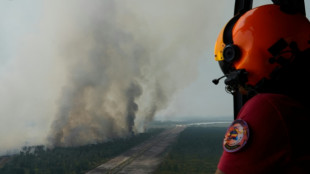 Spain returns wildfire evacuees as France braces for worsening weather

Dressed in pagan folk costumes, Latvians gather on a square in the centre of Riga for a ceremony that some historians see as the ancient precursor to the Christmas tree tradition.
But these colourful revellers celebrating the winter solstice have not come to decorate a tree, but to burn one.
After dragging a tree trunk by rope through the streets of the Baltic capital, the wild looking bunch then put it on a bonfire.
In mediaeval times, people would put the trees in their homes ahead of solstice before dragging them off to their fiery end.
"The tree stump symbolises everything that went wrong this year," said Liga Lukashunas, one of the celebrants and head of Riga's Ritmus cultural centre.
"We gather all our bad thoughts, wrongdoings or health troubles into these logs which then go up in smoke, allowing the upcoming year to have a fresh start."
- First mediaeval trees -
Near to where the ceremony finished, a plaque on the ground claims to be the spot where the world's first decorated Christmas tree was put on show in 1510.
The Baltic pagan tree-burning tradition was initially picked up by German traders, who developed the Christmas tree into its modern form and helped to spread it through the Hanseatic League ports along the Baltic.
According to historical records, the original tree in 1510 was decorated by the merchants' guild in Riga with artificial roses.
The merchants then danced around it before setting it on fire.
The first historical record of a Christmas tree in its current form comes from 1476 when one was installed in a house belonging to the city's Schwarzhaeupter organisation of foreign merchants.
The event was described by historian and linguist Guna Pitkevica in "The Great Christmas Book".
They "embellished an evergreen tree in their Schwarzhaeupter House with decorations and sweets, carrying it out on the street after Christmas was over, to burn it down," she said.
By ancient custom everyone in Latvia today is entitled to cut down their own fir tree for Christmas in state forests, which cover approximately one third of the country's territory.
Aida Rancane, founder of the folk band Grodi, said winter solstice ceremonies symbolised "the everlasting rebirth of nature and the world around us, allowing people to renew themselves."
L.K.Baumgartner--CPN