Biodiversity loss threatens economic stability: central banks report

 Kenya's economy faces climate change risks: World Bank

 EU top court to rule on record 4.1 bn euro Google fine

 Streamex is making digital gold accessible
 US stocks retreat to open Q3 ahead of June jobs data

 Oppressive heat broils US during World Cup, July Fourth
 Rufus the hawk patrolling Wimbledon tennis club

 US Fed chair says committed to combatting 'too high' prices

 England breaks record for warmest June: Met Office
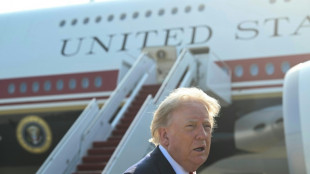 Trump defends earning more than $1bn on crypto

 Swedish court orders Google pay $1.46 bn for favouring its price comparisons

 China imposes 'national security' rules on overseas investments

 Indian sailors fear returning to Gulf after Middle East war

 Fear and anger brew inside Meta amid AI frenzy

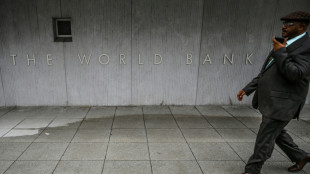 World Bank to phase out lending to China by 2031

 Tepid outlook weighs on Nike despite tariff refund boost

 Football brings joy to Venezuelan kids displaced by quakes
 German rail regulator backs Italian firm in competition spat

 Record number of 'new millionaires' in 2025, says UBS

 Ride-share group BlaBlaCar taps AI for 20-country expansion
 MEXC Lists Ondo's Tokenized Strategy Preferred Stock on Spot Market

 Germany's labour market dilemma: rising unemployment despite vacancies
 New Oxford academic centre symbolises UK's big-donor era

 Taiwan's ageing seaweed harvesters hope younger women wade in

 HUNTING/HER Headhunter Talk with EnBW Board Member & CHRO Colette Rückert-Hennen

 World Bank drops climate finance targets in renewed action plan

Central banks have underestimated the significant threat posed by biodiversity loss, a new report said Thursday, warning that financial institutions and businesses were destroying the natural assets that they depend on.
While climate change is increasingly factored into calculations of systemic economic risks, the report by central bankers, financial supervisors and academics said the comparable threats from the biodiversity crisis had only recently begun to be appreciated.
"Biodiversity supports all life on our planet," said Ravi Menon, chairman of the Central Banks and Supervisors' Network for Greening the Financial System, in his foreword to the report.
"But we are eroding this biodiversity at a pace that is severely damaging the natural ecosystems that provide us with food, water and clean air. This in turn could pose significant risks to economic, financial and social stability."
The report, compiled with input from dozens of central banks, comes amid international negotiations in Geneva to thrash out a global deal to protect nature up to mid-century that has been compared to the Paris Agreement for climate change.
Some 200 nations are set to sign off on this biodiversity framework, which includes a proposal to protect 30 percent of the world's habitats, at the UN's COP15 conference later this year in China.
The new report stressed the impact the financial system can make on biodiversity, through lending, investment and insurance choices.
- Appetite for destruction -
It also underscored how dependent economic and financial systems are on healthy and functioning ecosystems and the risks that arise when these natural processes are damaged.
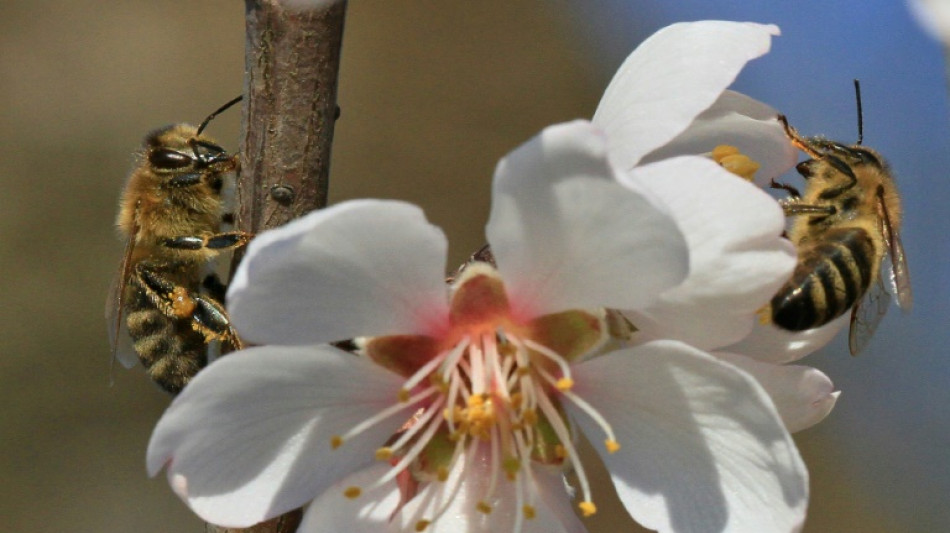
For example, crops yields are threatened by losses of pollinator species, which are caused by the destruction and break-up of habitats, pesticide pollution, and climate change.
Meanwhile, deforestation can cause changes not just to the local habitat, but the hydrological cycle as well, it said, noting research suggesting human pressures could cause the Amazon rainforest to pass a tipping point that would transform it into a savannah.
The Inter-American Development Bank has estimated that policies to prevent the Amazon reaching this threshold -- curbing deforestation, investing in sustainable agriculture, improving fire management -- would generate approximately $339.3 billion in additional wealth.
Researchers did, however, also warn that transition to a global economy that protects nature creates its own potential challenges.
"It's not that these government policies are wrong," said Nick Robins, of the Grantham Research Institute on Climate Change and the Environment at the London School of Economics, who was co-chair of the study group behind the report.
"It's just that maybe the current investments of these businesses and financial institutions are misaligned with a healthy ecosystem."
The report said some countries had begun to take action, but it urged central banks to come up with a coordinated global response to the biodiversity crisis.
"Inaction is also a choice" with inherent costs, said Robins, stressing that threats to nature should be integrated into the risk outlooks and calculations of central banks.
"Biodiversity loss is a threat to financial stability," he added.
P.Gonzales--CPN