'Rhino bond' charges onto markets to save S. African animals

 Kenya's economy faces climate change risks: World Bank

 EU top court to rule on record 4.1 bn euro Google fine

 Streamex is making digital gold accessible

 US stocks retreat to open Q3 ahead of June jobs data

 Oppressive heat broils US during World Cup, July Fourth

 Rufus the hawk patrolling Wimbledon tennis club

 US Fed chair says committed to combatting 'too high' prices

 England breaks record for warmest June: Met Office

 Trump defends earning more than $1bn on crypto

 Swedish court orders Google pay $1.46 bn for favouring its price comparisons

 China imposes 'national security' rules on overseas investments

 Indian sailors fear returning to Gulf after Middle East war

 Fear and anger brew inside Meta amid AI frenzy
 World Bank to phase out lending to China by 2031

 Tepid outlook weighs on Nike despite tariff refund boost

 Football brings joy to Venezuelan kids displaced by quakes
 German rail regulator backs Italian firm in competition spat

 Record number of 'new millionaires' in 2025, says UBS

 Ride-share group BlaBlaCar taps AI for 20-country expansion

 MEXC Lists Ondo's Tokenized Strategy Preferred Stock on Spot Market
 Germany's labour market dilemma: rising unemployment despite vacancies

 New Oxford academic centre symbolises UK's big-donor era

 Taiwan's ageing seaweed harvesters hope younger women wade in

 HUNTING/HER Headhunter Talk with EnBW Board Member & CHRO Colette Rückert-Hennen

 World Bank drops climate finance targets in renewed action plan

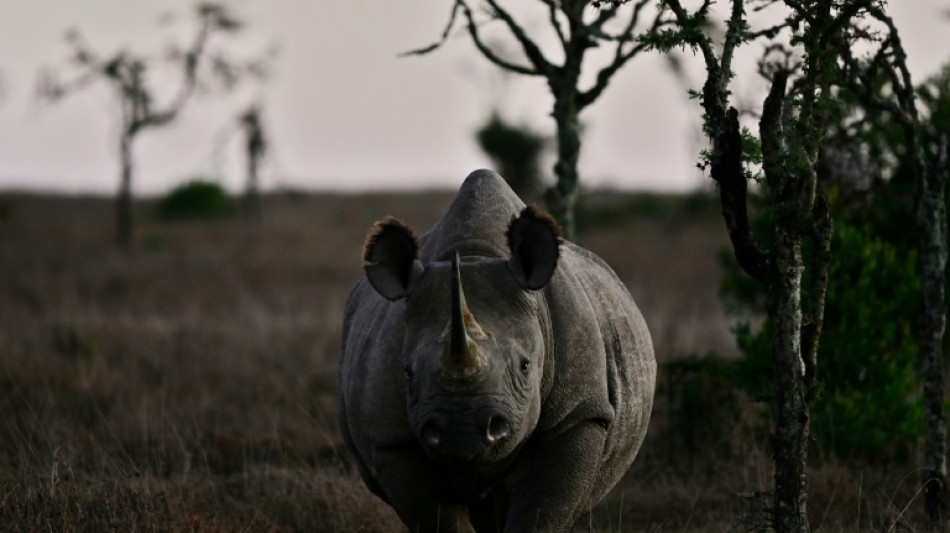
Critically endangered black rhinos in South Africa will get help from an unusual source: Wall Street, where institutional investors have expressed a willingness to buy a new type of bond being issued by the World Bank that will pay for successful efforts to save the animals.
In this pilot project that will be judged on whether the population of horned animals in two parks in the country increases, the Washington-based development lender will issue a $150 million bond March 31.
Rather than paying annual or semi-annual interest to investors, the proceeds instead will go to the staff in the parks to invest in the battle against poachers, and to improve conditions for the animals.
The funds will benefit the Addo Elephant National Park and the Great Fish River Nature Reserve, the World Bank said.
Officials hope the bond, two years in the making, will offer a new model to leverage private funds to finance conservation efforts or other projects. The catch is they must have benchmarks that can be objectively measured.
"The Rhino bond is a groundbreaking approach to enabling private sector investment in global public goods -- in this case biodiversity conservation, a key global development challenge," World Bank President David Malpass said in a statement.
"The pay-for-success financial structure protects an endangered species and strengthens South Africa's conservation efforts."
The five-year bond, which priced Wednesday, will be sold at 94.84 percent of face value, and will provide investors a guaranteed minimum return once it matures.
But they also can receive a share of $13.8 million from the Global Environment Facility if the number of rhinos increases.
- Spreading the risk -
The return would be based on a sliding scale, and if growth reaches or exceeds four percent, investors receive the entire "success payment."
"What we're looking to do here is really change that risk allocation and say is there a way that we can pass some of that project performance... (and) risk to someone else other than governments and donors," said Michael Bennet, head of market solutions and structured finance at the bank.
The parks will receive about $10 million total, with about half arriving in the first year. These funds, which usually go to bondholders, can be used for things like increasing drone and aircraft surveillance against poachers and creating water holes, Bennet told AFP.
The rhino population growth rate will be independently calculated by Conservation Alpha and verified by the Zoological Society of London.
Black rhinos are listed by the International Union for Conservation of Nature as critically endangered, though in the wild their population has doubled to more than 5,000 from a historic low three decades ago.
The animals are slaughtered for their horns, which are smuggled into Asia, where they are mistakenly believed to have medicinal benefits.
The South African government last month issued hunting permits that would allow 10 of the animals to be killed, along with 150 elephants.
The bond issue comes at a time when more investment funds are under pressure to invest in environmentally-friendly or socially-conscious ventures, a category known as ESG.
While boosting the rhino population is the primary goal of this bond, there are many positive benefits to the community, bank officials said.
"The nickname is the Rhino bond, but it's about so much more than that. It also has real tangible benefits to the communities and incentives to protect land," said Heike Reichelt, head of investor relations and sustainable finance at the World Bank Treasury.
And the project can help create more jobs, including for women, she told AFP.
M.Anderson--CPN