Australia lists small wallaby among new endangered species / Photo: SAEED KHAN - AFP/File

 Kenya's economy faces climate change risks: World Bank

 'Beginning of the end': Relief but no party as French wildfire winds down

 Southern Europe 'becoming more flammable' in hotter climate, experts say

 Mammoth bones found on parched bed of Danube in Bulgaria

 MEXC Lists Grvt (GRVT) with $60,000 Worth of GRVT and 10,000 USDT in Airdrop+ Rewards

 George and Amal Clooney flee French home due to wildfire

 MEXC Ventures Supports Alpha Arena's APAC Debut at Coinfest Bali

 AI data centre supplier Zhongji InnoLight slips on Hong Kong debut

 May, June heatwaves caused 2,877 extra deaths in England: govt

 BMW profit down a third as carmaker plans job cuts

 Seoul extends losses as most Asian markets drop, oil rises again

 Gambling.com Group Is Now Grandstand

 Meet the astronomer digging into the Milky Way's 'fossils'

 AI data centre supplier Zhongji InnoLight falls on Hong Kong debut

 Samsung operating profit up 1,800% in second quarter on AI boom

 Japanese population below 120 million for first time in decades

 US actor Jared Leto denies latest accusations of sexual assault

 Danube drops to 'historic lows' as fresh heatwave hits

 BTS pulls out of Grammys after Asian pop category introduction
 OpenAI says rogue AI agent attack hit other companies

 How an AFP beach snap became emblem of Europe's wildfire summer

 TRX Spot and Perpetuals Listing Launches on Backpack, Expanding Access to the TRON Ecosystem

 Nepal's tiger numbers climb 20 percent to estimated 429: survey
 FIFA's plans to sell $4.2bn stake in its tournaments widely criticised

 BMW aims to cut 8,000 jobs by end 2027: company source

Australia listed a small wallaby and the grey snake among 15 new threatened species on Tuesday as it launched a zero-extinction plan for its unique wildlife.
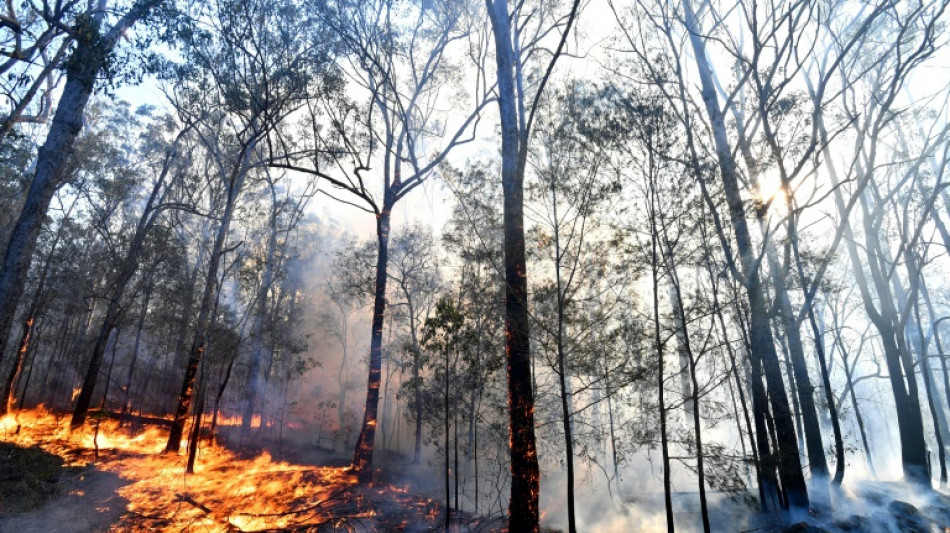
Many of Australia's species are clinging to existence, their habitats shrinking from human activity and extreme events such as the 2019-2020 Black Summer bushfires, wildlife groups say.
Prime Minister Anthony Albanese's government announced a new 10-year scheme to try and halt the slide into extinction of 110 "priority species" and shield 20 "priority places" from further degradation.
It aims to prevent any new extinctions of plants and animals while conserving at least 30 percent of Australia's land mass.
Wildlife groups blame Australia's poor record in protecting its unique species largely on habitat destruction, accelerated by global warming and resulting extreme weather.
The Black Summer fires burned through 5.8 million hectares in eastern Australia and killed or displaced an estimated 1-3 billion animals.
"The Black Summer bushfires in particular have seen devastating results for many species. We are determined to give wildlife a better chance," said Environment Minister Tanya Plibersek.
"Listing species as threatened under national environment law is a critical step in protecting the species and habitats in need of urgent help."
- 'Extinction capital' -
Australia's attempts to protect its wildlife had not worked so far, the minister added.
"Australia is the mammal extinction capital of the world," she said.
Among the 15 plants and animals listed as threatened are the vulnerable small parma wallaby, which faces danger from bushfires and predators, the endangered mildly venomous grey snake of Queensland, and the endangered small wingless matchstick grasshopper, which is sensitive to drought and frequent bushfires.
Wildlife groups welcomed the government's goal of preventing any new plant or animal extinctions.
The objective "is ambitious but essential if future generations of Australians are to see animals like koalas, mountain pygmy possums, greater gliders and gang gang cockatoos," said the Australian Conservation Foundation's nature programme manager Basha Stasak.
"Stopping the destruction of wildlife habitat is the key to achieving this objective."
Stasak called on the government to strengthen national environment law, saying it had failed to protect animals, plants and ecosystems.
Scientists had estimated the cost of tackling Australia's "extinction crisis" at 1.69 billion Australian dollars ($1 billion) a year, Stasak said.
- 'Downward spiral' -
A five-yearly State of the Environment report released in July painted a picture of wildlife devastation on land and sea.
It cited the clearing of millions of hectares of primary forest and mass coral bleaching on the Great Barrier Reef caused by marine heatwaves.
WWF-Australia called for investment in recovery plans for all threatened species.
"Australia's wildlife and wild places have been on a dangerous downward spiral," said WWF-Australia chief conservation officer Rachel Lowry.
She welcomed Australia's target of zero new extinctions, saying it matched the goals of New Zealand and European Union member countries.
Lowry pressed the government to set out and fund a recovery plan for the more than 1,900 threatened species in Australia.
"This plan picks 110 winners," she said.
"It's unclear how it will help our other 'non priority' threatened species such as our endangered greater glider for example."
Plibersek told journalists that protecting 110 prioritised species would create a "halo effect" on interdependent species in the same habitat.
Protecting 20 locations could create "little Noah's Arks, places that we can be confident we are returning to healthy populations of plants and animals," she said.
O.Hansen--CPN