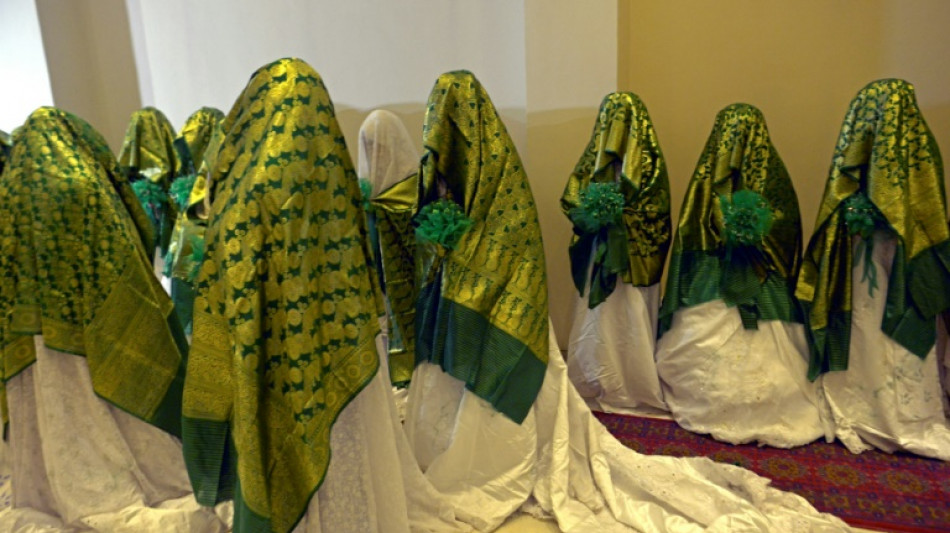
Seventy Afghan couples marry in Kabul mass wedding / Photo: Sahel ARMAN - AFP

 Kenya's economy faces climate change risks: World Bank

 Shell profit surges as Mideast war fuels oil prices

 Car maker Stellantis says back in profit in second quarter

 Samsung quarterly operating profit up 1,800% on AI boom

 South Korean stocks bounce after rout, oil holds gains on Mideast woes

 South Korea's women web sleuths fight AI deepfake porn

 Anything but programmable: New cost-efficient EC-power-supply-series for the DIN rail by CAMTEC PS

 Meta misses profit expectations, sticks to massive AI spending

 Campari - king of the spritz - hopes to conquer American heartland

 Air France-KLM and Lufthansa bid for Portugal's TAP airline

 Profits soar at Airbus as it delivers more planes

 Rheinmetall shares surge after armsmaker reports record profit

 FIFA hit by furious backlash over plans to sell stake in competitions

 MEXC Integrates World-Check to Fortify Institutional Grade Compliance Architecture

 Spain returns wildfire evacuees as France braces for worsening weather

 Russia seeks arrest of Telegram chief Durov

 South Korean stocks plunge as tech rout deepens, oil rises

 UBS says second-quarter net profit up 17% to $2.8 billion

 Crude jumps on fresh Mideast flare-up, tech rout deepens

 SK hynix posts 1,200% net profit boost on AI chip boom
 US government bans humanoid robots manufactured abroad

 GSJJ Launches ESG-Certified Custom Challenge Coins and Pin Badges
 Kering sales begin to recover as Gucci improves

 Spain allows wildfire evacuees to return but France fears flames spreading
 US Fed begins meeting with markets expecting steady interest rates

Dozens of Afghan women concealed in thick green shawls were married off in an austere mass wedding in Kabul on Monday, in a ceremony attended by hundreds of guests and gun-toting Taliban fighters.
Marriage is a costly affair in deeply impoverished Afghanistan, traditionally involving huge dowries, expensive gifts and lavish parties.
Historically, couples from families unable to foot the bill have sometimes opted to pool their resources in low-cost large scale marriages.
Monday's ceremony hitching 70 couples was one of the largest recently witnessed in Afghanistan, currently in economic freefall since the return of the Taliban.
"Today, no young man wants to bear the burden of an expensive wedding," said groom Ebadullah Niazai, who had waited eight years to be married.
"I have no job. We were short of money and so we decided to marry at a mass wedding ceremony," said 22 year-old groom Esmatullah Bashardost, who hails from the minority Shiite Hazara community.
Bashardost, sporting a traditional Afghan cap, said his wedding would likely be the most "happy day" of his life.
However celebrations were dramatically dampened by frigid restrictions the Taliban have imposed on social life.
Before they seized power in August weddings were riotously colourful affairs marked with singing, dancing, and some degree of mingling between men and women in the deeply conservative nation.
On Monday the brides and grooms were kept separate throughout the ceremony.
Guests of opposite sexes were separated by around a dozen Taliban fighters patrolling with weapons, and the only entertainment was poetry recitations and speeches by charity organisers of the event.
Journalists were not allowed to speak to the brides, who wore crisp white gowns under their concealing shawls, but were permitted to photograph and film them.
A red and white wedding cake was produced for each couple, but was placed in front of the men only, who wore traditional white shalwar kameez.
The event ended as grooms -- each sporting a plastic name badge -- collected their brides and left the venue in cars decorated with flowers and ribbons.
A single day booking at a Kabul wedding hall costs between $10,000 and $20,000 and organiser Sayed Ahmad Selab said some betrothed couples were "waiting for years" because of the expense.
During their first regime between 1996 and 2001 the Taliban barred showy weddings.
After surging back to power on the heels of a hasty US withdrawal, the Islamists have yet to reinstate their previous ban but they have forbidden musical entertainment.
Meanwhile, they have also issued creeping restrictions on women, segregating them from men and rolling back marginal gains they made over the past two decades.
In May women were told to stay at home as much as possible and to conceal themselves completely, including their faces, should they need to step out in public.
A.Zimmermann--CPN