Venezuela town finds sweet success in artisanal chocolate / Photo: Yuri CORTEZ - AFP

 French firm Safran helps build aircraft wings of the future in UK factory

 World Bank warns of worsening food insecurity as commodity prices soar

 Billionaire Ambani's Jio soars in market debut after India's biggest IPO

 AI chip giant SK hynix posts seven-fold surge in quarterly operating profit

 S.African activists push back on data centre rush

 Billionaire Ambani's Jio to debut after record India IPO

 UK set for cautious budget as borrowing costs climb

 US Fed expected to hold rates steady ahead of key midterm elections

 AI chip giant SK hynix says quarterly operating profit soars 630%

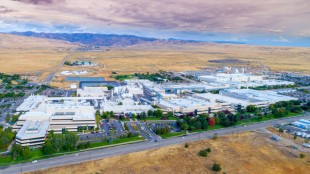 GA-ASI and Saab Perform Advanced AEW Flight Testing on Uncrewed MQ-9B

 Storied Paris department store seeks bankruptcy protection

 Boeing shares tumble after it releases cautious growth forecast
Armed with rubber boots and a sharp machete, Nidia Chavez heads to the plantation in search of "black gold" -- not a reference to Venezuela's plentiful oil, but rather cocoa.
In Chuao, in the northern state of Aragua, this type of black gold means everything in a town that has built a large part of its economy on labor-intensive, artisanal chocolate production.
"It is the black gold that we have here, this is what we live on," Chavez, 43, told AFP after collecting three containers of the fruit.
With the help of her machete, Chavez and her companions cut the cocoa into two to extract the pulp.
But there is an important rule in Chuao, inhabited by the descendants of slaves brought from Africa: Don't pluck the cocoa fruits unless you're a farmworker. It applies to both tourists and locals alike.
"It is forbidden," said Mauricio Sosa, 48, a boat operator and tour guide. "If not, we would be without cocoa," because the seed "is very tasty."
It's tempting, as the burgundy and yellow fruits abound around the town and all the way down to the coast.
Instead, the 18 to 20 tons of cocoa produced in Chuao each year are sold en masse by the Empresa Campesina Chuao, a civil society organization, to a businessman with close ties to the community. The prized chocolates made from the cocoa always note the origins.
A kilo (2.2 lbs) of cocoa beans can sell for about $10.
- 'Our pride' -
Estilita Ache was born 63 years ago in this remote village of about 3,000, which is most easily accessed by the sea. The other option is a multiday trek through mountains and jungle.
"Cocoa is everything," she said. "It's special. It must be, because you grab it with love."
Freshly extracted seeds lay in the fermentation room, covered by banana leaves, as women joke around in the old, wooden structure about gifts they want for Mother's Day.
It's suffocatingly hot inside -- a perfect environment for the seeds to acquire the ideal flavor and texture.
They're then dried in the sun, and packed in 61-kilo (134-lb) sacks.
This old-school process doesn't allow for mistakes, as any error would affect the quality of the product.
Empresa Campesina Chuao aims to produce "100 percent pure" cocoa. Vicenta Gamez, 66, points to a selection of chocolates, spreads, punch and tea that she prepares with her son, Robin Herrera, 28.
"We don't have big machines to prepare all this," she said with a smile. "Our cocoa is our greatest pride -- and the best in the world."
M.P.Jacobs--CPN