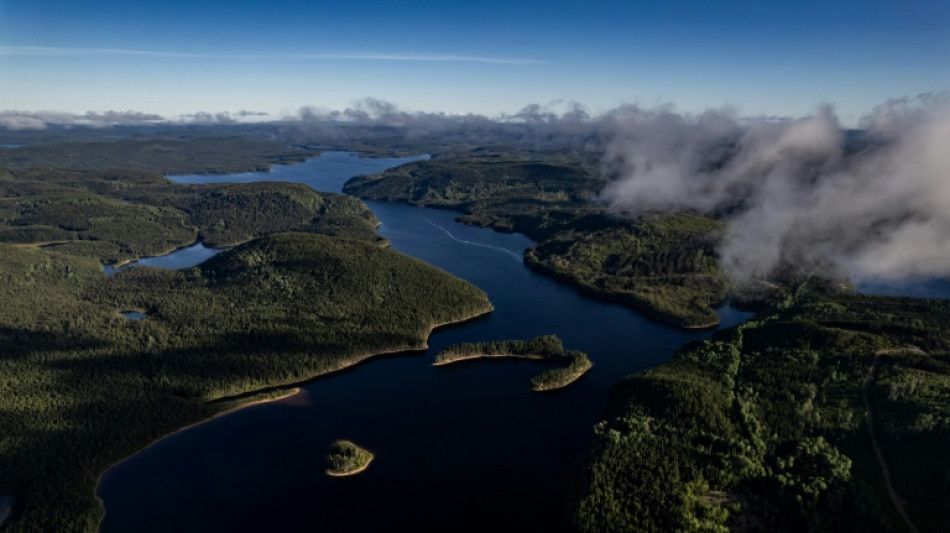
Ottawa rolls out CAN$1.6 bn plan to adapt to climate change / Photo: Ed JONES - AFP/File

 US Fed raises rates to tackle 'too high' inflation, irking Trump

 Turkey releases 106 protesters, jails more LGBTQ activists

 Candidate for UN chief calls for AI regulation akin to nuclear weapons

 'We're losing control,' AI pioneer Yoshua Bengio tells AFP

 IR-MED and Dice Technologies Announce collaboration to Evaluate and Advance Pressure-Injury Prevention Platform in Japan

 Watts, Pitt, Cruz to light up Spain's top film festival

 Toogood Gold's Table Mountain Sits in the Shadow of a Nevada Gold Rush

 MEXC July–August Security Report: 38.66M USDT in Risk Funds Intercepted, Futures Insurance Fund Hits 792M USDT

 Emporio Armani names Dario Vitale new creative director

 EU to ban social media for under 13s, curb access until 15

 Wildfires push endangered Sumatran elephants to brink: Indonesian NGO

 Bank of Japan set to raise rates under pressure from inflation, US

 EU chief to unveil social media, gaming curbs for under-15s

 'Resident Evil' film brings video game's ethos to the big screen

 GA-ASI Mojave First UAS To Complete Battlefield Short Field Ops

 Sanders, Bannon warn of AI dangers in rare US left-right alignment

 Empty benches as schools reopen in Venezuela's quake-hit Guaira

 Tiny English village holds 'independence' vote over asylum seeker housing

 US Treasury chief says to meet Chinese counterpart at weekend

 BingX Evolves into a Multi-Asset Trading Platform, Connecting Users to Global Opportunities

 International Trading Institute Expands Professional Trader Development Beyond the Master’s in Trading

 Lake Energy Secures $80 Million for U.S. Renewable Energy Expansion

 Stocks drop, oil climbs and Treasury yields hit 19-year high

 SkySail Strategies Outperforms Wall Street's 30-Year Risk Standard With Proprietary AI Inference Model

 Just add fish: Scientists pursue more rice, less disease in Senegal paddies

The Canadian government on Thursday unveiled a CAN$1.6 billion (US$1.2 billion) plan to help the country deal with the looming dangers of a warming world, such as floods, wildfires and extreme heat.
The so-called climate adaptation strategy will fund programs to help Canadians shield themselves from heat waves, protect coastlines from rising seas and safeguard infrastructure, including in the far north, which is facing the thaw of permafrost, officials said.
"Climate change is hitting all communities right across Canada," Emergency Preparedness Minister Bill Blair told a news conference from Prince Edward Island, a province hit hard by Hurricane Fiona in September.
The storm -- said to be the costliest to hit Canada's Atlantic coast -- was just a taste of what's to come, according to the government, which forecasts annual costs of natural disasters in Canada to rise to Can$15.4 billion by 2030.
"We are seeing in the last few years, not just in Canada but around the world, an increase in the frequency and severity of climate related events," said Blair, citing extreme weather events that killed hundreds and devastated communities across the country.
The adaptation strategy, which the government presented as a work-in-progress, was hailed as a "great step forward" by Greenpeace, while the Insurance Bureau of Canada, which represents home, car and business insurers, called it "ambitious."
Its goals also include making Canadians more aware of the risks of natural disasters in their communities, establishing 15 new urban national parks, conserving 30 percent of Canada's lands and waters to stem biodiversity loss, and preventing all future deaths from extreme heat.
Adaptation measures, according to a government statement, could result in up to Can$15 in savings for every dollar spent.
New construction standards in fire and flood zones alone would save an estimated Can$4.7 billion a year, the government said, while noting that urban forests in Toronto -- Canada's largest city -- have lowered cooling costs, improved air quality and reduced strains on stormwater sewers.
The new funding builds on more than Can$8 billion already committed by Ottawa for adaptation and disaster relief since 2009.
A fraught United Nations climate summit wrapped up on Sunday with a landmark deal on funding to help vulnerable countries cope with devastating climate impacts.
But it failed to push ahead on further cutting emissions in order to keep alive the aspirational goal of limiting global warming to 1.5 degrees Celsius from pre-industrial levels.
Y.Uduike--CPN