
Japan govt backs major firms in next-gen chip project / Photo: Richard A. Brooks - AFP/File

 Candidate for UN chief calls for AI regulation akin to nuclear weapons

 'We're losing control,' AI pioneer Yoshua Bengio tells AFP

 IR-MED and Dice Technologies Announce collaboration to Evaluate and Advance Pressure-Injury Prevention Platform in Japan

 Watts, Pitt, Cruz to light up Spain's top film festival

 Toogood Gold's Table Mountain Sits in the Shadow of a Nevada Gold Rush

 MEXC July–August Security Report: 38.66M USDT in Risk Funds Intercepted, Futures Insurance Fund Hits 792M USDT

 Emporio Armani names Dario Vitale new creative director

 EU to ban social media for under 13s, curb access until 15

 Wildfires push endangered Sumatran elephants to brink: Indonesian NGO

 Bank of Japan set to raise rates under pressure from inflation, US

 EU chief to unveil social media, gaming curbs for under-15s

 'Resident Evil' film brings video game's ethos to the big screen

 GA-ASI Mojave First UAS To Complete Battlefield Short Field Ops

 Sanders, Bannon warn of AI dangers in rare US left-right alignment

 Empty benches as schools reopen in Venezuela's quake-hit Guaira

 Tiny English village holds 'independence' vote over asylum seeker housing

 US Treasury chief says to meet Chinese counterpart at weekend

 BingX Evolves into a Multi-Asset Trading Platform, Connecting Users to Global Opportunities

 International Trading Institute Expands Professional Trader Development Beyond the Master’s in Trading

 Lake Energy Secures $80 Million for U.S. Renewable Energy Expansion

 Stocks drop, oil climbs and Treasury yields hit 19-year high

 SkySail Strategies Outperforms Wall Street's 30-Year Risk Standard With Proprietary AI Inference Model

 Just add fish: Scientists pursue more rice, less disease in Senegal paddies

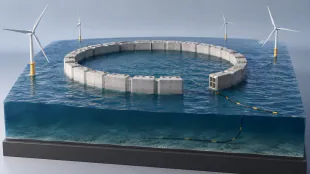 Belgium completes outer structure of offshore energy island

 China retail sales growth weakens further in August
The Japanese government will pour half a billion dollars into a new project to develop and make next-generation microchips, chief cabinet secretary Hirokazu Matsuno said Friday.
Eight major companies including Sony, SoftBank, Toyota and telecoms giant NTT have joined forces for the venture, Japanese media reports said.
The new firm, named Rapidus, will develop and mass produce next-generation semiconductors by 2027, according to major media outlets including national broadcaster NHK and the Mainichi Shimbun.
The pandemic has fuelled a global shortage of memory chips, with governments scrambling to secure supplies as carmakers and tech companies have been forced to make production cuts.
Each company has invested around one billion yen ($7 million), with MUFG Bank investing 300 million yen, according to the industry ministry.
The investor companies are expected to officially announce the project later on Friday.
The ministry will grant 70 billion yen to Rapidus to lead a research and development project for next-generation semiconductors, Matsuno said without elaborating.
"Semiconductors are a key technology that supports digitalisation and decarbonisation," Matsuno said at a regular briefing.
"We hope these steps will help improve the competitiveness of our country's semiconductor industry."
The chip shortage has prompted calls for the government and businesses to secure semiconductor supplies for Japan's economic security, as geopolitics become increasingly volatile -- especially concerning Taiwan, which has a huge chip-producing capacity.
The United States recently introduced new measures to limit China's access to high-end semiconductors with military uses, a move that has wiped billions from chip companies' valuations worldwide.
The German economy ministry also has recommended that the sale of a chip factory to a Chinese-owned firm should be blocked as it poses a security threat, government sources said Tuesday.
Last year, Taiwanese chip giant TSMC and Sony said they would tie up on a new $7 billion plant in Japan.
L.Peeters--CPN