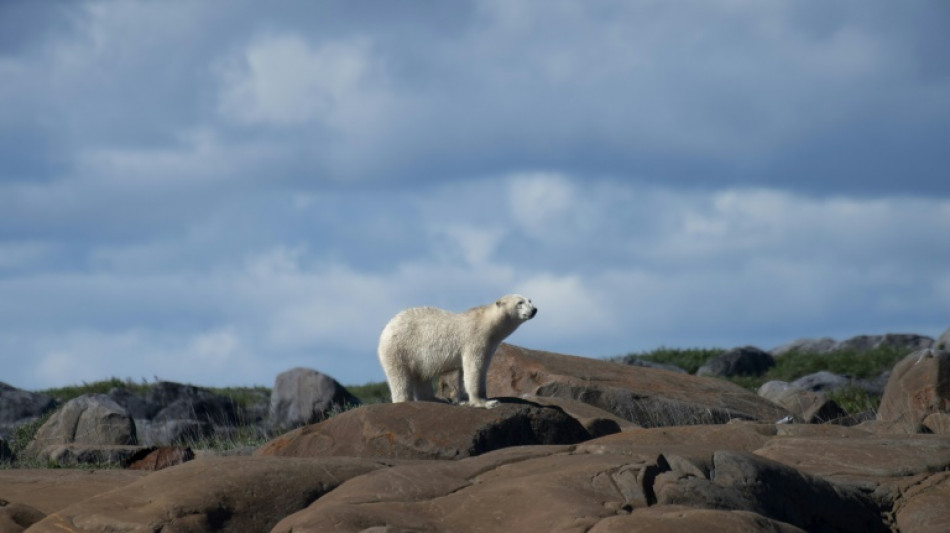
Polar bear hell: An ice pack that keeps receding / Photo: Olivier MORIN - AFP

 Candidate for UN chief calls for AI regulation akin to nuclear weapons

 'We're losing control,' AI pioneer Yoshua Bengio tells AFP

 IR-MED and Dice Technologies Announce collaboration to Evaluate and Advance Pressure-Injury Prevention Platform in Japan

 Watts, Pitt, Cruz to light up Spain's top film festival

 Toogood Gold's Table Mountain Sits in the Shadow of a Nevada Gold Rush

 MEXC July–August Security Report: 38.66M USDT in Risk Funds Intercepted, Futures Insurance Fund Hits 792M USDT

 Emporio Armani names Dario Vitale new creative director

 EU to ban social media for under 13s, curb access until 15

 Wildfires push endangered Sumatran elephants to brink: Indonesian NGO

 Bank of Japan set to raise rates under pressure from inflation, US

 EU chief to unveil social media, gaming curbs for under-15s

 'Resident Evil' film brings video game's ethos to the big screen

 GA-ASI Mojave First UAS To Complete Battlefield Short Field Ops

 Sanders, Bannon warn of AI dangers in rare US left-right alignment

 Empty benches as schools reopen in Venezuela's quake-hit Guaira

 Tiny English village holds 'independence' vote over asylum seeker housing

 US Treasury chief says to meet Chinese counterpart at weekend

 BingX Evolves into a Multi-Asset Trading Platform, Connecting Users to Global Opportunities

 International Trading Institute Expands Professional Trader Development Beyond the Master’s in Trading

 Lake Energy Secures $80 Million for U.S. Renewable Energy Expansion

 Stocks drop, oil climbs and Treasury yields hit 19-year high

 SkySail Strategies Outperforms Wall Street's 30-Year Risk Standard With Proprietary AI Inference Model

 Just add fish: Scientists pursue more rice, less disease in Senegal paddies

 Belgium completes outer structure of offshore energy island

 China retail sales growth weakens further in August
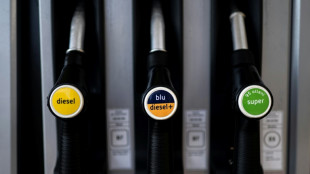
Sprawled on rocky ground far from sea ice, a lone Canadian polar bear sits under a dazzling sun, his white fur useless as camouflage.
It's midsummer on the shores of the Hudson Bay and life for the enormous male has been moving in slow motion, far from the prey that keeps him alive: seals.
Every year from late June, when the bay ice disappears -- shrinking until it dots the blue vastness like scattered confetti -- the bears must move onto shore to begin a period of forced fasting.
But that period is lasting longer and longer as temperatures rise.
The whole annual rhythm of the polar bear is in peril, and birth rates are dropping as they scavenge for food.
"There could be a beluga whale carcass they might be able to find, (or a) naive seal near shore, but generally they're just fasting. They lose nearly a kilogram of body weight every day that they're on land," said Geoff York, a biologist for Polar Bears International (PBI). An AFP team joined him on an expedition.
In the Arctic, global warming is occurring three or four times faster than elsewhere in the world, recent studies indicate.
According to a 2020 report published in the journal Nature Climate Change, this means the near-extinction of this iconic animal is approaching: From 1,200 individuals in the 1980s, the polar bear population in western Hudson Bay has dropped to about 800 today.
These days, this super predator of the Arctic sometimes has to feed on seaweed, as a mother and her cub were seen doing not far from the port of Churchill, the Manitoba town and self-declared "polar bear capital."
They are also moving closer to the cities. In Churchill, the bears a few years ago began frequenting the waste disposal site, a source of easy - but harmful - food for them.
Since then, the town has taken precautions. The dump is now guarded by cameras, fences and patrols. Across Churchill, people leave cars and houses unlocked in case someone needs to take refuge quickly after a bad encounter with this large carnivore.
The emergency number for the wildlife protection unit is posted on many walls.
Some areas, like schoolgrounds, are more closely monitored.
When they get an urgent call, Ian Van Nest, the provincial officer of the unit, and his colleagues jump into their pickup truck armed with a rifle and a spray can of repellent, wearing protective vests.
Sometimes the bears can be scared off with just "the horn on your vehicle," Van Neste said. Other times the animals need to be sedated, then kept in cages until winter rolls around and they are freed.
The fate of the polar bear should alarm everyone, said Flavio Lehner, a climate scientist at Cornell University, who notes that the Arctic is a good barometer of planetary health.
And since the 1980s, data show, the bay's summer ice pack has decreased by nearly half.
P.Schmidt--CPN