
Global chip giants converge on Taiwan for Computex / Photo: I-Hwa Cheng - AFP

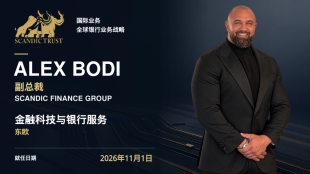 亞歷克斯・博迪獲任命為 SCANDIC FINANCE 集團副總裁

 Alex Bodi appointed Vice President of SCANDIC FINANCE GROUP

 Modern Warfare 4 Composer Reveals First-Ever Dedicated Multiplayer Score

 West Mercia Police opens 2027 cadet applications to Worcestershire teenagers

 Goa plans relationship-readiness course amid concern over divorces

 BHEL wins Adani Power projects valued at up to ₹28,000 crore

 India seeks threefold increase in coal stocks to prevent summer power shortages

 Indus Towers expands solar-powered network to 50,000 telecom sites

 Equitas Small Finance Bank rebounds after naming interim chief executive

 Titan quarterly profit seen rising as jewellery business drives growth

 Kuwait finance minister holds economic cooperation talks at COMCEC

 Kuwait marks key events and anniversaries from national history
Global semiconductor chip giants will gather at Taiwan's top tech expo this week to showcase "the next frontier" for an industry dominated by artificial intelligence.
Nvidia boss Jensen Huang will make a keynote speech on Monday, the eve of Computex, as the tech sector grapples with the impact of US tariffs and disrupted supply chains.
The four-day event will draw computer and chip companies from around the world to Taiwan, whose semiconductor industry is critical to the production of everything from iPhones to the servers that run ChatGPT.
Taiwan produces the bulk of the world's most advanced chips, including those needed for the most powerful AI applications and research.
"I have many amazing announcements to make," Huang told reporters in Taipei on Friday.
"We are at the heart of the technology ecosystem and so there are many partners of ours here and we're looking forward to announcing many collaborations, many new projects, many new technologies and initiatives together."
Top executives from Qualcomm, MediaTek and Foxconn will also speak at Computex, where advances in moving AI from data centres into laptops, robots and cars will be in the spotlight.
"From Agentic AI driving smarter personal devices to Physical AI reshaping autonomy, the show maps out the next frontier," specialist research firm Counterpoint said in a note.
Tech expert Paul Yu told AFP the industry was at a "critical juncture" for AI hardware development.
"Over the past two and a half years, significant investment has driven rapid advances in AI technology," said Yu, of Witology Markettrend Research Institute.
"2025 to 2026 will be the crucial period for transitioning AI model training into profitable applications."
- 'Taiwan to continue to thrive' -
While US tariffs were the biggest issue facing the sector, most companies at Computex "will shy away from addressing tariffs directly as the situation is too uncertain," said Eric Smith of specialist platform TechInsights.
Last month, Washington announced a national security probe into imports of semiconductor technology, which could put the industry in the crosshairs of President Donald Trump's trade bazooka and inflict potentially devastating levies.
Since taking office in January, Trump has threatened hefty tariffs against many of America's biggest trade partners with the aim of forcing companies to move production to US soil.
Export-dependent Taiwan has pledged to increase investment in the United States as it seeks to avoid a 32 percent US tariff on its shipments.
But there are concerns the island could lose its dominance of the chip sector -- the so-called "silicon shield" protecting it from an invasion or blockade by China and an incentive for the United States to defend it.
TSMC, the Taiwanese contract chipmaking giant, has unveiled plans to inject an additional $100 billion into the United States, on top of the $65 billion already pledged.
TSMC-supplier GlobalWafers also announced plans last week to increase its US investment by $4 billion as the Taiwanese company opened a wafer facility in the US state Texas.
But Huang was optimistic on Friday when asked about the impact of tariffs on Taiwan, saying the island would "remain at the centre of the technology ecosystem".
"There are so many smart companies here, there are so many innovative and spirited companies," Huang said.
"I fully expect Taiwan to continue to thrive... before, after, throughout."
P.Gonzales--CPN
