
Whack-a-mole: US academic fights to purge his AI deepfakes / Photo: Kirill KUDRYAVTSEV - AFP

 US House faces test on sweeping Russia sanctions bill

 British PM says to make 'difficult decisions' as inflation rises

 Global fuel price demos: a round-up

 Leverate Launches MCP for Traders to Connect AI Assistants With Trading Platforms

 MEXC Launches $1M "Discover Your Wall Street DNA" Campaign to Help Traders Find Their Market Fit

 Stocks edge higher ahead of US Fed rate call

 BASIS.pro Expands On-Chain Infrastructure with XDC Network Partnership and Zypher DAO as Auto Earn Goes Live

 Pickle-flavoured tart? AI inspires Japan's convenience stores

 EU chief hosts Canada's Carney in push to 'deepen' alliance

 Meta chief pushes back on AI slowdown calls

 US Fed to deliver rate decision with markets betting on hike

 Sanders, Bannon warn of AI dangers in rare US left-right alignment

 Empty benches as schools reopen in Venezuela's quake-hit Guaira

 Tiny English village holds 'independence' vote over asylum seeker housing

 US Treasury chief says to meet Chinese counterpart at weekend

 BingX Evolves into a Multi-Asset Trading Platform, Connecting Users to Global Opportunities

 International Trading Institute Expands Professional Trader Development Beyond the Master’s in Trading

 Lake Energy Secures $80 Million for U.S. Renewable Energy Expansion

 Stocks drop, oil climbs and Treasury yields hit 19-year high

 SkySail Strategies Outperforms Wall Street's 30-Year Risk Standard With Proprietary AI Inference Model

 Just add fish: Scientists pursue more rice, less disease in Senegal paddies

 Belgium completes outer structure of offshore energy island
 China retail sales growth weakens further in August
 In Kashmir, lake weeds mix with traditional art

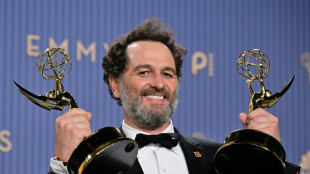
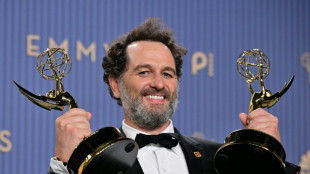 'Widow's Bay' and 'The Pitt' take key Emmy awards

As deepfake videos of John Mearsheimer multiplied across YouTube, the American academic rushed to have them taken down, embarking on a grueling fight that laid bare the challenges of combating AI-driven impersonation.
The international relations scholar spent months pressing the Google-owned platform to remove hundreds of deepfakes, an uphill battle that stands as a cautionary tale for professionals vulnerable to disinformation and identity theft in the age of AI.
In recent months, Mearsheimer's office at the University of Chicago identified 43 YouTube channels pushing AI fabrications using his likeness, some depicted him making contentious remarks about heated geopolitical rivalries.
One fabricated clip, which also surfaced on TikTok, purported to show the academic commenting on Japan's strained relations with China after Prime Minister Sanae Takaichi expressed support for Taiwan in November.
Another lifelike AI clip, featuring a Mandarin voiceover aimed at a Chinese audience, purported to show Mearsheimer claiming that American credibility and influence were weakening in Asia as Beijing surged ahead.
"This is a terribly disturbing situation, as these videos are fake, and they are designed to give viewers the sense that they are real," Mearsheimer told AFP.
"It undermines the notion of an open and honest discourse, which we need so much and which YouTube is supposed to facilitate."
Central to the struggle was what Mearsheimer's office described as a slow, cumbersome process that prevents channels from being reported for infringement unless the targeted individual's name or image featured in its title, description, or avatar.
As a result, his office was forced to submit individual takedown requests for every deepfake video, a laborious process that required a dedicated employee.
- 'AI scales fabrication' -
Even then, the system failed to stem the spread. New AI channels continued sprouting, some slightly altering their names -- such as calling themselves "Jhon Mearsheimer" -- to evade scrutiny and removal.
"The biggest problem is that they (YouTube) are not preventing new channels dedicated to posting AI-generated videos of me from emerging," Mearsheimer said.
After months of back and forth -- and what Mearsheimer described as a "herculean" effort -- YouTube shut down 41 of the 43 identified channels.
But the takedowns came only after many deepfake clips gained significant traction, and the risk of their reappearance still lingers.
"AI scales fabrication itself. When anyone can generate a convincing image of you in seconds, the harm isn't just the image. It's the collapse of deniability. The burden of proof shifts to the victim," Vered Horesh, from the AI startup Bria, told AFP.
"Safety can't be a takedown process -- it has to be a product requirement."
In its response, a YouTube spokesperson said it was committed to building "AI technology that empowers human creativity responsibly" and that it enforced its policies "consistently" for all creators, regardless of their use of AI.
In his recent annual letter outlining YouTube's priorities for 2026, CEO Neal Mohan wrote the platform is "actively building" on its systems to reduce the spread of "AI slop" -- low-quality visual content -- while it plans to dramatically expand AI tools for its creators.
- 'Major headache' -
Mearsheimer's experience underscores a new, deception-filled internet, where rapid advancements in generative AI distort shared realities and empower anonymous scammers to target professionals with public-facing profiles.
Hoaxes produced with inexpensive AI tools can often slip past detection, deceiving unsuspecting viewers.
In recent months, doctors have been impersonated to sell bogus medical products, CEOs to peddle fraudulent financial advice, and academics to fabricate opinions for agenda-driven actors in geopolitical rivalries.
Mearsheimer said he planned to launch his own YouTube channel to help shield users from deepfakes impersonating him.
Mirroring that approach, Jeffrey Sachs, a US economist and Columbia University professor, recently announced the launch of his own channel in response to "the extraordinary proliferation of fake, AI-generated videos of me" on the platform.
"The YouTube process is difficult to navigate and generally is completely whack-a-mole," Sachs told AFP.
"There remains a proliferation of fakes, and it's not simple for my office to track them down, or even to notice them until they’ve been around for a while. This is a major, continuing headache," he added.
burs-ac/dw
Y.Ibrahim--CPN