Italy's spread-out Olympics face transport challenge / Photo: Odd ANDERSEN - AFP/File

 AI 'warning shots' focus Beijing on national security risks
 Philippine tribe in limbo over US-led tech hub
 Saudi-led coalition says Houthis fired ballistic missile at Riyadh
 Cuba works to restore power after another blackout

 Brigitte Bardot widower slams sale of star's belongings

 Indonesia accepts Malaysia's help to tackle wildfires
 Nvidia, OpenAI CEOs to attend Xi dinner at White House

 Cuba hit with seventh major blackout of the year

 Nigeria miners struggled to breathe in cell before 37 died: survivors

 Warren Buffett steps down as Berkshire Hathaway chairman

 Isolated Syrian-Druze city blames Damascus for shortages

 Kerry James Marshall: American 'blackness' painter celebrated in Europe

 Infantino 'must go', says German FA vice-president

 Japan's busiest rail station tests robot bins

 Backpackers fret over Australian visa crackdown

 Bank of Japan hikes rates to 31-year high to battle inflation

 AI doomsday warnings unlikely to slow IPOs but questions linger

 In Brazil's Amazon, the hunt for oil fuels hopes and fears

 Baby orangutans in India expose 'frightening' scale of trafficking

 Oversight Board blasts 'inadequate' Meta safeguards for AI deepfakes

 Harry makes first public appearance since return to UK

 Princess Diana's brother makes new explosive claims against Charles

 Trump admin overhauls key protection for endangered species

 Mbappe draws political fire over Ceuta t-shirt controversy

 Third malaria death in Germany from outbreak tied to Frankfurt airport

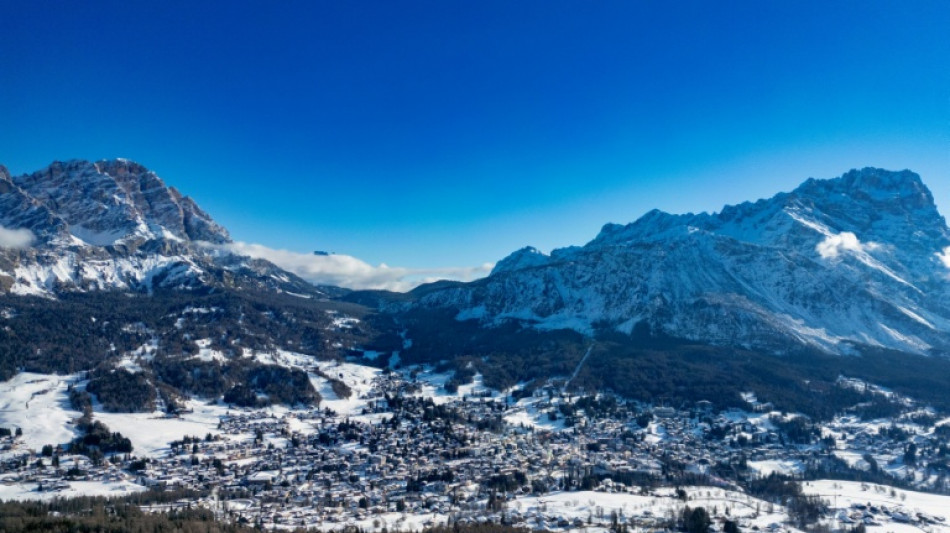
One of the biggest challenges in this month's Winter Olympics may be off the slopes: moving hundreds of thousands of spectators and athletes over a swath of northern Italy.
The Games are being organised at seven sites -- the most spread-out Olympics ever.
Italian authorities argue that organising events up to hundreds of kilometres from each other will limit the environmental impact.
But "the more fragmented the venue layout, the more complex the mobility demands -- not only for athletes and officials, but especially for spectators, who generate the largest transport volumes", said Robert Steiger, a professor at Innsbruck University in Austria specialising in the effects of climate change on tourism.
Andrea Gibelli, head of the local branch of Italy's state railways, said in November that "the real challenge will be to offer a service that can compete with private transport".
"With these spread-out Olympic Games, the first instinct is to say: 'I'll go by car,'" he said.
Spectators are "strongly encouraged to arrive by train or to park outside of sensitive areas and then continue by shuttle", Andrea Scrocco, transport director for the Olympics, told AFP.
- Train or car? -
In Milan, there will be a stepped-up train, metro and bus service also at night.
But getting to the mountain sites will be more difficult as there is no high-speed Olympic train as there was for Beijing in 2022.
A spectator going to watch the skiing in Cortina and arriving at the nearest major airport -- Venice -- would have to take a bus from the airport to Venice train station to take a regional train, then a bus, then walk to a ski lift and finally walk to the slopes.
A more convenient cable car to and from the entrance of Cortina has not been completed.
For spectators, car travel will often remain faster, despite the risk of traffic jams, very limited access to the resorts and reservation-only parking.
Uber, a partner of the Games, could benefit from the chaos and expects its activity to double in the Olympic zones during the event.
- Delays in infrastructure -
Italy has pledged to invest 3.5 billion euros ($4.1 billion) in infrastructure for these Games, notably on roads and railways to reach the resorts.
Transport Minister Matteo Salvini is inaugurating infrastructure every week.
But most of the planned tunnels and bridges, presented and funded as the "legacy" of the Games, will not be ready for several years.
As of January 22, 40 of the 95 planned projects -- including sports facilities -- had been completed, according to the Olympic works delivery company Simico.
Two small tunnels were inaugurated on January 26 after many delays, to access Cortina from the plains by bypassing villages.
But the tender for the 1.5-kilometre tunnel that is supposed to ease access to the Longarone valley has only just been launched.
Between Milan and the Bormio-Livigno hub, where ski and snowboard competitions are scheduled, a new road bridge was inaugurated with great fanfare in mid-January.
But only one of the two planned lanes is open.
The Swiss canton of Graubuenden, through which many spectators will pass on their way to Bormio-Livigno, is moreover asking Lombardy for four million francs (4.4 million euros) for traffic and parking management.
"I believe we made the right decision in opting for a more dispersed Games, but that has... created additional complexities," Kirsty Coventry, the president of the International Olympic Committee, has said.
H.Cho--CPN