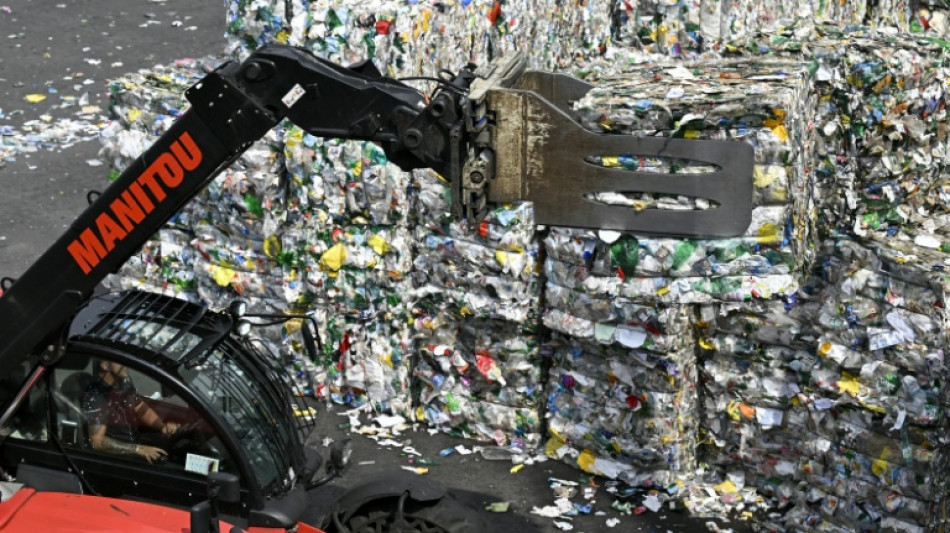
EU nations back chemical recycling for plastic bottles / Photo: Jean-Christophe VERHAEGEN - AFP/File

 Saudi-led coalition says Houthis fired ballistic missile at Riyadh
 Cuba works to restore power after another blackout
 Brigitte Bardot widower slams sale of star's belongings

 Indonesia accepts Malaysia's help to tackle wildfires

 Nvidia, OpenAI CEOs to attend Xi dinner at White House

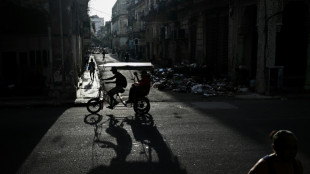 Cuba hit with seventh major blackout of the year

 Nigeria miners struggled to breathe in cell before 37 died: survivors

 Warren Buffett steps down as Berkshire Hathaway chairman

 Isolated Syrian-Druze city blames Damascus for shortages

 Kerry James Marshall: American 'blackness' painter celebrated in Europe

 Infantino 'must go', says German FA vice-president

 Japan's busiest rail station tests robot bins

 Backpackers fret over Australian visa crackdown

 Bank of Japan hikes rates to 31-year high to battle inflation

 AI doomsday warnings unlikely to slow IPOs but questions linger

 In Brazil's Amazon, the hunt for oil fuels hopes and fears

 Baby orangutans in India expose 'frightening' scale of trafficking

 Oversight Board blasts 'inadequate' Meta safeguards for AI deepfakes

 Harry makes first public appearance since return to UK

 Princess Diana's brother makes new explosive claims against Charles

 Trump admin overhauls key protection for endangered species

 Mbappe draws political fire over Ceuta t-shirt controversy

 Third malaria death in Germany from outbreak tied to Frankfurt airport

 AtlasClear Holdings Reports Preliminary Fiscal 2026 Revenue of Approximately $20.1 Million, Up 85%; Revenue Plus Interest Income of Approximately $21.9 Million

 'Another arrow to the quiver': World Bank posts record private capital mobilization

European nations voted Friday to allow for chemical recycling to play a larger role in the production of plastic bottles, overcoming reservations about the energy-intensive technology.
Under EU rules, single use plastic bottles need to contain at least 25 percent of recycled plastic -- with the share set to increase to 30 percent by 2030.
Currently only plastic recycled through mechanical techniques, which involve washing, shredding, and remelting the stuff, can be used towards the quota.
But representatives for the European Union's 27 member states voted Friday to extend the same benefit to chemically recycled plastics.
The vote follows a proposal put forward by the European Commission aimed at supporting investment in the plastic recycling sector, which is struggling against competition from China and other parts of Asia.
The change "will benefit the plastics industry, they now have consistent and clarified rules to calculate, verify and report the recycled content," said Anna-Kaisa Itkonen, a spokeswoman for the European Commission.
She defined the vote as a "first milestone for defining rules for chemical recycling at EU-level."
Brussels believes that chemical recycling can help the re-use of certain challenging types of packaging such as yoghurt pots.
But environmental groups complain that the process, which involves heating plastics to high temperatures to recycle them, is energy intensive, more polluting than mechanical techniques and could serve as a fig leaf for companies to continue produce more plastics.
A commission source said there was "strong pressure from industry" to back chemical recycling despite doubts about its benefits.
"We see many pilot projects, but at the industrial level, we're not there yet," the source said.
Europe's recycling sector is under severe pressure, due to abundant supply of cheap plastics as global production continues to rise.
More than half of plastics produced -- 57 percent -- come from Asia, with 35 percent coming from China.
X.Wong--CPN