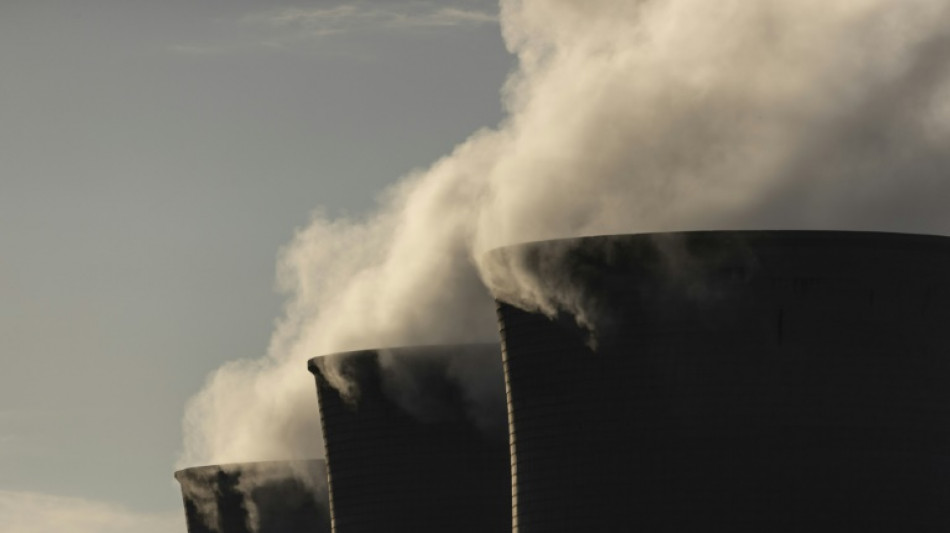
US proposes stricter air quality standards for soot / Photo: GUILLEM SARTORIO - AFP

 Argentine judge orders suspension of Falklands oil project

 US Fed raises rates to tackle 'too high' inflation, irking Trump

 Turkey releases 106 protesters, jails more LGBTQ activists

 Candidate for UN chief calls for AI regulation akin to nuclear weapons

 'We're losing control,' AI pioneer Yoshua Bengio tells AFP

 IR-MED and Dice Technologies Announce collaboration to Evaluate and Advance Pressure-Injury Prevention Platform in Japan

 Watts, Pitt, Cruz to light up Spain's top film festival

 Toogood Gold's Table Mountain Sits in the Shadow of a Nevada Gold Rush

 MEXC July–August Security Report: 38.66M USDT in Risk Funds Intercepted, Futures Insurance Fund Hits 792M USDT

 Emporio Armani names Dario Vitale new creative director

 EU to ban social media for under 13s, curb access until 15

 Wildfires push endangered Sumatran elephants to brink: Indonesian NGO

 Bank of Japan set to raise rates under pressure from inflation, US

 EU chief to unveil social media, gaming curbs for under-15s

 'Resident Evil' film brings video game's ethos to the big screen

 GA-ASI Mojave First UAS To Complete Battlefield Short Field Ops

 Sanders, Bannon warn of AI dangers in rare US left-right alignment

 Empty benches as schools reopen in Venezuela's quake-hit Guaira

 Tiny English village holds 'independence' vote over asylum seeker housing

 US Treasury chief says to meet Chinese counterpart at weekend

 BingX Evolves into a Multi-Asset Trading Platform, Connecting Users to Global Opportunities

 International Trading Institute Expands Professional Trader Development Beyond the Master’s in Trading

 Lake Energy Secures $80 Million for U.S. Renewable Energy Expansion

 Stocks drop, oil climbs and Treasury yields hit 19-year high

 SkySail Strategies Outperforms Wall Street's 30-Year Risk Standard With Proprietary AI Inference Model

The US Environmental Protection Agency (EPA) proposed stricter standards on Friday for microscopic particles responsible for harmful air pollution.
The EPA proposal, which will be subject to public comment and hearings before it would take effect, would toughen the national air quality standard for fine particles, also known as soot.
Fine particle pollution can be caused by a number of sources including construction sites, smokestacks, wildfires, power plants and vehicles.
It causes respiratory illnesses such as asthma, heart attacks and disproportionately affects low-income and communities of color in the United States.
The EPA proposal would strengthen the air quality standard for fine particles from an annual average level of 12 micrograms per cubic meter to between nine and 10 micrograms per cubic meter.
"Our work to deliver clean, breathable air for everyone is a top priority at EPA," agency chief Michael Regan said in a statement.
"This proposal will help ensure that all communities, especially the most vulnerable among us, are protected from exposure to harmful pollution."
The EPA estimated that a strengthened air quality standard would prevent up to 4,200 premature deaths and 270,000 lost workdays per year.
The standards were last changed under the Obama administration in 2012. The Trump administration declined to do so in 2020.
Harold Wimmer, president and CEO of the American Lung Association, expressed disappointment with the EPA proposal, saying that it did not go far enough in regulating fine particle emissions.
"Current science shows that stronger limits are urgently needed," Wimmer said.
"More protective standards are necessary to drive cleanup nationwide in communities that currently experience unhealthy levels of deadly particle pollution."
Beto Lugo Martinez, executive director of Clean Air Now, described the proposal as a "good step" but insufficient.
"Without strategic placing of regulatory monitors that can actually measure excessive pollution levels and the will to make polluters pay for violating the standard, this new 'recommendation' will not make a difference," Martinez said in a statement.
M.Davis--CPN