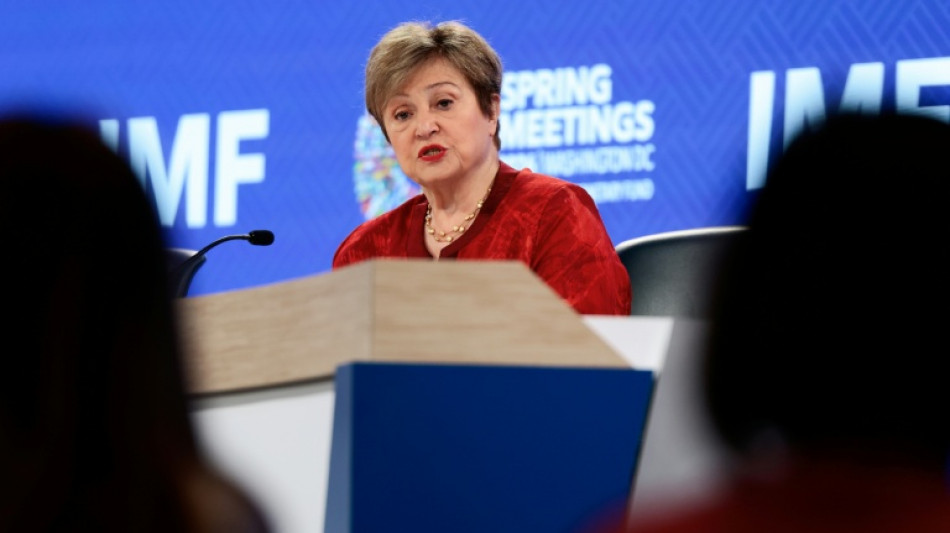
IMF chief warns of 'tough times' if oil prices stay high / Photo: Kent NISHIMURA - AFP

 Princess Diana's brother makes new explosive claims against Charles

 Trump admin overhauls key protection for endangered species

 Mbappe draws political fire over Ceuta t-shirt controversy

 Third malaria death in Germany from outbreak tied to Frankfurt airport

 AtlasClear Holdings Reports Preliminary Fiscal 2026 Revenue of Approximately $20.1 Million, Up 85%; Revenue Plus Interest Income of Approximately $21.9 Million

 'Another arrow to the quiver': World Bank posts record private capital mobilization

 Ireland to boycott Eurovision 2027 over Gaza

 India's Tata Sons reappoints N. Chandrasekaran as chairman

 Germany urges EU action against China to defend carmakers

 Japan eyes changing prostitution law to punish sex buyers

 Modi pitches India as global chipmaking hub

 Ukraine plans record defence spending in 2027

 NASA scan discovers new, 'once in a century' Moon crater

 Most stocks rise as Fed hikes and indicates drive to curb inflation

 UK-Sudanese author pens book to give children 'African history of Africa'

 Argentine judge orders suspension of Falklands oil project

 US Fed raises rates to tackle 'too high' inflation, irking Trump

 Turkey releases 106 protesters, jails more LGBTQ activists

 Candidate for UN chief calls for AI regulation akin to nuclear weapons

 'We're losing control,' AI pioneer Yoshua Bengio tells AFP

 IR-MED and Dice Technologies Announce collaboration to Evaluate and Advance Pressure-Injury Prevention Platform in Japan

 Watts, Pitt, Cruz to light up Spain's top film festival

 Toogood Gold's Table Mountain Sits in the Shadow of a Nevada Gold Rush

 MEXC July–August Security Report: 38.66M USDT in Risk Funds Intercepted, Futures Insurance Fund Hits 792M USDT

 Emporio Armani names Dario Vitale new creative director

IMF chief Kristalina Georgieva warned Wednesday of difficult times ahead for the global economy if war in the Middle East is unresolved and oil prices stay high, adding that inflation risks could seep into food prices.
"We must brace for tough times ahead" if the conflict persists, she told reporters at a press briefing during the International Monetary Fund and World Bank's spring meetings in Washington.
The gathering brings government and financial leaders to the US capital this week, with policymakers looking to limit economic fallout from the war.
US-Israeli strikes launched against Iran on February 28 sparked Tehran's retaliation, virtually closing the Strait of Hormuz, a key shipping route for oil and fertilizers.
Energy prices have since surged, squeezing countries -- especially vulnerable economies and those dependent on oil exports from the region.
"We are concerned about risks for inflation, moving into food prices should the delivery of fertilizers at a reasonable price (not be) restarted soon," Georgieva said.
But as countries move to limit price shocks on their citizens, Georgieva urged central banks to "wait and see" before adjusting interest rates if they can do so.
She said this was particularly the case where the public has a "well-anchored" expectation of inflation being kept under control.
"If we are to move faster out of the war, it may not be necessary to take action," she said.
But she conceded that countries where central banks lack such credibility might need to send stronger signals.
For now, "we are still at a time when a faster resolution of hostilities is possible," she said.
She urged IMF member countries to come forward to the Washington-based lender if they need financial assistance during the conflict.
"Currently, we have 39 programs, and prospective demand for new programs from at least a dozen countries, a number of them in sub-Saharan Africa," she said of the fund's financial aid.
"If you need help financially, don't hesitate. Move fast, because the sooner we act, the more we would protect the economy and the people," Georgieva said.
She also stressed the need to protect fiscal sustainability as countries move to help their populations, cautioning that "untargeted measures, export controls or broad-based tax cuts" could serve to "prolong the pain of high prices."
H.Meyer--CPN