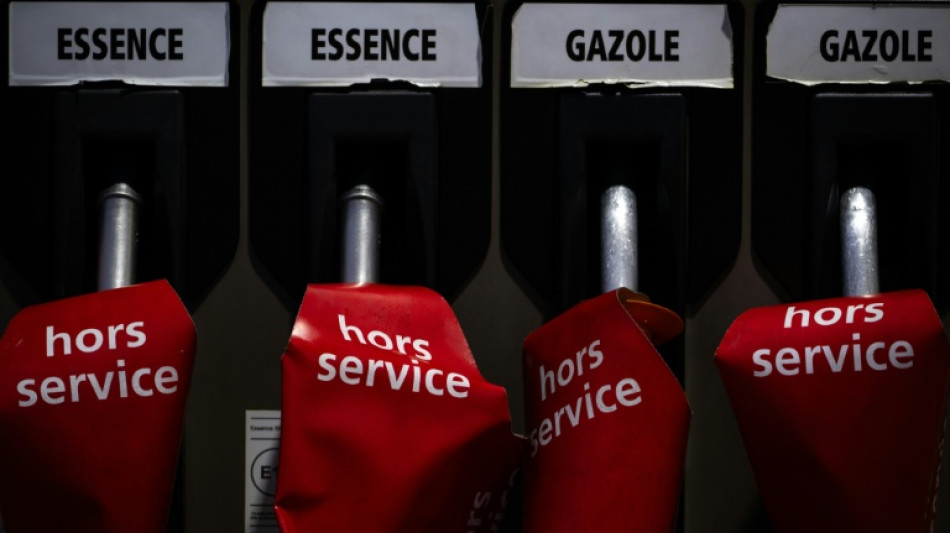
Asian stocks rally, crude drops on lingering hope for a peace deal / Photo: SEBASTIEN BOZON - AFP

 'In our lane': Fed's Warsh defies Trump but still fighting for credibility
 Trump admin makes major cut to endangered species protections

 GM delivers first components for US interceptor missiles
 Travis Scott and Keith Richards feature on GTA VI soundtrack

 King Charles warns tech bosses of 'existential dangers' of AI

 French fishermen block ports over petrol prices

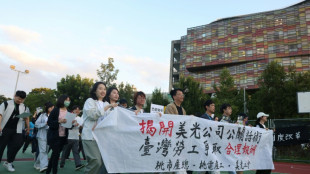 Micron's Taiwan workers say 68 months' bonus not enough

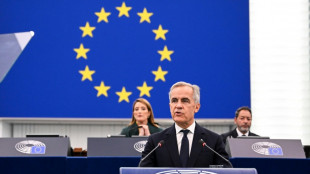 Canada's Carney pushes 'new alliance' with EU despite Trump threats

 Beyond Investment Returns: Families Are Measuring Wealth by Freedom, Continuity, and Legacy, According to Nour Private Wealth
 King Charles disputes claims in book by Princess Diana's brother

 Nepal floods among 'most challenging' disasters: WFP

 Kids and social media: what would change under new EU law

 King Charles to call on tech giants for 'reassurances' over AI

 STARPRIME Responds to Diverging Gold Market Demand with AM/PM Fixing and XAU24/7

 Where the US-China tariff row stands ahead of White House summit

 Indonesia cash-for-photos scheme turns animal hunters into protectors

 Bayer to Present How it Rebuilt Global Planning with OMP at Gartner Supply Chain Planning Summit 2026

 US Congress passes sweeping Russia sanctions bill

 US stocks fall, dollar gains after Fed lifts interest rates

 US Fed raises rates to tackle 'too high' inflation in move sure to rile Trump

 US Fed raises rates to battle inflation in move likely to rile Trump

 US House faces test on sweeping Russia sanctions bill

 British PM says to make 'difficult decisions' as inflation rises

 Global fuel price demos: a round-up

 Leverate Launches MCP for Traders to Connect AI Assistants With Trading Platforms

Stocks rose and oil fell Tuesday on hopes for a deal to end the Middle East war and reopen the Strait of Hormuz, with Donald Trump saying Tehran had called to seek an agreement even as a US naval blockade around Iran's ports began.
While weekend peace talks in Pakistan ended with no deal, investors took heart from the fact that the two sides found some areas of agreement, with Iran saying they had been "inches away" at one point.
Soon after, the US president said the military would blockade the strategic Strait -- through which a fifth of global oil and gases passes -- adding to fears for energy supplies from the Middle East.
The US military clarified it would begin blockading all Iranian ports in the Gulf from Monday at 1400 GMT, but will allow ships not coming or going to Iran to pass through the strait.
Trump's blockade announcement saw crude surge as much as eight percent and Asian stocks sink Monday. But optimism was revived in New York, with some observers pointing to Trump's announcement that Iranian representatives had called seeking to make a deal.
"They'd like to make a deal. Very badly, very badly," he told reporters outside the Oval Office.
While he did not identify which officials had called, all three main indexes in New York ended well in positive territory, while oil gave back all its gains.
And the optimistic tone continued into Asia, with Tokyo and Seoul leading gains thanks to renewed buying of tech firms as traders returned to the AI theme.
Taipei's 1.7 percent rise helped push the TAIEX to a fresh record high.
Hong Kong, Shanghai, Sydney, Singapore and Wellington also joined the push higher.
Both main oil prices also fell to hold below $100, with West Texas Intermediate down around two percent and Brent 1.5 percent lower.
The equity advances extended a rebound enjoyed last week after Washington and Tehran announced a two-week ceasefire in the war, which has sent shockwaves through the world economy since it started on February 28.
SPI Asset Management's Stephen Innes said the rallies have been built on "the belief that diplomacy, however imperfect, remains in play. Last week’s advance was not driven by resolution but by hope".
"The talks in Pakistan did not deliver a deal, but they did something just as important. They kept the door open. And in markets, an open door is often enough," he added.
"Oil felt that shift immediately. Not because the physical reality changed, but because the narrative did. The market began to price not the blockade itself, but the possibility that it is being used as leverage rather than a prelude to something more destructive."
Still, in a social media post, Trump said the bulk of Iran's navy had already been destroyed but that if any of what he said were Tehran's few remaining "fast attack ships" approach the blockade "they will be immediately ELIMINATED".
He also said 34 ships had passed through the strait Sunday, adding it was the most since the war began, though the figure could not be immediately corroborated.
Iran continued to hit out at Washington, with Foreign Minister Abbas Araghchi blaming it for the impasse in the talks during a call with his Saudi counterpart Prince Faisal bin Farhan.
"Unfortunately, we witnessed the continued excessive demands of the American side in the negotiations, which led to the failure to achieve a result," his ministry quoted him as saying.
Analysts suggested the US president was trying to starve Iran of funds but also pressure Beijing, the biggest buyer of Iranian oil, to lean on Tehran to reopen Hormuz.
Meanwhile, the head of the International Energy Agency warned Monday that April could prove a tougher month than March for energy markets and the economy.
Fatih Birol said March saw delivery of cargo loaded before the crisis in the Middle East, but "during the month of April, nothing has been loaded".
"The longer the disruption is, the more severe the problem becomes," he told reporters.
- Key figures at 0230 GMT -
West Texas Intermediate: DOWN 2.0 percent at $97.12 a barrel
Brent North Sea Crude: DOWN 1.5 percent at $97.84 a barrel
Tokyo - Nikkei 225: UP 2.4 percent at 57,849.02 (break)
Hong Kong - Hang Seng Index: UP 1.0 percent at 25,925.96
Shanghai - Composite: UP 0.5 percent at 4,009.56
Euro/dollar: DOWN at $1.1759 from $1.1761 on Monday
Pound/dollar: DOWN at $1.3505 from $1.3507
Dollar/yen: DOWN at 159.20 yen from 159.41 yen
Euro/pound: DOWN at 87.06 pence from 87.08 pence
New York - Dow Jones: UP 0.6 percent at 48,218.25 (close)
London - FTSE 100: DOWN 0.2 percent at 10,582.96 (close)
A.Agostinelli--CPN