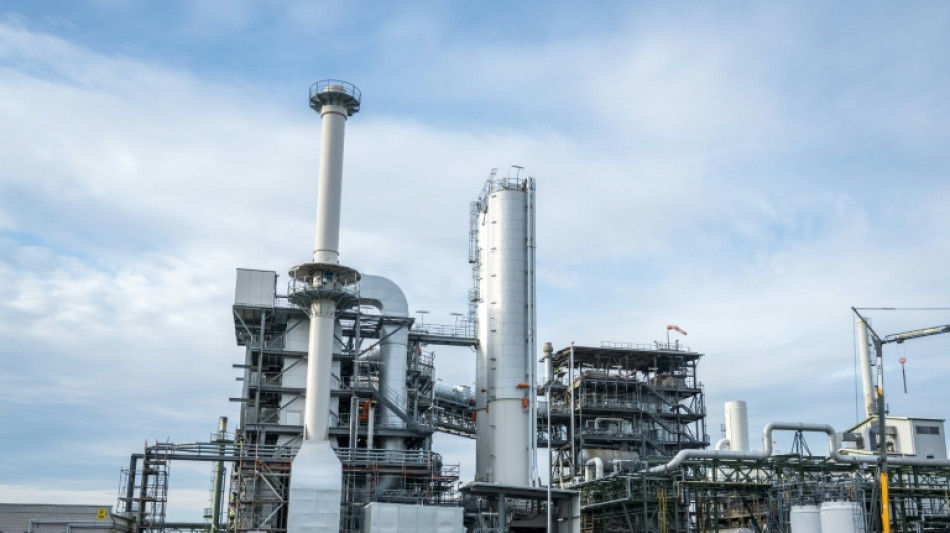
Germany unveils rescue plan for struggling chemical sector / Photo: STEFANIE LOOS - AFP

 Prized Mexican relic returns on loan, two centuries on

 'In our lane': Fed's Warsh defies Trump but still fighting for credibility

 Trump admin makes major cut to endangered species protections

 GM delivers first components for US interceptor missiles

 Travis Scott and Keith Richards feature on GTA VI soundtrack

 King Charles warns tech bosses of 'existential dangers' of AI

 French fishermen block ports over petrol prices

 Micron's Taiwan workers say 68 months' bonus not enough

 Canada's Carney pushes 'new alliance' with EU despite Trump threats

 Beyond Investment Returns: Families Are Measuring Wealth by Freedom, Continuity, and Legacy, According to Nour Private Wealth

 King Charles disputes claims in book by Princess Diana's brother

 Nepal floods among 'most challenging' disasters: WFP

 Kids and social media: what would change under new EU law

 King Charles to call on tech giants for 'reassurances' over AI

 STARPRIME Responds to Diverging Gold Market Demand with AM/PM Fixing and XAU24/7

 Where the US-China tariff row stands ahead of White House summit

 Indonesia cash-for-photos scheme turns animal hunters into protectors

 Bayer to Present How it Rebuilt Global Planning with OMP at Gartner Supply Chain Planning Summit 2026

 US Congress passes sweeping Russia sanctions bill

 US stocks fall, dollar gains after Fed lifts interest rates

 US Fed raises rates to tackle 'too high' inflation in move sure to rile Trump

 US Fed raises rates to battle inflation in move likely to rile Trump

 US House faces test on sweeping Russia sanctions bill

 British PM says to make 'difficult decisions' as inflation rises

 Global fuel price demos: a round-up

The German government and the country's chemical industry on Thursday presented a sweeping plan to help the ailing sector as it faces new headwinds from the Middle East war energy shock.
Chemicals is one of the most important sectors in Europe's biggest economy but key industry players complain of high energy costs, onerous EU regulations and fierce foreign competition.
Germany's ruling coalition, chemical industry association VCI and chemical workers' union IGBCE together outlined a raft of measures to boost the sector.
These include subsidising power prices, seeking reforms to EU carbon pricing schemes that the energy-intensive sector complains unfairly burden them, and reducing regulations.
"I would like to emphasise how important the chemical industry is from both a national and a European perspective," said VCI president Markus Steilemann.
Chemical companies generate huge revenues and support hundreds of thousands of jobs, contributing to social cohesion and harmony, he said.
But the sector is facing "the most severe crisis since the post-war period, and this crisis is unfortunately being further exacerbated by the current events we are witnessing in the Middle East", added Steilemann.
The surge in oil and gas prices since the start of the conflict last month, as well as supply chain snarls, are weighing heavily on the sector.
Economy Minister Katherina Reiche said the government would soon finalise the details of a previously announced plan to subsidise power costs for industry, including the chemicals sector.
"The biggest competitive disadvantage right now is energy prices," said Reiche. "That is why we are acting now with targeted relief."
Other measures in the plan include speeding up planning procedures, and pushing ahead with the digitisation and decarbonisation of the industry.
The crisis in the chemicals sector reflects a broader malaise in the German economy, whose growth has trailed behind other major economies.
A.Agostinelli--CPN
