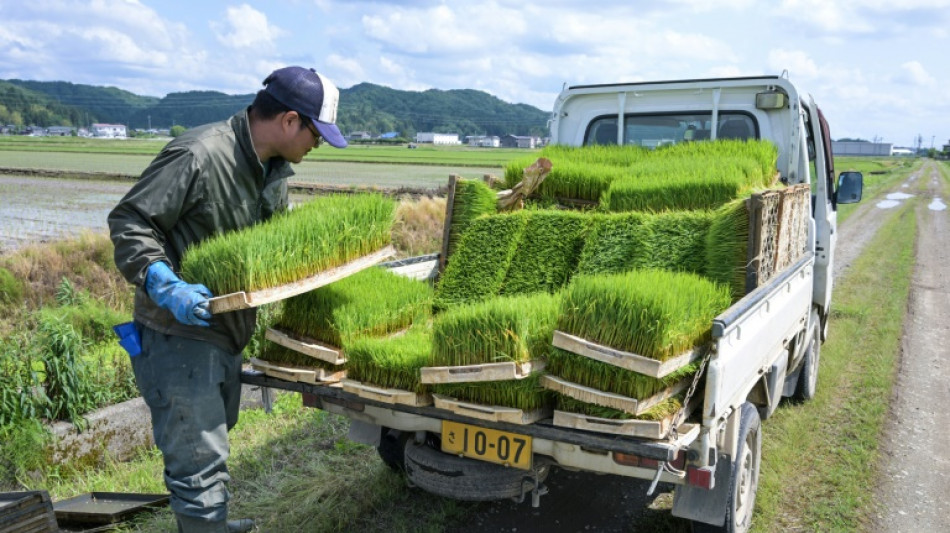
Rice prices double in Japan as inflation accelerates / Photo: Richard A. Brooks - AFP

 Jay-Z rape accuser says she made 'false accusations'

 Trump's photo of Xi greeting carries signs of AI

 First US trial against TikTok to open Monday

 French literary prize removes novel from longlist after AI claims
 Trump accuser E. Jean Carroll finally has her damages
 Heavy fighting, internet disruption as Ethiopia conflict rages

 Asian markets mixed after oil gains

 UN approves resolution on dealing with rising sea levels

 Global stocks mostly fall as oil prices and bond yields rise

 Starbucks to close 250 more cafes in North America

 Stocks fall as oil prices rise and bonds back under pressure

 Top ECB official to resign to take up IMF role

 Eviction of pensioner puts Spain housing crisis in spotlight
 Average EU diesel price hits record 2.23 euros a litre: AFP analysis

 Whitetip Investments Marks 10 Years of Regulation, Transparency & Responsible Trading

 Stocks fall, oil prices rise as global bonds under pressure

 Hungary detects invasive spotted lanternfly for first time in EU

 Forex Expo Dubai 2026 Breaks Guinness World Record Again With 23,816 Attendees

 Asian markets fall on US-China jitters as leaders meet

 As Moscow steps up attacks, Kyiv residents brace for harsh winter

 Markets mixed as China's Xi arrives for US talks

 Archaeological 'breakthrough' could confirm origins of Paris

 Australian PM says OpenAI hacked government health website

 Rio breaks record for rainiest September amid powerful El Nino

 Mandela Digital Extends Early Access Programme to 11 February 2027 Following Strong Response

Rice prices doubled last month in Japan as core inflation accelerated, official data showed Friday, posing a threat to Prime Minister Shigeru Ishiba ahead of July elections.
The vote for parliament's upper house, due next month, is crucial for Ishiba after public support for his government tumbled to its lowest level since he took office in October, partly due to frustration over the cost of living.
In May, Japan's core inflation rate, which excludes volatile fresh food prices, hit 3.7 percent -- its highest level since January 2023 -- interior ministry data showed.
The figure narrowly beat market expectations and was up from a 3.5 percent year-on-year rise logged in April.
Rice was more than twice as expensive as a year previously -- despite the government releasing its emergency stockpile of the staple grain to try to bring its price down.
A supply chain snarl-up has caused a shortage of rice in shops, with the grain's price up 101 percent on-year in May, compared to the eye-watering 98 percent rise in April.
The government began releasing stockpiles in February in an attempt to drive down prices, something it has only previously done during disasters.
Electricity bills were 11.3 percent higher in May, and gas fees rose 5.4 percent, according to Friday's data.
Excluding energy and fresh food, Japan's consumer price index (CPI) rose 3.3 percent, compared to April's 3.0 percent.
- Cash handouts -
To help households combat inflation, Ishiba has pledged cash handouts of 20,000 yen ($139) for every citizen, and twice as much for children, ahead of the election.
The 68-year-old leader's coalition was deprived of a majority in the powerful lower house in October as voters vented their anger at rising prices and political scandals.
It was the worst election result in 15 years for the Liberal Democratic Party (LDP), which has governed Japan almost continuously since 1955.
Earlier this week the Bank of Japan kept its interest rates unchanged and said it would taper its purchase of government bonds at a slower pace, as trade uncertainty threatens to weigh on the world's number four economy.
"Policy flip-flops and delayed pass-through from producers to consumers mean inflation will slow only gradually in the coming months," said Stefan Angrick of Moody's Analytics.
"This will keep a sustained pickup in real wages out of reach, and with it a meaningful uptick in consumption."
Factors behind the rice shortages include an intensely hot and dry summer two years ago that damaged harvests nationwide.
Since then some traders have been hoarding rice in a bid to boost their profits down the line, experts say.
The issue was made worse by panic-buying last year prompted by a government warning about a potential "megaquake" that did not strike.
Going forward, US tariffs are expected to weigh on Japan's growth, with economists predicting a slowdown ahead.
Intensifying fighting between Iran and Israel was also adding pressure for energy prices to head north, posing a further risk to the Japanese economy.
D.Philippon--CPN