Trump fuels EU push to cut cord with US tech / Photo: Sameer Al-DOUMY - AFP/File

 AI 'warning shots' focus Beijing on national security risks

 Philippine tribe in limbo over US-led tech hub

 Saudi-led coalition says Houthis fired ballistic missile at Riyadh
 Cuba works to restore power after another blackout

 Brigitte Bardot widower slams sale of star's belongings

 Indonesia accepts Malaysia's help to tackle wildfires

 Nvidia, OpenAI CEOs to attend Xi dinner at White House

 Cuba hit with seventh major blackout of the year

 Nigeria miners struggled to breathe in cell before 37 died: survivors

 Warren Buffett steps down as Berkshire Hathaway chairman

 Isolated Syrian-Druze city blames Damascus for shortages

 Kerry James Marshall: American 'blackness' painter celebrated in Europe

 Infantino 'must go', says German FA vice-president

 Japan's busiest rail station tests robot bins

 Backpackers fret over Australian visa crackdown

 Bank of Japan hikes rates to 31-year high to battle inflation

 AI doomsday warnings unlikely to slow IPOs but questions linger

 In Brazil's Amazon, the hunt for oil fuels hopes and fears

 Baby orangutans in India expose 'frightening' scale of trafficking

 Oversight Board blasts 'inadequate' Meta safeguards for AI deepfakes

 Harry makes first public appearance since return to UK

 Princess Diana's brother makes new explosive claims against Charles

 Trump admin overhauls key protection for endangered species

 Mbappe draws political fire over Ceuta t-shirt controversy

 Third malaria death in Germany from outbreak tied to Frankfurt airport

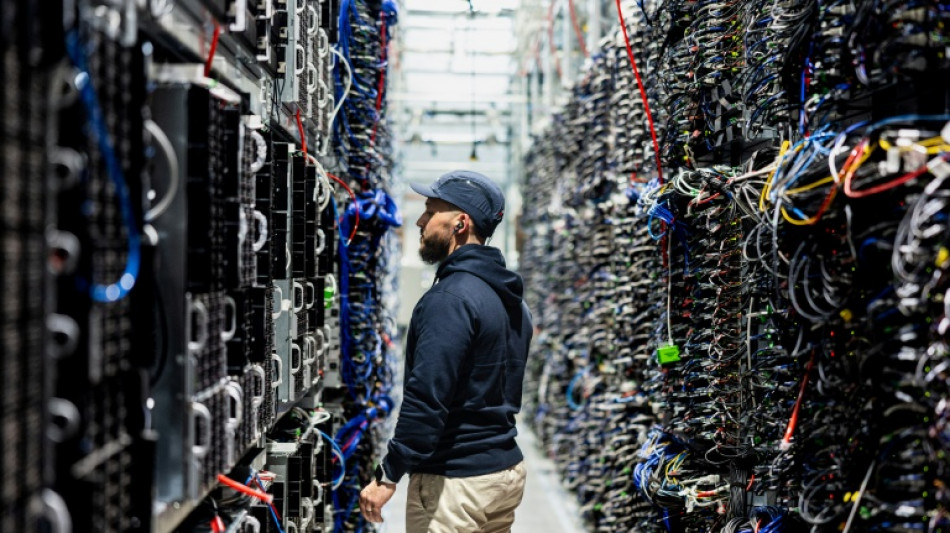
Until President Donald Trump's return a year ago, when the EU talked about cutting economic dependency on foreign powers -- it was understood to mean China. But now Brussels has US tech in its sights.
As Trump ramps up his threats -- from strong-arming Europe on trade to pushing to seize Greenland -- concern has grown that the unpredictable leader could, should he so wish, plunge the bloc into digital darkness.
Since Trump's Greenland climbdown, top officials have stepped up warnings that the European Union is dangerously exposed to geopolitical shocks and must work towards strategic independence -- in defence, energy and tech alike.
The 27-country bloc relies on foreign countries for over 80 percent of digital products, services, infrastructure and intellectual property, according to a 2023 EU report.
Europe has already begun chipping away at its reliance on US tech.
The latest step came last week when France told state employees they would soon be required to use a domestic alternative to tools like Zoom or Microsoft Teams.
Brussels' wake up call came last year when Washington sanctioned judges at the International Criminal Court, cutting them off from US tech such as Amazon or Google.
The move laid bare the US stranglehold over many tools that underpin European lives.
"During the last year everybody has really realised how important it is that we are not dependent on one country or one company when it comes to some very critical technologies," EU tech tsar Henna Virkkunen said.
"Dependencies... can be weaponised against us," she warned.
- Technology 'no longer neutral' -
Virkkunen will in March unveil a major "tech sovereignty" package covering cloud, artificial intelligence and chips -- areas where the EU hopes to build greater autonomy.
"Digital technologies are no longer neutral tools," European Digital SME Alliance's secretary general, Sebastiano Toffaletti, told AFP.
"When core infrastructures like cloud, AI or platforms are controlled from outside Europe, so are the rules, the data and ultimately the leverage."
Among EU member states, France and Germany have been leading the charge.
The northern German state of Schleswig-Holstein became a poster child for digital sovereignty last year by ditching Microsoft in favour of open-source software.
Digitalisation minister Dirk Schroedter said the move was economically-driven at first, before "political tensions" shifted the focus.
"Dominance of a few tech corporations in public infrastructure limits... our flexibility, threatens our security and inflates our software costs," Schroedter told AFP.
Over six months, the state migrated more than 40,000 mailboxes from Microsoft Exchange and Outlook to open-source solutions Open-Xchange and Thunderbird.
There were challenging areas during the transition -- for example in document‑sharing with other federal states and the national government -- but Schroedter said the state showed "digital independence is possible".
Meanwhile, the European Parliament is reviewing its reliance on Microsoft among other tools after a cross-party group of lawmakers urged it to adopt European alternatives.
- 'Leverage against US' -
Moves are also underway at EU level.
French firm Mistral and German giant SAP agreed to work on a European AI-driven cloud solution at a Franco-German digital sovereignty summit in November.
And France, Germany, Italy and the Netherlands teamed up last year in a push to create common European digital infrastructure, steered by the European Commission.
Much of EU policymaking is now being viewed through the prism of sovereignty.
The bloc has long been working on a digital euro, which dozens of economists -- including Thomas Piketty -- called an "essential safeguard of European sovereignty" in an open letter last month.
That follows the 2024 launch of Wero, a European payments alternative to Mastercard, Visa and PayPal backed by several major banks.
But Zach Meyers of CERRE, a Brussels-based think tank, warns the EU must be clear about what "tech sovereignty" is meant to achieve.
If the goal is to withstand political pressure, the EU may be better off focusing on gaining "more leverage against" the United States, Meyers argued.
To that end, he said the most effective strategy is not to cut back on American tech use in Europe but "rather to double down on parts of the tech value chain where the US is dependent on Europe" -- from chip-building machinery to corporate software or telecoms equipment.
U.Ndiaye--CPN