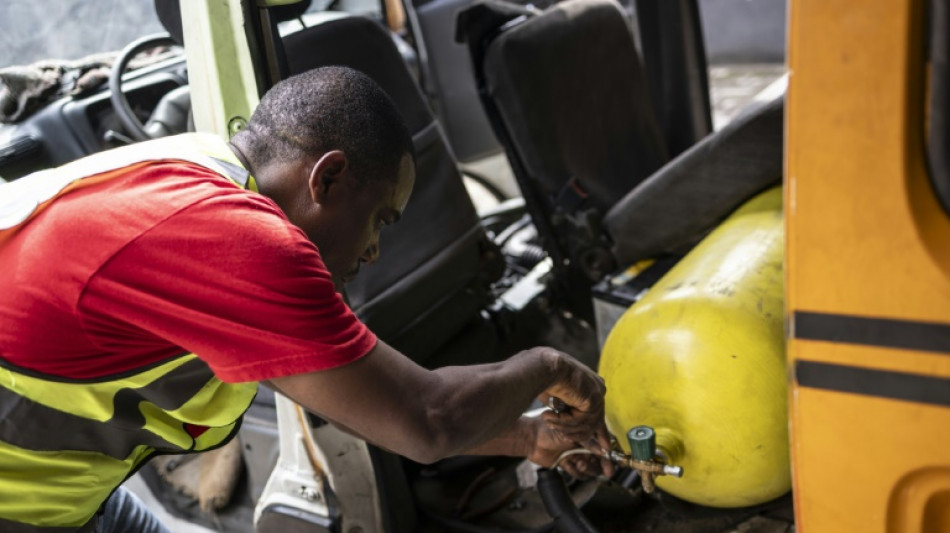
Shortages hit Nigeria's drive towards natural gas-fuelled cars / Photo: OLYMPIA DE MAISMONT - AFP/File

 Jay-Z rape accuser says she made 'false accusations'

 Trump's photo of Xi greeting carries signs of AI
 First US trial against TikTok to open Monday

 French literary prize removes novel from longlist after AI claims
 Trump accuser E. Jean Carroll finally has her damages
 Heavy fighting, internet disruption as Ethiopia conflict rages

 Asian markets mixed after oil gains

 UN approves resolution on dealing with rising sea levels

 Global stocks mostly fall as oil prices and bond yields rise

 Starbucks to close 250 more cafes in North America
 Stocks fall as oil prices rise and bonds back under pressure
 Top ECB official to resign to take up IMF role

 Eviction of pensioner puts Spain housing crisis in spotlight
 Average EU diesel price hits record 2.23 euros a litre: AFP analysis

 Whitetip Investments Marks 10 Years of Regulation, Transparency & Responsible Trading

 Stocks fall, oil prices rise as global bonds under pressure
 Hungary detects invasive spotted lanternfly for first time in EU
 Forex Expo Dubai 2026 Breaks Guinness World Record Again With 23,816 Attendees

 Asian markets fall on US-China jitters as leaders meet
 As Moscow steps up attacks, Kyiv residents brace for harsh winter
 Markets mixed as China's Xi arrives for US talks

 Archaeological 'breakthrough' could confirm origins of Paris

 Australian PM says OpenAI hacked government health website

 Rio breaks record for rainiest September amid powerful El Nino
 Mandela Digital Extends Early Access Programme to 11 February 2027 Following Strong Response

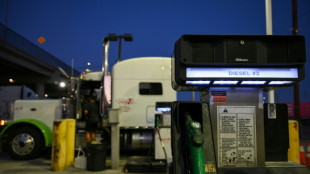
Motorists in Nigerian cities are spending hours, or even days, queuing for natural gas to power their cars after the government promoted its use as an alternative fuel.
Some are so frustrated they say they regret the decision to convert their vehicle engines to use compressed natural gas (CNG) instead of petrol or diesel.
Murtala Ishola, who is in his early 60s, said he was used to queuing for hours to fill up his gas tank but recently it had become a days-long wait.
"I have been here for the 5th day," he told AFP outside a filling station in the capital Abuja.
Nigeria is promoting CNG as a solution to alleviate perennial fuel shortages and the five-fold price hike that followed the abolition of petroleum fuel subsidies by President Bola Tinubu in May 2023.
The oil-rich country has long been one of Africa's top exporters of crude but struggles to provide refined fuel to domestic users.
Four months after scrapping the fuel subsidies, Tinubu established the Presidential Compressed Natural Gas Initiative (PCNGI) to drive CNG adoption and ease Nigeria into a cleaner energy era.
Experts say mass adoption of CNG will reduce greenhouse gas emissions, improve air quality and cut maintenance costs.
By the end of last year, approximately 100,000 cars had been converted, with more than $200 million already invested in the scheme, according to the government.
With about 12 million vehicles on Nigerian roads, the government aims to convert one million commercial vehicles by 2026.
But many of those whose cars now use the gas in Abuja say that the long wait in queues erodes the gains of the conversion.
- 'Plan loses credibility'- -
A fuel attendant told AFP on condition of anonymity that the CNG shortage was primarily due to logistics problems -- inadequate delivery trucks and bad roads from the source.
Gas used in Abuja comes by road from the south-central state of Kogi, around 235 kilometres (146 miles) from the capital.
The gas, mostly made of methane, is extracted from underground in a process similar to crude oil production and then compressed for storage and transportation.
People also complain that fuelling stations are too few and far between.
PCNGI officials did not respond to AFP requests for comment.
However, the state-run Nigerian National Petroleum Company (NNPC) promised in February to improve supplies.
Nigeria's CNG market operates under a state-backed hybrid model.
The NNPC controls upstream gas supply, while licensed private firms handle distribution under the oversight of the Nigerian Midstream and Downstream Petroleum Regulatory Authority, another state oil firm.
The gas is eventually retailed out to motorists through independent stations operated by marketers.
However, with limited CNG stations in the capital, Ishola said he may be forced "to revert to petrol", which is nearly four times more expensive than gas.
"I have been here with others since Monday morning," a visibly angry Ibrahim Halilu told AFP on a Friday.
A commuter vehicle driver Akande George said the trouble he endures to refuel his car is forcing him to rethink his options.
"I may leave this commercial driving life for... farming," he said. "I am getting older and can't keep pushing these daily struggles."
Experts warn that shortages risk stalling or derailing the national plan to transition from petrol in Africa's leading crude producer.
"One of the key success factors in any fuel-switching programme is consumer confidence in fuel availability," said Ayodele Oni, a legal expert in energy and commercial law.
"If people cannot consistently access CNG, the plan loses credibility, both among the public and potential private sector investors.
"The shortages could weaken momentum, create implementation delays and reduce the expected economic and environmental benefits of the programme," he added.
Y.Tengku--CPN