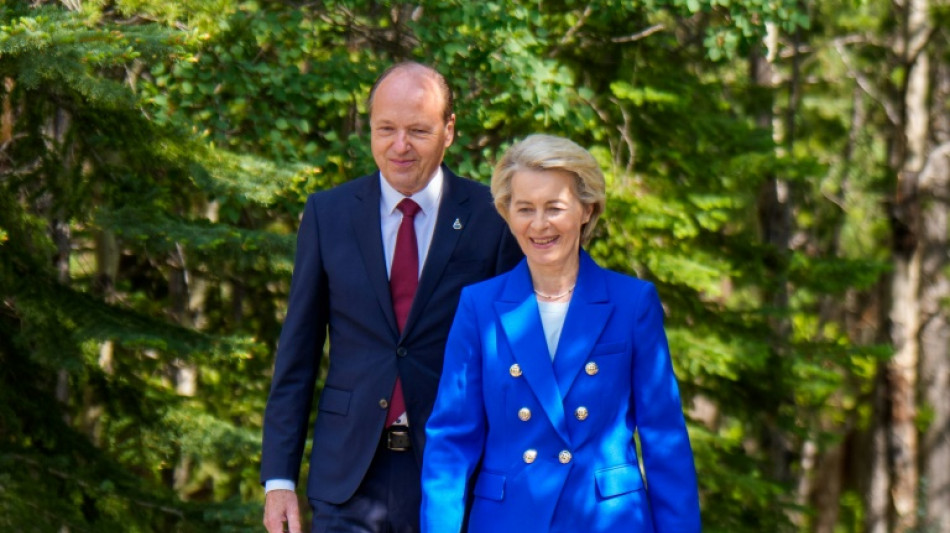
EU chief says pressure off for lower Russia oil price cap / Photo: Michael Kappeler - POOL/AFP

 Jay-Z rape accuser says she made 'false accusations'

 Trump's photo of Xi greeting carries signs of AI

 First US trial against TikTok to open Monday

 French literary prize removes novel from longlist after AI claims
 Trump accuser E. Jean Carroll finally has her damages
 Heavy fighting, internet disruption as Ethiopia conflict rages

 Asian markets mixed after oil gains

 UN approves resolution on dealing with rising sea levels

 Global stocks mostly fall as oil prices and bond yields rise
 Starbucks to close 250 more cafes in North America
 Stocks fall as oil prices rise and bonds back under pressure
 Top ECB official to resign to take up IMF role

 Eviction of pensioner puts Spain housing crisis in spotlight
 Average EU diesel price hits record 2.23 euros a litre: AFP analysis

 Whitetip Investments Marks 10 Years of Regulation, Transparency & Responsible Trading

 Stocks fall, oil prices rise as global bonds under pressure
 Hungary detects invasive spotted lanternfly for first time in EU

 Forex Expo Dubai 2026 Breaks Guinness World Record Again With 23,816 Attendees

 Asian markets fall on US-China jitters as leaders meet

 As Moscow steps up attacks, Kyiv residents brace for harsh winter

 Markets mixed as China's Xi arrives for US talks
 Archaeological 'breakthrough' could confirm origins of Paris

 Australian PM says OpenAI hacked government health website

 Rio breaks record for rainiest September amid powerful El Nino
 Mandela Digital Extends Early Access Programme to 11 February 2027 Following Strong Response

EU Commission Chief Ursula von der Leyen on Tuesday said surging energy prices have reduced the urgency to slash the price cap on Russia's global oil exports.
The European Commission, the EU's executive arm, had suggested cutting the current oil price cap from $60 to $45 as Moscow drags its feet on a ceasefire in Ukraine.
The measure would have been a major component of a fresh wave of sanctions against Russia planned by the EU, with hopes that the United States would also commit.
The EU had said it would make its case at the G7 summit being held at a wooded resort in Alberta, Canada, but the gathering was overshadowed by the conflict between Israel and Iran that sent US President Donald Trump home early to handle the crisis.
The current $60 cap "had little effect, but in the last days, we have seen that the oil price has risen [and] the cap in place does serve its function," von der Leyen told reporters on the sidelines of the G7 meeting.
"So for the moment, there's little pressure on lowering the oil price cap," she added.
The existing cap was a G7 initiative aimed at limiting the amount of money Russia makes by exporting oil to countries across the world.
It was designed to limit the price Moscow can get for oil by banning shipping firms and insurance companies from dealing with Russia to export above that amount.
Under the leadership of the previous Biden administration, it was set at $60 by the G7 in late 2022, months after the invasion of Ukraine.
To have the most impact, the EU and other G7 partners need to get the United States to follow suit and agree to the price cut.
But Trump so far has frustrated Western allies by refusing to impose new sanctions on Russia despite President Vladimir Putin's failure to agree to a Ukraine ceasefire.
Von der Leyen said the G7 leaders, with Trump still present, on Monday discussed coordinating on sanctions against Russia "to put more pressure" on Russian President Vladimir Putin.
The EU's latest proposal for an 18th round of sanctions since Russia's invasion also includes measures to stop the defunct Baltic Sea gas pipelines Nord Stream 1 and 2 from being brought back online.
"The fact that we have just put another hardened, biting package of sanctions on Russia is proof" of the EU's continued support for Ukraine, von der Leyen said.
D.Philippon--CPN