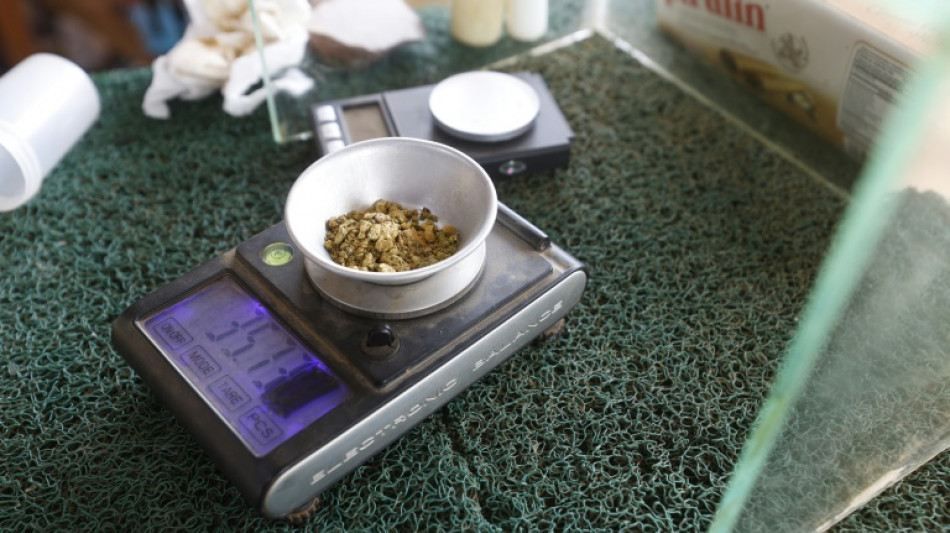
Venezuela's El Dorado, where gold is currency of the poor / Photo: Pedro MATTEY - AFP

 Jay-Z rape accuser says she made 'false accusations'

 Trump's photo of Xi greeting carries signs of AI

 First US trial against TikTok to open Monday

 French literary prize removes novel from longlist after AI claims
 Trump accuser E. Jean Carroll finally has her damages
 Heavy fighting, internet disruption as Ethiopia conflict rages
 Asian markets mixed after oil gains

 UN approves resolution on dealing with rising sea levels

 Global stocks mostly fall as oil prices and bond yields rise

 Starbucks to close 250 more cafes in North America

 Stocks fall as oil prices rise and bonds back under pressure
 Top ECB official to resign to take up IMF role

 Eviction of pensioner puts Spain housing crisis in spotlight

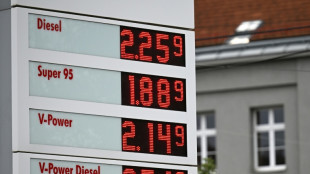 Average EU diesel price hits record 2.23 euros a litre: AFP analysis

 Whitetip Investments Marks 10 Years of Regulation, Transparency & Responsible Trading

 Stocks fall, oil prices rise as global bonds under pressure
 Hungary detects invasive spotted lanternfly for first time in EU

 Forex Expo Dubai 2026 Breaks Guinness World Record Again With 23,816 Attendees

 Asian markets fall on US-China jitters as leaders meet
 As Moscow steps up attacks, Kyiv residents brace for harsh winter
 Markets mixed as China's Xi arrives for US talks

 Archaeological 'breakthrough' could confirm origins of Paris

 Australian PM says OpenAI hacked government health website

 Rio breaks record for rainiest September amid powerful El Nino

 Mandela Digital Extends Early Access Programme to 11 February 2027 Following Strong Response

In the Venezuelan mining community of El Dorado, the majority of residents carry around gold instead of cards or cash to pay for groceries.
They live in a town named after the mythical City of Gold and untold riches -- but most of them are poor.
Merchants use scales to carefully weigh the flecks people guard in plastic pill bottles or wrapped in pieces of paper, and market goods are priced in weight of gold.
For 0.02 grams, you can get a small packet of maize meal, for one gram a pre-packaged bag of groceries that includes flour, pasta, oil, margarine, ketchup and milk powder.
A gram of gold can purchase between $85 and $100 worth of goods, but takes hours of back-breaking work to amass. If you're in luck.
"Gold is a blessing given to us so we can buy what we want, but you have to work hard," 48-year-old Jose Tobias Tranquini told AFP in the town of 5,000 residents mostly employed in mining -- legal and illegal.
"One day at the mine you might find nothing; there are lucky people who have gotten up to a kilo (2.2 pounds), but... I haven't had that kind of blessing. I've only gotten a little bit," said Tranquini.
El Dorado's residents have limited access to banking services.
They could sell their gold at one of the dozens of dealers that dot the streets, but most prefer not to. Gold -- unlike the battered Venezuelan currency that has lost 50 percent of its value this year -- does not depreciate.
- No gold, no life -
El Dorado arose as a military fort as Britain and Venezuela squared off in 1895 over the mineral- and oil-rich region of Essequibo now at the center of an increasingly heated territorial dispute with Guyana, which has administered it for decades.
The oldest inhabitants of the town remember that when it rained, particles of gold emerged from the town's clay streets.
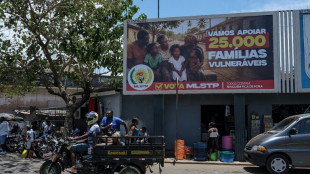
Nowadays, the streets are tarred, though potholed, and the population rely for transport mainly on motorcycles that zoom noisily to and fro.
Hilda Carrero, a 73-year-old merchant, arrived in Eldorado 50 years go in the midst of a gold rush. The town, she recalls, was just "jungle and snakes... It was ugly."
Carrero sells cans of water for 0.03 grams of gold apiece -- about $1.50 -- but business, like mining hauls, is erratic. Some days she sells nothing.
"If I don't have gold I have no life," Carrero sighed.
It can be hard to make a living in a place where abundant reserves of gold, diamonds, iron, bauxite, quartz and coltan have attracted organized crime and guerrilla groups that mine illegally, and sow violence.
Extortion of small business owners is rife, and 217 people were killed in the four years to 2020 in clashes between rival criminal gangs.
Environmentalists also denounce an "ecocide" in the heavily-exploited area, and mine collapses have claimed dozens of lives.
- Hazardous work -
Around El Dorado, there are numerous camps processing the gold-laden sand that miners dig up daily.
In tall sheds with zinc roofs, mountains of sand are milled in machines that work with modified car engines, then washed in water and toxic mercury to separate the gold from other metals.
Tiny particles almost imperceptible to the naked eye are trapped in a green mat which is shaken out to collect them.
The granules are finally heated with a blowtorch to remove impurities before the gold can be traded or sold.
It is hard work, and hazardous.
"The danger of this is the smoke" produced by the mercury burning off, a mill owner explained while smoking a cigarette.
A family of five working at a mine visited by AFP spent four hours that day processing a ton of sand.
For their efforts: one gram of gold.
"We'll use it to buy food and whatever is needed at the mill," a worker who asked not to be named told AFP as he cupped a tiny grain of gold in coarse hands.
It was a good day.
A.Levy--CPN