Ireland prepares to excavate 'mass grave' at mother and baby home / Photo: Paul Faith - AFP

 Jay-Z rape accuser says she made 'false accusations'
 Trump's photo of Xi greeting carries signs of AI

 First US trial against TikTok to open Monday
 French literary prize removes novel from longlist after AI claims

 Trump accuser E. Jean Carroll finally has her damages

 Heavy fighting, internet disruption as Ethiopia conflict rages

 Asian markets mixed after oil gains

 UN approves resolution on dealing with rising sea levels
 Global stocks mostly fall as oil prices and bond yields rise
 Starbucks to close 250 more cafes in North America
 Stocks fall as oil prices rise and bonds back under pressure
 Top ECB official to resign to take up IMF role

 Eviction of pensioner puts Spain housing crisis in spotlight

 Average EU diesel price hits record 2.23 euros a litre: AFP analysis

 Whitetip Investments Marks 10 Years of Regulation, Transparency & Responsible Trading

 Stocks fall, oil prices rise as global bonds under pressure
 Hungary detects invasive spotted lanternfly for first time in EU

 Forex Expo Dubai 2026 Breaks Guinness World Record Again With 23,816 Attendees

 Asian markets fall on US-China jitters as leaders meet
 As Moscow steps up attacks, Kyiv residents brace for harsh winter
 Markets mixed as China's Xi arrives for US talks
 Archaeological 'breakthrough' could confirm origins of Paris

 Australian PM says OpenAI hacked government health website

 Rio breaks record for rainiest September amid powerful El Nino
 Mandela Digital Extends Early Access Programme to 11 February 2027 Following Strong Response

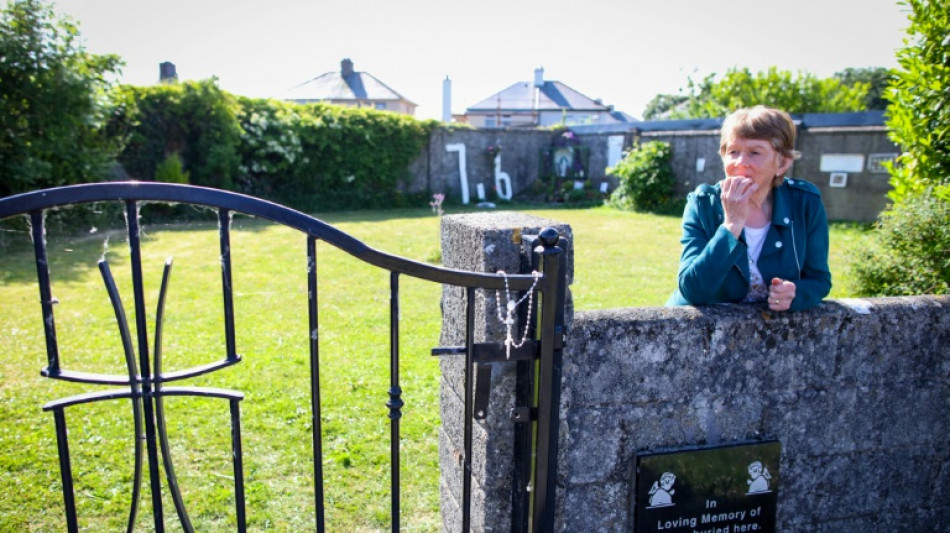
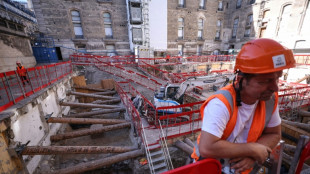
Over a decade since a historian discovered an unmarked mass burial site for children at a former mother and baby home in western Ireland, workers finally began on Monday to prepare for extensive excavations.
A crew sealed off the site in Tuam, 135 miles (220 kilometres) west of Dublin, in preparation for beginning to dig for any remains next month.
In 2014, local historian Catherine Corless produced evidence that 796 children, from newborns to a nine-year-old, died at Tuam's mother and baby home.
Her research pointed to the children's likely final resting place -- a disused septic tank discovered in 1975.
Significant quantities of baby remains were discovered in an apparently makeshift crypt at the site during test excavations between 2016 and 2017.
The home was run by Catholic nuns between 1925 and 1961, and the site was left largely untouched after the institution was knocked down in 1972.
It was Corless's discovery of the unmarked mass burial site that led to an Irish Commission of Investigation into the so-called mother and baby home.
n findings published in 2021, the commission said there had been "disquieting" levels of infant mortality at the institutions.
"It's been a fierce battle. When I started this nobody wanted to listen. At last we are righting the wrongs," Corless, 71, told AFP last month in Tuam.
"I was just begging 'Take the babies out of this sewage system and give them the decent Christian burial that they were denied'," she said.
- Babies taken from mothers -
Women who became pregnant out of wedlock were siloed in the so-called mother and baby homes by Irish society, the state and the Catholic church, which has historically held an iron grip on Irish social attitudes.
After giving birth at the homes, mothers were then separated from their newborn children, who were often given up for adoption.
The state-backed enquiries sparked by the discoveries in Tuam found that 56,000 unmarried women and 57,000 children passed through 18 such homes over the space of 76 years.
The commission's report concluded that 9,000 children had died in the homes across Ireland.
Often church and state worked in tandem to run the institutions, which still operated in Ireland as recently as 1998.
A team was finally appointed in 2023 to lead the Tuam site excavation.
It is tasked with recovering, memorialising and re-burying any remains recovered at the site.
Sample DNA will be taken from people who have reasonable grounds to believe the remains are those of a close relative.
P.Kolisnyk--CPN