UN slashes global aid plan over 'deepest funding cuts ever' / Photo: YASUYOSHI CHIBA - AFP

 Jay-Z rape accuser says she made 'false accusations'

 Trump's photo of Xi greeting carries signs of AI

 First US trial against TikTok to open Monday

 French literary prize removes novel from longlist after AI claims

 Trump accuser E. Jean Carroll finally has her damages

 Heavy fighting, internet disruption as Ethiopia conflict rages

 Asian markets mixed after oil gains

 UN approves resolution on dealing with rising sea levels
 Global stocks mostly fall as oil prices and bond yields rise
 Starbucks to close 250 more cafes in North America

 Stocks fall as oil prices rise and bonds back under pressure

 Top ECB official to resign to take up IMF role

 Eviction of pensioner puts Spain housing crisis in spotlight
 Average EU diesel price hits record 2.23 euros a litre: AFP analysis

 Whitetip Investments Marks 10 Years of Regulation, Transparency & Responsible Trading

 Stocks fall, oil prices rise as global bonds under pressure
 Hungary detects invasive spotted lanternfly for first time in EU

 Forex Expo Dubai 2026 Breaks Guinness World Record Again With 23,816 Attendees

 Asian markets fall on US-China jitters as leaders meet
 As Moscow steps up attacks, Kyiv residents brace for harsh winter
 Markets mixed as China's Xi arrives for US talks

 Archaeological 'breakthrough' could confirm origins of Paris

 Australian PM says OpenAI hacked government health website

 Rio breaks record for rainiest September amid powerful El Nino
 Mandela Digital Extends Early Access Programme to 11 February 2027 Following Strong Response

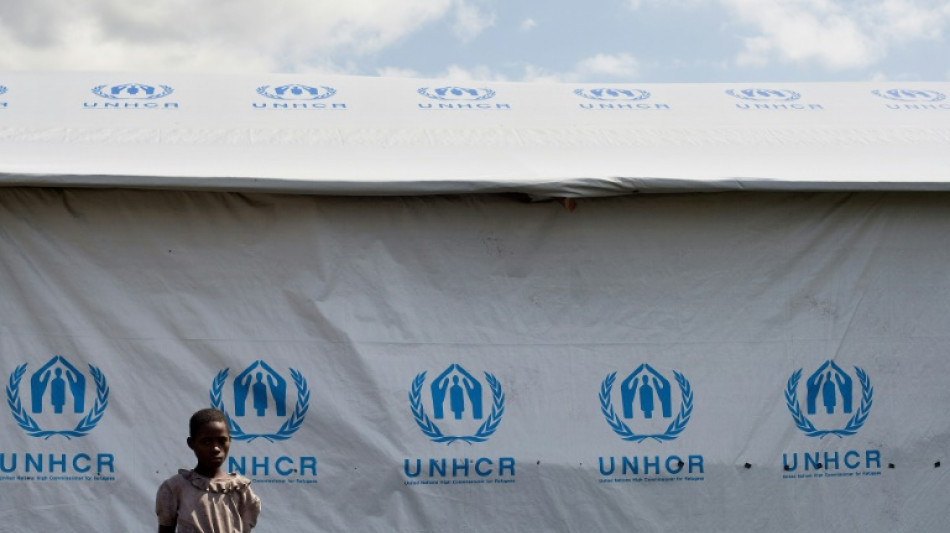
The United Nations said Monday it was drastically scaling back its global humanitarian aid plans because of the "deepest funding cuts ever" -- leaving tens of millions of people facing dire straits.
The UN's Office for the Coordination of Humanitarian Affairs (OCHA) said it was seeking $29 billion in funding for 2025 compared to the $44 billion originally requested in December, in a "hyper-prioritised" appeal.
Since US President Donald Trump returned to office in January, the United States -- the world's top donor -- has heavily slashed foreign aid, causing havoc in the humanitarian sector across the globe.
Drastic US funding cuts have had dramatic consequences for emergency aid, vaccination campaigns and the distribution of drugs to fight AIDS.
Other major donor countries have also cut back their contributions in the face of an uncertain economic outlook.
"Brutal funding cuts leave us with brutal choices," OCHA chief Tom Fletcher said in a statement.
"All we ask is one percent of what you chose to spend last year on war. But this isn't just an appeal for money -- it's a call for global responsibility, for human solidarity, for a commitment to end the suffering."
- 'Cruel', 'heartbreaking' -
In late April, while visiting a hospital in Kandahar in Afghanistan, Fletcher warned: "Cutting funding for those in greatest need is not something to boast about... The impact of aid cuts is that millions die."
With 2025 nearly halfway through, the UN has received only $5.6 billion out of the $44 billion originally sought for this year -- a mere 13 percent.
In total, the original plan covered more than 70 countries and aimed to assist nearly 190 million vulnerable people.
Even so, that plan acknowledged there were 115 million people the UN would not be able to reach.
"We have been forced into a triage of human survival," Fletcher said Monday.
The mathematics "is cruel, and the consequences are heartbreaking".
"Too many people will not get the support they need, but we will save as many lives as we can with the resources we are given," he said.
Aid will now be directed so that it can "reach the people and places facing the most urgent needs", with those in "extreme or catastrophic conditions" as the starting point, said Fletcher.
"This will ensure that limited resources are directed where they can do the most good -- as quickly as possible," the statement said.
- 'Red alert' -
Fletcher's call came as the UN's Food and Agriculture Organization (FAO) and World Food Programme (WFP) issued a joint early warning report identifying worsening hunger in 13 hotspots.
Five of those places are facing an immediate risk of starvation -- situations worsened by dwindling funds, the agencies said.
Sudan, the Palestinian territories, South Sudan, Haiti and Mali have communities "already facing famine, at risk of famine or confronted with catastrophic levels of acute food insecurity", said the report.
"The devastating crises are being exacerbated by growing access constraints and critical funding shortfalls," it said.
Yemen, the Democratic Republic of Congo, Myanmar and Nigeria are now considered of very high concern and requiring urgent attention to save lives and livelihoods, it added, with Burkina Faso, Chad, Somalia and Syria the other hotspots.
"This report is a red alert," said WFP chief Cindy McCain.
"Without funding and access, we cannot save lives. Urgent, sustained investment in food assistance and recovery support is crucial as the window to avert yet more devastating hunger is closing fast."
In late March, WFP said it was facing an "unprecedented crisis" due to a 40 percent cut in its funding for 2025, risking life-saving aid for 58 million people.
Ch.Lefebvre--CPN