
-
 Jay-Z rape accuser says she made 'false accusations'
-
Spotting AI writing: how reliable are the detectors?

-
 Trump's photo of Xi greeting carries signs of AI
-
US court refuses to overturn Pentagon ban on Anthropic

-
 First US trial against TikTok to open Monday
-
South Lebanon children return to school destroyed by Israel strike
-
 French literary prize removes novel from longlist after AI claims
-
European stock markets climb as oil prices drop

-
 Trump accuser E. Jean Carroll finally has her damages
-
Asian markets mixed after recent oil surge

-
 Heavy fighting, internet disruption as Ethiopia conflict rages
-
Cash for nature protection: hotelier's offer to Principe islanders

-
 Asian markets mixed after oil gains
-
India rape cases turn focus back onto women's safety

-
 UN approves resolution on dealing with rising sea levels
-
Rich nations should foot climate bill, says Nepal minister

-
 Global stocks mostly fall as oil prices and bond yields rise
-
Italy bans burqas in schools, caps numbers of foreign students per class
-
 Starbucks to close 250 more cafes in North America
-
Napoli hoping to build new stadium, says owner
-
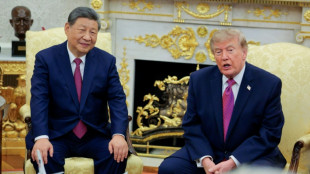 Stocks fall as oil prices rise and bonds back under pressure
-
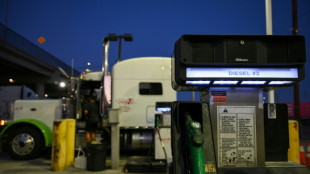
What happens if the US bans diesel exports
-
 Top ECB official to resign to take up IMF role
-
Oscar-winner Cotillard fears being moved by AI actor

-
 Eviction of pensioner puts Spain housing crisis in spotlight
-
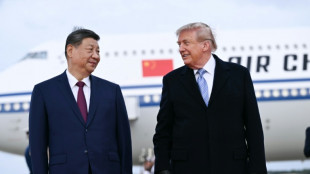
Stocks fall, oil prices rise as global bonds back under pressure
-
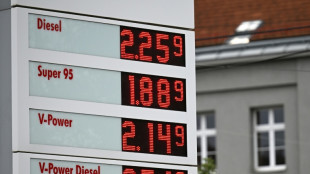 Average EU diesel price hits record 2.23 euros a litre: AFP analysis
-
Streamex Converts Interest Into Capital as GLDY Investment Strategy Secures $1M+ Institutional Allocation

-
 Whitetip Investments Marks 10 Years of Regulation, Transparency & Responsible Trading
-
STARTRADER Named Best Fintech Forex Broker at Forex Expo Dubai 2026

-
 Stocks fall, oil prices rise as global bonds under pressure
-
German think tanks urge Merz to stick with reforms after election defeats
-
 Hungary detects invasive spotted lanternfly for first time in EU
-
France's top-selling newspaper to slash jobs

-
 Forex Expo Dubai 2026 Breaks Guinness World Record Again With 23,816 Attendees
-
BaazEX Enters the Asian Trading Market With a New Approach to Online Forex Trading.

-
 Asian markets fall on US-China jitters as leaders meet
-
Sao Tome voters want to stop exodus of 'neglected' youth

-
 As Moscow steps up attacks, Kyiv residents brace for harsh winter
-
Mexican cartels target Australia with their African meth
-
 Markets mixed as China's Xi arrives for US talks
-
Rapper-turned-PM faces first big test after Nepal disaster
-
 Archaeological 'breakthrough' could confirm origins of Paris
-
Meta launches camera-free AI glasses amid privacy pushback

-
 Australian PM says OpenAI hacked government health website
-
Anthropic touts AI-led biology discovery

-
 Rio breaks record for rainiest September amid powerful El Nino
-
Stocks fall on soaring bond yields, higher oil prices
-
 Mandela Digital Extends Early Access Programme to 11 February 2027 Following Strong Response
-
ArcPoint Expands Globally with Institutional Intelligence Platform for Modern Investors

Iran fires back at Israel after onslaught targets nuclear facilities
Iran fired a barrage of ballistic missiles at Israel in a counter-strike Friday, after an unprecedented onslaught hammered the Islamic republic's top military brass and targeted its nuclear facilities and bases.
Air raids sirens and explosions rang out across Israel after Prime Minister Benjamin Netanyahu took to the airways to issue a word of caution, saying he expected "several waves of Iranian attacks" in response.
Smoke could later be seen billowing above the skyscrapers in downtown Tel Aviv, according to an AFP journalist, as Iran's Revolutionary Guard said it attacked dozens of targets in Israel.
Several people were trapped in a high-rise building in central Israel, the firefighting service said.
The salvo came hours after Israel said its wide-spread air raids had killed several top Iranian generals, including most of the senior leadership of the Revolutionary Guards' air force, following several rounds of strikes that hit about 200 targets including nuclear facilities.
As the two sides traded blows, Iran's supreme leader Ayatollah Ali Khamenei vowed to bring Israel "to ruin" during a televised address.
"The armed forces of the Islamic republic will inflict heavy blows upon this malevolent enemy," Khamenei told the nation.
In the onslaught's wake, Trump urged Iran on Friday to "make a deal" on its nuclear programme, warning of "even more brutal" attacks to come.
The United States underlined that it was not involved in the Israeli action and warned Iran not to attack its personnel or interests, but Tehran said Washington would be "responsible for consequences".
Netanyahu said Israel -- the Middle East's only, if undeclared, nuclear poewr -- struck at the "heart of Iran's nuclear enrichment programme", taking aim at scientists and the main uranium enrichment facility in Natanz.
The strikes would "continue as many days as it takes", the Israeli premier said, while the military said intelligence showed Iran was approaching the "point of no return" on its nuclear programme.
The strikes killed Iran's highest-ranking military officer, armed forces chief of staff Mohammad Bagheri, and the head of the Revolutionary Guards, Hossein Salami, Iranian media reported.
Foreign Minister Abbas Araghchi rejected "calls for Iran to show restraint in the face of Israeli aggression", according to a statement.
- Security Council meeting -
Khamenei swiftly appointed new commanders to replace those killed, while state media said a senior adviser to the supreme leader had himself been wounded.
"The senior chain of command of the air force of the Islamic Revolutionary Guards Corps had assembled in an underground command centre to prepare for an attack on the State of Israel," the Israeli military said, adding that its attacks had killed most of them.
Iran confirmed the Guards aerospace commander had been killed, along with "a group of brave and dedicated fighters".
AFP images showed a gaping hole in the side of a Tehran residential building that appeared to have sustained a targeted strike.
State media reported continued attacks and interceptions well into the evening Friday, including on the northwest where it said 18 people were killed.
Tasnim news agency said six nuclear scientists were among the dead.
The UN Security Council said it would hold an emergency meeting at 1900 GMT.
The meeting was requested by Iran, and supported by Russia and China, a diplomatic source told AFP.
- 'Scathing response' -
In Tehran, where the streets were largely deserted, 62-year-old retiree Ahmad Moadi said: "How much longer are we going to live in fear?"
"As an Iranian, I believe there must be an overwhelming response, a scathing response."
Air traffic was halted at Tehran's main gateway, Imam Khomeini International Airport, while Iraq, Jordan and Syria closed their airspace.
Israel declared a state of emergency as anxieties grew amid a wave of uncertainty gripping the region.
"I'm worried for my children, and also about my livelihood, because this affects the market. You can't work, you can't do anything," Tel Aviv resident Vered Saar told AFP.
Oil prices surged while stocks sank on the Israeli strikes, which came after Trump's warning of a "massive conflict" in the region.
Trump had also said the United States was drawing down staff in the Middle East, after Iran had threatened to target US military bases in the region if conflict broke out.
Prior to the strikes, Trump said he believed a deal on Iran's nuclear programme was "fairly close", cautioning however that an Israeli attack on its arch foe could wreck the chances of an agreement.
- Radiation 'unchanged' in Natanz area -
Confirming Natanz had been among Israel's targets, the International Atomic Energy Agency (IAEA) said radiation levels outside the site "remained unchanged".
"Most of the damage is on the surface level," said the Atomic Energy Organisation of Iran's spokesman Behrouz Kamalvandi.
Fawaz Gerges, a professor of international relations at the London School of Economics, said: "I think Israel has declared all-out war against Iran."
The United States and other Western governments have repeatedly accused Iran of seeking a nuclear weapon, an ambition it has consistently denied.
Israel again called for global action after the IAEA accused Iran on Thursday of non-compliance with its obligations.
The agency later said it would hold an extraordinary meeting of its board of governors in the coming days.
Iran currently enriches uranium to 60 percent, far above the 3.67-percent limit set by a largely moribund 2015 agreement with major powers, but still short of the 90 percent threshold needed for a nuclear warhead.
A.Levy--CPN