Italy forges on with world's largest suspension bridge / Photo: Andreas SOLARO - AFP/File

 Iran proposes Hormuz plan, Trump reportedly refuses
 El Nino rewrites the menu in the world's top restaurants

 Jay-Z rape accuser says she made 'false accusations'
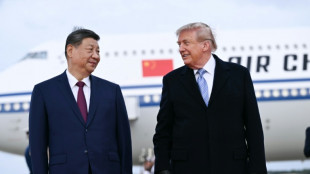
 Trump's photo of Xi greeting carries signs of AI

 First US trial against TikTok to open Monday

 French literary prize removes novel from longlist after AI claims
 Trump accuser E. Jean Carroll finally has her damages
 Heavy fighting, internet disruption as Ethiopia conflict rages
 Asian markets mixed after oil gains

 UN approves resolution on dealing with rising sea levels

 Global stocks mostly fall as oil prices and bond yields rise

 Starbucks to close 250 more cafes in North America
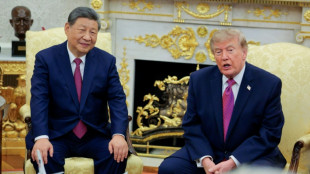 Stocks fall as oil prices rise and bonds back under pressure
 Top ECB official to resign to take up IMF role

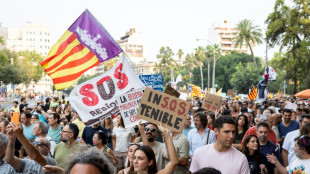 Eviction of pensioner puts Spain housing crisis in spotlight
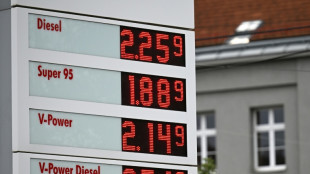 Average EU diesel price hits record 2.23 euros a litre: AFP analysis

 Whitetip Investments Marks 10 Years of Regulation, Transparency & Responsible Trading

 Stocks fall, oil prices rise as global bonds under pressure
 Hungary detects invasive spotted lanternfly for first time in EU
 Forex Expo Dubai 2026 Breaks Guinness World Record Again With 23,816 Attendees

 Asian markets fall on US-China jitters as leaders meet
 As Moscow steps up attacks, Kyiv residents brace for harsh winter
 Markets mixed as China's Xi arrives for US talks

 Archaeological 'breakthrough' could confirm origins of Paris

 Australian PM says OpenAI hacked government health website

Italy hopes to begin constructing the world's largest suspension bridge connecting Sicily to the Italian mainland this summer amid widespread scepticism that it will ever be built.
The 13.5-billion-euro ($15.3-billion) project would carry trains and six lanes of traffic, allowing cars to cross the Strait of Messina in 15 minutes.
Giorgia Meloni's hard-right government hopes to boost the economy of the impoverished region, although critics say there are better ways to do this -- and many believe that after decades of false starts, the bridge will never actually happen.
The choppy waters between the eastern tip of Sicily and the western edge of the region of Calabria are legendary as the place where monsters Scylla and Charybdis terrified sailors in Homer's epic poem "The Odyssey".
These days the challenges are more prosaic, from winds of more than 100 kilometres an hour (62 mph) to the real risk of earthquakes in a region that lies across two tectonic plates.
The government says the bridge will be at the cutting edge of engineering, with the section suspended between its two pillars stretching 3.3 kilometres, the longest in the world.
But critics point to a long history of public works announced, financed and never completed in Italy, whether due to corruption or political instability, resulting in enormous losses for taxpayers.
"The public does not trust this political class and these projects that become endless construction sites," said Luigi Storniolo, a member of protest group No Ponte (No Bridge).
Infrastructure Minister and Deputy Prime Minister Matteo Salvini, one of the main champions of the project, insists it will be a game-changer for the local economy.
"The bridge will be a catalyst for development," he said on a recent visit to Reggio di Calabria, the city where the bridge will begin.
- 'A senseless project' -
The government hopes to boost trade in Sicily, which currently suffers from an "insularity cost" of around 6.5 billion euros a year, according to regional authorities.
Meloni's ministers are expected to give their final approval to the project -- which Rome will fund -- later this month, and Salvini insists construction will begin this summer.
But work had already been announced for the summer of 2024, before being postponed -- a common theme in the history of the bridge, the idea of which dates back to the unification of Italy at the end of the 19th century.
The first law for the project was passed in 1971. Since then, successive governments have either revived it or cancelled it.
In 2012, the idea appeared to be definitely abandoned amid the eurozone debt crisis, only for Meloni's government, which took office in 2022, to return to it once again.
Salvini has repeatedly stated that the bridge would create 120,000 jobs in Calabria and Sicily, which have the fourth and the 13th highest unemployment rates respectively in the EU for young people under 29.
However, the left-wing CGIL trade union estimates around 2,300 workers a year will be hired during the project, and critics say the jobs created will be offset by long-term losses from the closure of ferries.
- Mafia risk -
The project has sparked local protests, with critics warning of the impact on a protected marine zone and an important bird migratory route.
Storniolo told AFP it was a "senseless project" which used up valuable funds when "our regions already suffer from many problems... healthcare, schools, and infrastructure."
The Italian Court of Auditors has also criticised the extent of the debt-laden Italian state's investment in this one project in its assessment of the 2024 budget.
"They want to make an entire territory believe that its only hope is this bridge -- but then the bridge never arrives," protester Storniolo added.
There is also the question of mafia infiltration.
The attorney general of Messina recently warned of the risk that organised crime would benefit from the project, noting that "the power of the mafia is hidden... behind public contracts".
The government has proposed placing companies relating to the project under control of an anti-mafia structure reporting to the interior ministry.
But Italian President Sergio Mattarella blocked this, saying it should only be used for one-off events such as earthquakes or the Olympics.
Salvini argued that the bridge can help tackle the mafia, saying: "You do not fight the mafia... with conferences and protests, but by creating jobs and giving hope to young people."
T.Morelli--CPN