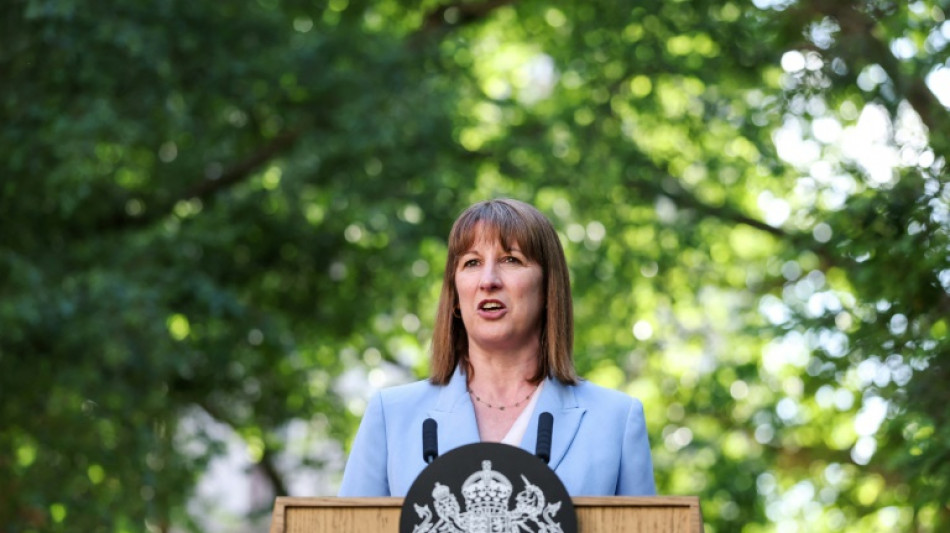
UK hands health service major spending boost / Photo: Hannah McKay - POOL/AFP

 Iran proposes Hormuz plan, Trump reportedly refuses
 El Nino rewrites the menu in the world's top restaurants

 Jay-Z rape accuser says she made 'false accusations'

 Trump's photo of Xi greeting carries signs of AI

 First US trial against TikTok to open Monday

 French literary prize removes novel from longlist after AI claims

 Trump accuser E. Jean Carroll finally has her damages

 Heavy fighting, internet disruption as Ethiopia conflict rages

 Asian markets mixed after oil gains

 UN approves resolution on dealing with rising sea levels

 Global stocks mostly fall as oil prices and bond yields rise

 Starbucks to close 250 more cafes in North America

 Stocks fall as oil prices rise and bonds back under pressure

 Top ECB official to resign to take up IMF role

 Eviction of pensioner puts Spain housing crisis in spotlight

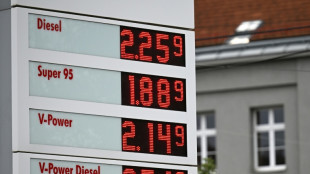 Average EU diesel price hits record 2.23 euros a litre: AFP analysis

 Whitetip Investments Marks 10 Years of Regulation, Transparency & Responsible Trading

 Stocks fall, oil prices rise as global bonds under pressure
 Hungary detects invasive spotted lanternfly for first time in EU

 Forex Expo Dubai 2026 Breaks Guinness World Record Again With 23,816 Attendees

 Asian markets fall on US-China jitters as leaders meet

 As Moscow steps up attacks, Kyiv residents brace for harsh winter

 Markets mixed as China's Xi arrives for US talks

 Archaeological 'breakthrough' could confirm origins of Paris

 Australian PM says OpenAI hacked government health website

Britain's Labour government on Wednesday said it was injecting the struggling National Health Service with a "record" £29-billion ($39-billion) annual boost, as it looks to cut spending on its asylum programme.
Finance minister Rachel Reeves set out her much-anticipated Spending Review to grow the UK economy, which faces pressure from US President Donald Trump's tariffs onslaught.
"We are renewing Britain," Reeves told parliament as she announced increased day-to-day spending, adjusted for inflation, to key departments from energy to education.
But Prime Minister Keir Starmer's government said it will "cut the asylum backlog" and end the use of hotels to house asylum seekers, to save £1 billion annually.
Amid the Russia's war in Ukraine, Reeves confirmed defence spending -- including on intelligence services -- will rise by 2.6 percent of economic output by 2027, helped by cuts to international aid.
"A new era in the threats we face demands a new era for defence and security," she told MPs.
These spending increases forced other key ministries to tighten their belts, with cuts to the foreign office and transport departments, adjusted for inflation.
Reeves had already announced major cuts to public budgets in recent months amid tight fiscal conditions.
Since Labour won power last July, ending years of rule by the Conservatives, it has scaled back disability welfare payments, hoping to save more than £5 billion by 2030.
- Balance the books -
Reeves, whose official title is chancellor of the exchequer, has amended her fiscal rules to allow the government more headroom for investment in the run-up to the review.
At the same time, she is looking to balance the books so that tax revenues match day-to-day spending, meaning the government borrows only to invest.
The minister has allowed the Treasury to borrow more, particularly for infrastructure projects across the vital housing and energy sectors.
This has handed her a windfall of £113 billion over five years.
Reeves needed to "balance the books by making cuts to unprotected department budgets", said Joe Nellis, economic adviser at consultancy MHA.
While Britain's economy grew by a better-than-expected 0.7 percent in the first quarter, analysts cautioned that solid expansion was unlikely to be sustained.
"If growth fails to emerge, then she (Reeves) will either have to cut further areas of public sector spending or raise taxes again in this year's Autumn Budget," said Nellis.
Reeves, in her inaugural budget, raised a business tax, which is starting to impact on unemployment and wages growth.
Ahead of the review, the government pledged billions of pounds for Britain's nuclear industry -- including the new Sizewell C power plant -- plus £86 billion for science and technology by 2030 and more than £15 billion for public transport in England.
- U-turns -
Reeves confirmed £39 billion for a programme to build affordable homes over the next 10 years, and plans to deliver 1.5 million homes.
The review also included an investment of up to £750 million on a new national supercomputer in Edinburgh.
Labour on Monday U-turned on a policy to scrap a winter heating benefit for millions of pensioners following widespread criticism, including from within its own party.
D.Philippon--CPN