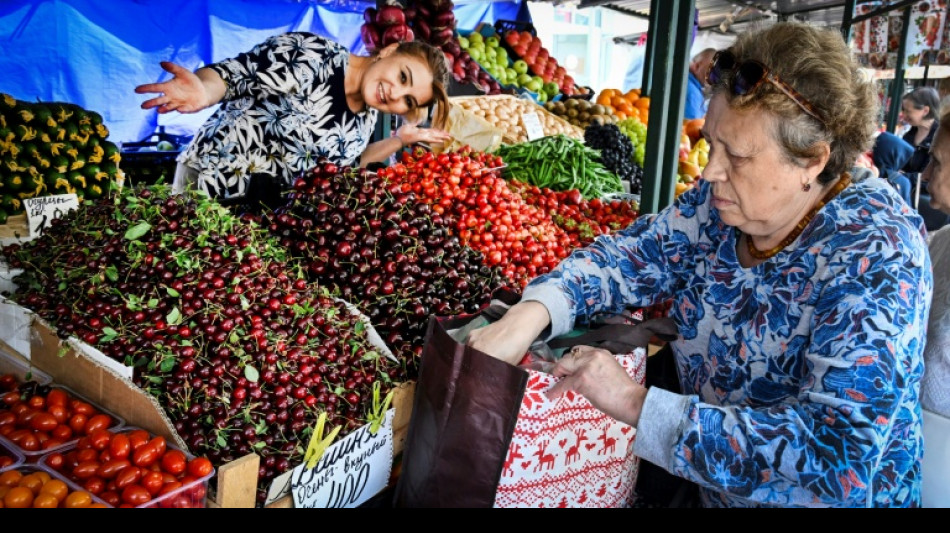
Russians struggle with 'crazy' prices / Photo: Alexander NEMENOV - AFP

 Iran proposes Hormuz plan, Trump reportedly refuses
 El Nino rewrites the menu in the world's top restaurants

 Jay-Z rape accuser says she made 'false accusations'

 Trump's photo of Xi greeting carries signs of AI

 First US trial against TikTok to open Monday
 French literary prize removes novel from longlist after AI claims
 Trump accuser E. Jean Carroll finally has her damages
 Heavy fighting, internet disruption as Ethiopia conflict rages

 Asian markets mixed after oil gains

 UN approves resolution on dealing with rising sea levels

 Global stocks mostly fall as oil prices and bond yields rise
 Starbucks to close 250 more cafes in North America
 Stocks fall as oil prices rise and bonds back under pressure
 Top ECB official to resign to take up IMF role

 Eviction of pensioner puts Spain housing crisis in spotlight
 Average EU diesel price hits record 2.23 euros a litre: AFP analysis

 Whitetip Investments Marks 10 Years of Regulation, Transparency & Responsible Trading

 Stocks fall, oil prices rise as global bonds under pressure
 Hungary detects invasive spotted lanternfly for first time in EU
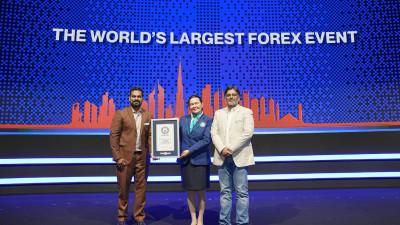 Forex Expo Dubai 2026 Breaks Guinness World Record Again With 23,816 Attendees

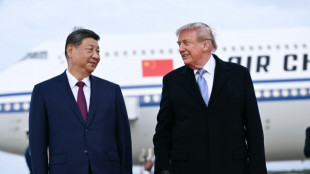 Asian markets fall on US-China jitters as leaders meet
 As Moscow steps up attacks, Kyiv residents brace for harsh winter
 Markets mixed as China's Xi arrives for US talks

 Archaeological 'breakthrough' could confirm origins of Paris

 Australian PM says OpenAI hacked government health website

Russian pensioner Roman Paltievich stared at the prices for apricots, tomatoes and watermelons stacked high on stalls at a Moscow market -- foods that he now struggles to fit into his budget.
"The prices are crazy," lamented the 84-year-old, who said he can no longer afford cherries -- or even potatoes, a staple that is now three times more expensive than a year ago.
Russia's three-year-long military offensive on Ukraine has caused inflation to surge at home, a thorn in the side for the Kremlin, which strives to shield Russians from the fallout of its campaign.
Western sanctions have disrupted supply chains and dozens of consumer brands have left the country, while inflation is now running above 10 percent.
Meanwhile, deep labour shortages caused by massive recruitment by the army and arms manufacturers, have seen both salaries and prices jump higher.
Russia's Central Bank last week cut interest rates from a two-decade high, saying inflation -- including food prices -- was starting to come under control.
But for many hard-pressed Russians, it does not feel that way.
Paltievich's wife, Tatyana, stood next to him clutching a small punnet of strawberries -- a precious treat for her grandchildren that set her back 400 rubles ($5).
"We survived 1991, so now we're not afraid of anything," she said defiantly, in reference to the collapse of the Soviet Union and the economic chaos that followed.
- Filling up the fridge -
Many of those navigating the aisles at Moscow's Preobrazhensky market were also worried about high prices.
"I came here to buy chicken for my granddaughter. It's more expensive in the supermarkets, so I don't buy there anymore," Nikolai Kucherov, a 62-year-old freelance artist told AFP.
"I had to forget about travelling. For the past three or four years, I've only been thinking about filling up the fridge," he said.
The Kremlin has hailed Russia's economic performance since it ordered its troops into Ukraine in February 2022.
A huge surge in spending on the military has helped Moscow defy predictions that sanctions would collapse the Russian economy.
Engineer Konstantin Zelenkov, 38, is one of those who have benefited from rising wages amid the government spending boom.
"Some things are becoming more expensive but salaries are rising too, so it's staying roughly the same," he told AFP.
Central bank chief Elvira Nabiullina has also pointed to rising wages and on Friday said inflation was starting to moderate, though it remains well above the institution's four percent target.
"The high interest rate has led to a significant slowdown in inflation," she told reporters.
Overall "the rate of increase in food prices has slowed", she added.
But even Russian President Vladimir Putin was forced recently to address fears over a potato shortage that sent prices for the staple soaring.
For many across Russia, price rises feel never-ending.
"Starting even with bread, everything is getting more and more expensive," Irina Yakovleva, 68, said.
"We just have to limit ourselves," she added.
D.Goldberg--CPN