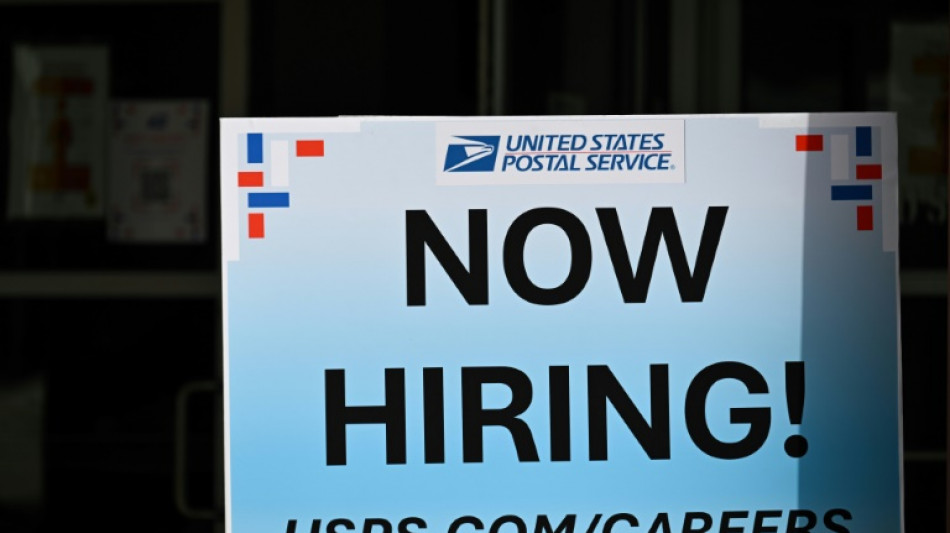
US job market resilient in May despite Trump tariffs / Photo: Patrick T. Fallon - AFP/File

 TikTok agrees to teen limits in US settlement following Meta
 Venezuela's oil cradle pins hopes on US energy deals

 Lula bans sports betting days ahead of Brazil's election

 Spotting AI writing: how reliable are the detectors?
 US court refuses to overturn Pentagon ban on Anthropic

 South Lebanon children return to school destroyed by Israel strike

 European stock markets climb as oil prices drop

 Asian markets mixed after recent oil surge

 Cash for nature protection: hotelier's offer to Principe islanders
 India rape cases turn focus back onto women's safety

 Rich nations should foot climate bill, says Nepal minister
 Italy bans burqas in schools, caps numbers of foreign students per class

 Napoli hoping to build new stadium, says owner
 What happens if the US bans diesel exports

 Oscar-winner Cotillard fears being moved by AI actor

 Stocks fall, oil prices rise as global bonds back under pressure
 Streamex Converts Interest Into Capital as GLDY Investment Strategy Secures $1M+ Institutional Allocation

 STARTRADER Named Best Fintech Forex Broker at Forex Expo Dubai 2026
 German think tanks urge Merz to stick with reforms after election defeats

 France's top-selling newspaper to slash jobs

 BaazEX Enters the Asian Trading Market With a New Approach to Online Forex Trading.
 Sao Tome voters want to stop exodus of 'neglected' youth

 Mexican cartels target Australia with their African meth
 Rapper-turned-PM faces first big test after Nepal disaster

 Meta launches camera-free AI glasses amid privacy pushback

The United States added more jobs than analysts expected in May even as hiring cooled, government data showed Friday, a resilient showing amid growing scrutiny over the effects of President Donald Trump's widespread tariffs.
Hiring in the world's largest economy came in at 139,000 last month, slowing from April's level which was revised downwards to 147,000, said the Labor Department.
The unemployment rate was unchanged at 4.2 percent, while pay gains exceeded expectations at 0.4 percent.
The headline figures indicate that the US employment market appears relatively healthy despite the jolts to financial markets, supply chains and consumer sentiment this year as Trump announced successive waves of tariffs.
While April was the month in which Trump rolled out his widest-ranging duties since returning to the presidency –- a 10 percent levy on most trading partners and higher rates for dozens of economies -– experts say their effects take time to filter through.
This is partly because of Trump's on-again, off-again approach to rolling out levies.
His higher blanket tariff rates, although unveiled in April, were swiftly halted until early July -- allowing some room for negotiations to take place.
Trump's tit-for-tat escalation with China brought both sides' levies on each other's products to triple digits too in April, a level effectively acting as a trade embargo.
But the countries reached a deal to temporarily lower levels in May.
For now, economists are keeping close tabs on signals that US employers might be pulling back on hiring.
On Wednesday, data from payroll firm ADP showed that private sector employment cooled to 37,000 in May, slowing from 60,000 in the prior month and marking its slowest rate since 2023.
This prompted Trump to issue a fiery response urging the independent Federal Reserve Chair Jerome Powell again to cut interest rates.
Initial jobless claims also picked up in the week ending May 31, with economists warning that this could be a sign of a weakening labor market in response to Trump's tariffs and uncertainty they have triggered.
Anecdotal data such as the Fed's beige book survey of economic conditions and recent surveys of businesses have also indicated the levies are causing many firms to pause investment and hiring.
All these mean that such effects could soon show up in government employment numbers.
"Certainly, employment growth is going to slow down over the next few months," said Dan North, senior economist at Allianz Trade North America.
"We just haven't seen the full effect of the tariffs, and we probably won't for a few more months, especially given that they're so choppy, on and off," North told AFP.
O.Ignatyev--CPN