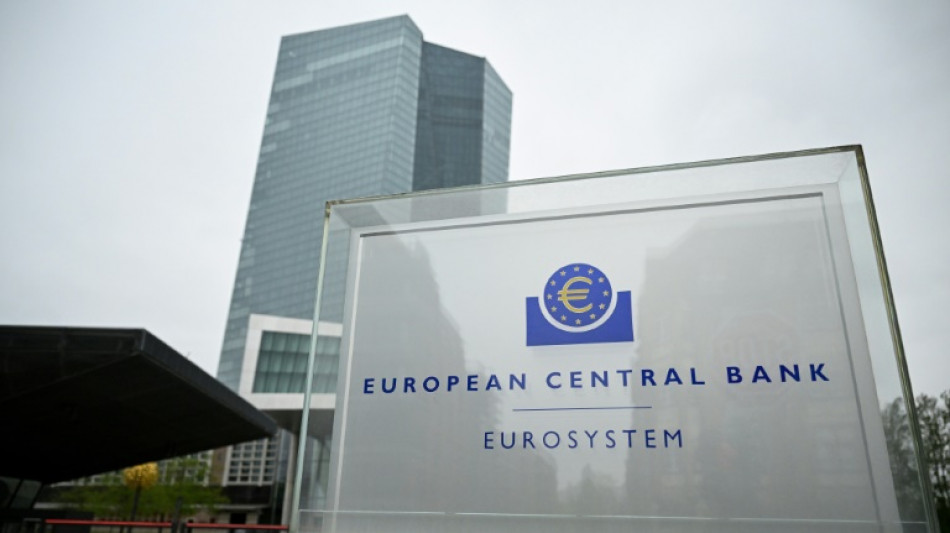
New eurozone rate cut expected as Trump trade war weighs / Photo: Kirill KUDRYAVTSEV - AFP

 TikTok agrees to teen limits in US settlement following Meta

 Venezuela's oil cradle pins hopes on US energy deals

 Lula bans sports betting days ahead of Brazil's election

 Spotting AI writing: how reliable are the detectors?
 US court refuses to overturn Pentagon ban on Anthropic

 South Lebanon children return to school destroyed by Israel strike

 European stock markets climb as oil prices drop

 Asian markets mixed after recent oil surge

 Cash for nature protection: hotelier's offer to Principe islanders
 India rape cases turn focus back onto women's safety

 Rich nations should foot climate bill, says Nepal minister
 Italy bans burqas in schools, caps numbers of foreign students per class

 Napoli hoping to build new stadium, says owner
 What happens if the US bans diesel exports

 Oscar-winner Cotillard fears being moved by AI actor

 Stocks fall, oil prices rise as global bonds back under pressure
 Streamex Converts Interest Into Capital as GLDY Investment Strategy Secures $1M+ Institutional Allocation

 STARTRADER Named Best Fintech Forex Broker at Forex Expo Dubai 2026
 German think tanks urge Merz to stick with reforms after election defeats

 France's top-selling newspaper to slash jobs

 BaazEX Enters the Asian Trading Market With a New Approach to Online Forex Trading.
 Sao Tome voters want to stop exodus of 'neglected' youth
 Mexican cartels target Australia with their African meth
 Rapper-turned-PM faces first big test after Nepal disaster

 Meta launches camera-free AI glasses amid privacy pushback

US President Donald Trump's tariff blitz, persistent growth worries and slowing inflation are expected to prompt eurozone rate-setters to lower borrowing costs again on Thursday.
It would be the European Central Bank's seventh consecutive interest rate cut, with officials having shifted focus from taming consumer price rises to easing pressure on the sluggish eurozone economy.
Trump's tariffs have added to an already uncertain outlook for the single-currency area, with Europe firmly in his crosshairs, fuelling fears about a heavy hit to the continent's exporters.
Expectations that the Frankfurt-based institution will deliver a fresh rate cut were strengthened this week when data showed eurozone inflation eased to 1.9 percent in May, faster than expected and below its two-percent target.
"Any doubts about an ECB interest rate cut this week have now been eliminated," said Dirk Schumacher, chief economist at German public lender KfW.
Analysts expect another quarter-point reduction that would take the central bank's key deposit rate to two percent.
Observers will be on the lookout for any hints from ECB President Christine Lagarde at her press conference that policymakers could hit pause at their next meeting in July, as some expect.
The ECB's series of cuts stands in contrast to the US Federal Reserve, which has kept rates on hold recently amid fears that Trump's levies could stoke inflation in the world's top economy.
- Questions on Lagarde's future -
Lagarde may also face questions on her own future after the Financial Times last week reported she had discussed leaving the ECB early to take the helm of the World Economic Forum, which organises the annual Davos gathering.
The ECB has however insisted that Lagarde is "determined" to finish her term, which ends in 2027.
Trump, who argues his tariffs will bring manufacturing jobs back to the United States, has already hit the EU with multiple waves of levies.
The bloc currently faces a 10-percent "baseline" levy as well as higher duties on specific sectors.
He has paused even higher rates on the EU and other trading partners to allow for talks, but he continues to launch fresh salvos that are keeping the world on edge.
This week he doubled tariffs on aluminium and steel from 25 to 50 percent and last month threatened the EU with an escalation if it did not negotiate a swift deal.
For the ECB, it is a tricky task to protect the eurozone from the mercurial US president's trade policies while keeping inflation stable.
The ECB is expected to cut its inflation predictions when it releases its own new economic forecasts Thursday, with most observers now believing that Trump's tariffs will add to downward pressure.
- Easing inflation -
This is due to factors including tariff-hit China redirecting inexpensive manufactured goods to Europe, recent strengthening of the euro and potentially lower energy prices.
The ECB is also likely to cut its growth estimates Thursday due to the impact of the trade war, after the EU slashed its forecasts last month.
Lower inflation and slower growth should push the ECB to make further rate cuts, but there are some factors making this uncertain.
These include signs of resilience in the eurozone economy at the start of the year and a a potentially inflationary spending blitz planned by the new German government.
Given the lack of clarity, ING bank analyst Carsten Brzeski said he believes the ECB would like to take a breather at its next meeting in July.
"Unless trade tensions return with a vengeance, our suspicion is that the ECB would like to stick to a wait-and-see approach over the summer," he said.
T.Morelli--CPN