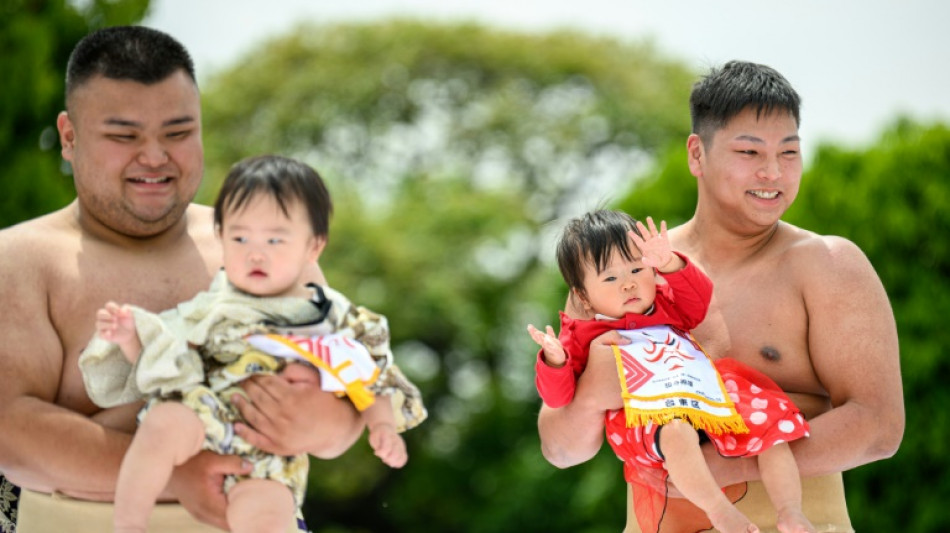
Japan births in 2024 fell below 700,000 for first time / Photo: Philip FONG - AFP

 TikTok agrees to teen limits in US settlement following Meta

 Venezuela's oil cradle pins hopes on US energy deals

 Lula bans sports betting days ahead of Brazil's election

 Spotting AI writing: how reliable are the detectors?

 US court refuses to overturn Pentagon ban on Anthropic

 South Lebanon children return to school destroyed by Israel strike

 European stock markets climb as oil prices drop

 Asian markets mixed after recent oil surge
 Cash for nature protection: hotelier's offer to Principe islanders

 India rape cases turn focus back onto women's safety

 Rich nations should foot climate bill, says Nepal minister

 Italy bans burqas in schools, caps numbers of foreign students per class

 Napoli hoping to build new stadium, says owner

 What happens if the US bans diesel exports

 Oscar-winner Cotillard fears being moved by AI actor

 Stocks fall, oil prices rise as global bonds back under pressure

 Streamex Converts Interest Into Capital as GLDY Investment Strategy Secures $1M+ Institutional Allocation

 STARTRADER Named Best Fintech Forex Broker at Forex Expo Dubai 2026

 German think tanks urge Merz to stick with reforms after election defeats

 France's top-selling newspaper to slash jobs

 BaazEX Enters the Asian Trading Market With a New Approach to Online Forex Trading.

 Sao Tome voters want to stop exodus of 'neglected' youth

 Mexican cartels target Australia with their African meth

 Rapper-turned-PM faces first big test after Nepal disaster

 Meta launches camera-free AI glasses amid privacy pushback

The number of births in Japan last year fell below 700,000 for the first time on record, government data showed Wednesday.
The fast-ageing nation welcomed 686,061 newborns in 2024 -- 41,227 fewer than in 2023, the data showed. It was the lowest figure since records began in 1899.
Japan has the world's second-oldest population after tiny Monaco, according to the World Bank.
Prime Minister Shigeru Ishiba has called the situation a "quiet emergency", pledging family-friendly measures like more flexible working hours to try and reverse the trend.
Wednesday's health ministry data showed that Japan's total fertility rate -- the average number of children a woman is expected to have -- also fell to a record low of 1.15.
The ministry said Japan saw 1.6 million deaths in 2024, up 1.9 percent from a year earlier.
Ishiba has called for the revitalisation of rural regions, where shrinking elderly villages are becoming increasingly isolated.
In more than 20,000 communities in Japan, the majority of residents are aged 65 and above, according to the internal affairs ministry.
The country of 123 million people is also facing increasingly severe worker shortages as its population ages, not helped by relatively strict immigration rules.
In neighbouring South Korea, the fertility rate in 2024 was even lower than Japan's, at 0.75 -- remaining one of the world's lowest but marking a small rise from the previous year on the back of a rise in marriages.
O.Ignatyev--CPN