
UK to build attack subs as part of major defence review / Photo: HENRY NICHOLLS - POOL/AFP/File

 TikTok agrees to teen limits in US settlement following Meta

 Venezuela's oil cradle pins hopes on US energy deals

 Lula bans sports betting days ahead of Brazil's election

 Spotting AI writing: how reliable are the detectors?
 US court refuses to overturn Pentagon ban on Anthropic

 South Lebanon children return to school destroyed by Israel strike
 European stock markets climb as oil prices drop

 Asian markets mixed after recent oil surge

 Cash for nature protection: hotelier's offer to Principe islanders

 India rape cases turn focus back onto women's safety

 Rich nations should foot climate bill, says Nepal minister
 Italy bans burqas in schools, caps numbers of foreign students per class

 Napoli hoping to build new stadium, says owner
 What happens if the US bans diesel exports

 Oscar-winner Cotillard fears being moved by AI actor

 Stocks fall, oil prices rise as global bonds back under pressure

 Streamex Converts Interest Into Capital as GLDY Investment Strategy Secures $1M+ Institutional Allocation

 STARTRADER Named Best Fintech Forex Broker at Forex Expo Dubai 2026
 German think tanks urge Merz to stick with reforms after election defeats

 France's top-selling newspaper to slash jobs

 BaazEX Enters the Asian Trading Market With a New Approach to Online Forex Trading.
 Sao Tome voters want to stop exodus of 'neglected' youth
 Mexican cartels target Australia with their African meth
 Rapper-turned-PM faces first big test after Nepal disaster

 Meta launches camera-free AI glasses amid privacy pushback
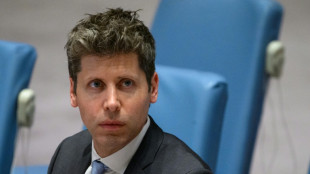
Britain announced it will build 12 new attack submarines as it was set to unveil Monday a major defence review to deal with "growing" Russian aggression and the changing nature of warfare.
Prime Minister Keir Starmer told BBC radio that "there is greater instability on defence and security than there has been for many, many years, and greater threats."
His Labour government will later publish its Strategic Defence Review, a document that will assess threats facing the UK and make recommendations.
The review warns that Britain is entering "a new era of threat" as drones and artificial intelligence transform modern warfare, The Guardian newspaper reported over the weekend.
"I wanted a review that told me the challenges we're actually facing and likely to face for the foreseeable future," Starmer told the BBC Monday.
"And the principles are clear: war-fighting readiness, integrating our forces... and a NATO first approach," he added.
The UK has been racing to rearm in the face of the threat from Russia and fears that US President Donald Trump will no longer help protect Europe.
Starmer said it would serve as "a blueprint for strength and security for decades to come".
- 'Daily attacks' -
His government pledged in February to lift defence spending to 2.5 percent of GDP by 2027 in the "largest sustained increase in defence spending since the end of the Cold War".
And despite budget constraints, it aims for spending to rise to three percent in the next parliamentary term, due in 2029.
The Labour government has said it will cut UK overseas aid to help fund the spending.
Based on the recommendations of the review, which is led by former NATO secretary general George Robertson, the government said Sunday that it would boost stockpiles and weapons production capacity, which could be scaled up if needed.
This includes £1.5 billion ($2 billion) for building "at least six munitions and energetics factories", procuring 7,000 domestically built long-range weapons, and spending £6 billion on munitions over the current parliamentary term.
The government also said late Sunday that it would build up to 12 new attack submarines as part of its AUKUS military alliance with Australia and the United States, and invest £15 billion in its nuclear warhead programme.
The defence ministry last week pledged £1 billion for the creation of a "cyber command" to help on the battlefield.
"We're in a world that is changing now... and it is a world of growing threats," Defence Secretary John Healey told the BBC in an interview Sunday.
"It's growing Russian aggression. It's those daily cyberattacks, it's new nuclear risks, and it's increasing tension in other parts of the world as well," he said.
- 'Sophisticated challenge' -
The last such defence review was commissioned in 2021 by the previous Conservative government, and was revised in 2023 after Russia's invasion of Ukraine.
While launching the new review, Robertson said it would tackle threats from Russia, China, Iran and North Korea, calling them a "deadly quartet".
But in an op-ed in The Sun newspaper, Starmer did not mention China, while warning that "The Kremlin is working hand in hand with its cronies in Iran and North Korea."
The softer rhetoric on China is in line with the Labour government's efforts to thaw relations with Beijing, which reached new lows under former prime minister Rishi Sunak's Conservative government.
The review describes Russia as an "immediate and pressing" threat, but calls China a "sophisticated and persistent challenge", according to The Guardian.
At a time when Washington is demanding that its NATO allies bolster their own defences, Britain is considering strengthening its deterrent by buying nuclear-missile capable aircrafts from the United States, The Sunday Times reported.
Without confirming or denying, Healey said Sunday that "strong deterrence is absolutely essential in order to keep Britain and the British people safe".
M.García--CPN