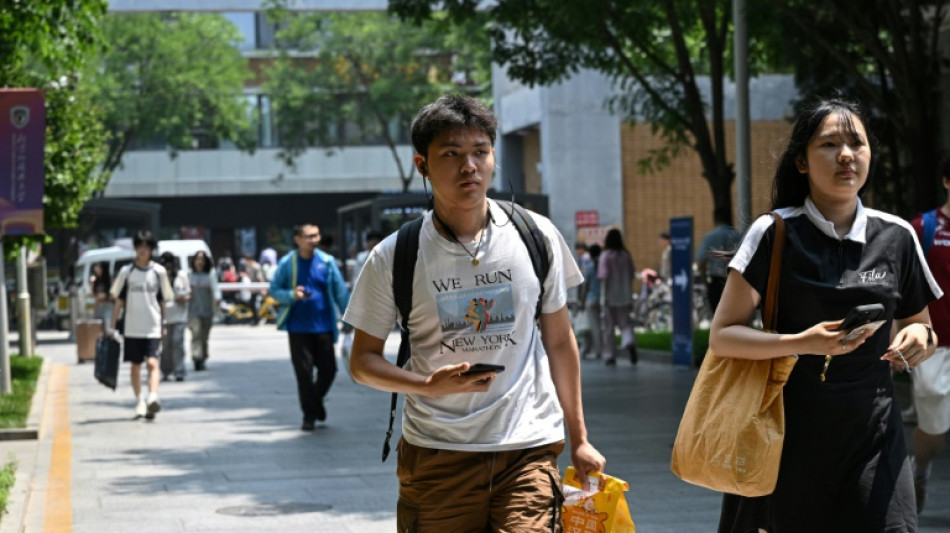
Targeting foreign students, Trump hits a US lifeline / Photo: Jade GAO - AFP

 S.African women runners arm themselves after string of killings

 Indonesia fires threatens critically-endangered orangutan: IUCN

 Iran proposes Hormuz plan, Trump reportedly refuses
 El Nino rewrites the menu in the world's top restaurants
 Jay-Z rape accuser says she made 'false accusations'
 Trump's photo of Xi greeting carries signs of AI
 First US trial against TikTok to open Monday
 French literary prize removes novel from longlist after AI claims
 Trump accuser E. Jean Carroll finally has her damages
 Heavy fighting, internet disruption as Ethiopia conflict rages

 Asian markets mixed after oil gains
 UN approves resolution on dealing with rising sea levels
 Global stocks mostly fall as oil prices and bond yields rise
 Starbucks to close 250 more cafes in North America
 Stocks fall as oil prices rise and bonds back under pressure
 Top ECB official to resign to take up IMF role

 Eviction of pensioner puts Spain housing crisis in spotlight
 Average EU diesel price hits record 2.23 euros a litre: AFP analysis

 Whitetip Investments Marks 10 Years of Regulation, Transparency & Responsible Trading

 Stocks fall, oil prices rise as global bonds under pressure
 Hungary detects invasive spotted lanternfly for first time in EU
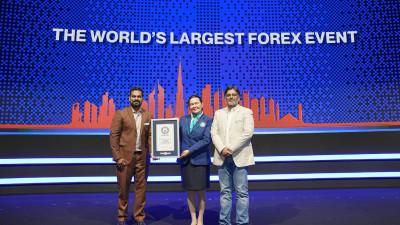 Forex Expo Dubai 2026 Breaks Guinness World Record Again With 23,816 Attendees

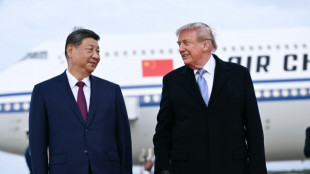 Asian markets fall on US-China jitters as leaders meet
 As Moscow steps up attacks, Kyiv residents brace for harsh winter
 Markets mixed as China's Xi arrives for US talks
On the campaign trail last year, then-candidate Donald Trump proposed handing US residency cards automatically to international students when they earn diplomas, bemoaning that they were leaving to form successful companies in China and India.
Now back at the White House, Trump's message has changed drastically.
Hoping to crush an academic establishment he sees as his enemy, Trump has launched unprecedented actions against international students that experts warn are likely to decrease enrollment and could trigger a brain drain of top talent.
In a matter of days, the Trump administration has sought to bar all foreign students from Harvard University, one of most prestigious US institutions, and Secretary of State Marco Rubio has vowed to "aggressively" revoke visas to students from China, long the top source of students to the United States although recently eclipsed by India.
Rubio has already yanked thousands of visas, largely over students' involvement in activism critical of Israel's offensive in Gaza but also over minor traffic violations and other infractions.
"The US, historically, has a reputation around the world of having a very open atmosphere for scientific and technical research, and that draws a lot of people, especially people from countries that don't necessarily have that kind of openness," said Phoebe Sengers, a professor in information science and science and technology studies at Cornell University.
She said it's certain the number of international students will "plummet in the coming years."
"The challenge with that is that students who would come here don't just disappear. They will stay in their home countries or go to other countries where they can get a technical education, and they're going to be building businesses in those countries and competing directly with our firms," she said.
- Universities as 'enemy' -
US universities have long been reputed to be among the world's best, and among the most expensive to attend.
International students who pay full tuition are vital sources of revenue, as are federal research grants, which the Trump administration is also slashing.
The State Department has justified its crackdown by pointing to "theft" of US technology by China, and Trump has spoken of making more spots for US-born students.
But Trump's inner circle has long made clear its intentions to battle universities -- whose often left-leaning faculties, high costs and selectivity make them perfect foils for a presidency centered on countering elites and foreigners.
Vice President JD Vance stated in no uncertain terms his hope to destroy the power of academe in a 2021 speech entitled, "The universities are the enemy."
Yet Vance himself rose from poverty to power through Yale Law School, one of the country's most elite institutions.
Universities have an outsized influence on the economy, with international students directly contributing $50 billion to the US economy in 2023, according to the US Commerce Department.
Many top US entrepreneurs are immigrants who came as students, including Trump's ally Elon Musk, with around half of the Fortune 500 companies founded by immigrants or their children.
Krishna Bista, a professor at Morgan State University who studies international student mobility, said the tone set by the Trump administration "could deter even the most qualified applicants" from the United States.
"It's not just a visa issue -- it affects students' sense of safety, belonging and academic freedom," he said.
"Other nations are building policies to recruit talent -- it's irrational for the US to push it away."
The Hong Kong University of Science and Technology recently offered fast-track admissions to Harvard students whom Trump wants to force to transfer.
- Growing competition -
The United States across administrations has wooed international students, although the number also declined following the September 11, 2001 attacks due to greater curbs of all visas.
A world-record 1.1 million international students studied in the United States in the 2023-24 academic year, according to a State Department-backed report of the Institute of International Education.
But international students on average make up just under six percent of the US university population -- far below Britain, the second top destination for international students, where the figure is 25 percent.
The opportunity to change course may have already slipped away.
"Even if everything was turned around tomorrow, our reputation as an open and welcoming society has already taken significant damage," Sengers said.
"It would take a concerted effort to bring things back to where they were four months ago."
Y.Ibrahim--CPN