Suriname poised for cash inflow from newly discovered oil
/ Photo: Ranu Abhelakh - AFP/File

 S.African women runners arm themselves after string of killings
 Indonesia fires threatens critically-endangered orangutan: IUCN

 Iran proposes Hormuz plan, Trump reportedly refuses
 El Nino rewrites the menu in the world's top restaurants
 Jay-Z rape accuser says she made 'false accusations'
 Trump's photo of Xi greeting carries signs of AI
 First US trial against TikTok to open Monday
 French literary prize removes novel from longlist after AI claims
 Trump accuser E. Jean Carroll finally has her damages
 Heavy fighting, internet disruption as Ethiopia conflict rages
 Asian markets mixed after oil gains
 UN approves resolution on dealing with rising sea levels
 Global stocks mostly fall as oil prices and bond yields rise
 Starbucks to close 250 more cafes in North America
 Stocks fall as oil prices rise and bonds back under pressure
 Top ECB official to resign to take up IMF role
 Eviction of pensioner puts Spain housing crisis in spotlight
 Average EU diesel price hits record 2.23 euros a litre: AFP analysis
 Whitetip Investments Marks 10 Years of Regulation, Transparency & Responsible Trading

 Stocks fall, oil prices rise as global bonds under pressure
 Hungary detects invasive spotted lanternfly for first time in EU
 Forex Expo Dubai 2026 Breaks Guinness World Record Again With 23,816 Attendees

 Asian markets fall on US-China jitters as leaders meet
 As Moscow steps up attacks, Kyiv residents brace for harsh winter
 Markets mixed as China's Xi arrives for US talks
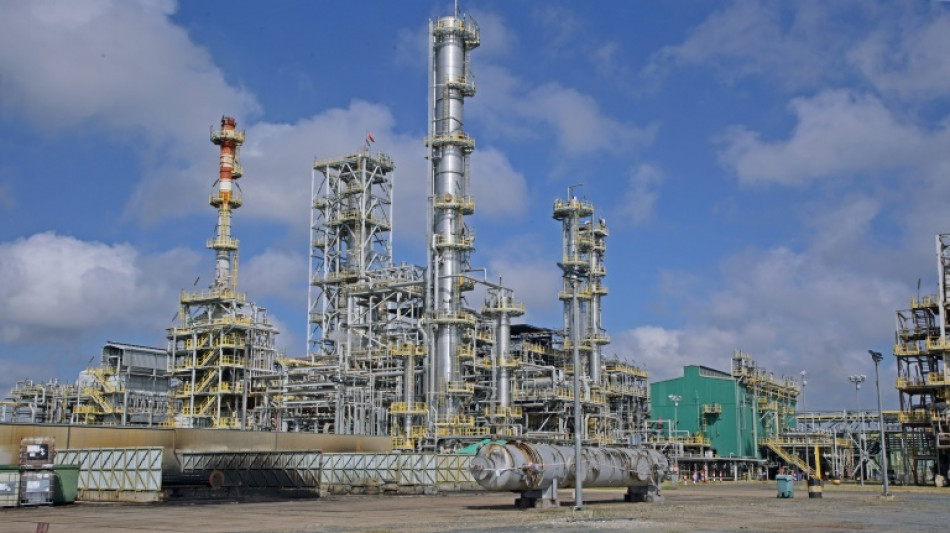
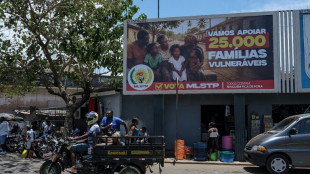
Suriname, South America's smallest country, is preparing for an inflow of cash from a huge offshore oil find, with the president insisting the population will receive a direct share of the wealth.
The Dutch-speaking nation of about 600,000 people expects to rake in about $10 billion in the next decade or two, with crude extraction set to begin in 2028.
Projected output is 220,000 barrels per day (bpd) -- up from about 5,000 to 6,000 -- in a country where one in five people live in poverty.
"From 2028, we'll be an oil-producing country," President Chan Santokhi told AFP ahead of elections Sunday for lawmakers who will choose the next president.
He is one of several candidates in the running to steer the former Dutch colony wedged between Brazil, Guyana and French Guiana.
"It will be a huge amount of income for the country," Santokhi said. "We are now able... to do more for our people so that everyone can be part of the growth of the nation."
Besides investing in agriculture, tourism, health, education and green energy, some of the oil money is being paid directly to Surinamese citizens under a program Santokhi has dubbed "Royalties for Everyone" -- RVI for its Dutch acronym.
"It's their share," he said.
Victorine Moti, a finance ministry official responsible for the fund, told AFP: "The whole population of Suriname is eligible for this program, everybody who was born before the 1st of January 2025 and had the Surinamese nationality."
"In figures, it's 572,000 people."
All eligible citizens can register to receive a one-off payment equivalent to $750 paid into an account with an interest yield of seven percent per year.
"With the certificate, they can go to the bank and they have two options: they can withdraw the money or they can choose to save. Hopefully, they will try to save and not cash out immediately," said Moti.
The first beneficiaries are the elderly and disabled, paid with funds advanced by banks.
Next in line will be people 60 and older, then -- once the revenues start flowing in 2028 -- the biggest group of people aged 18-59.
People who save their money for 10 years will receive a bonus of $150 on top of interest earned.
- 'Enjoy my money' -
Naslem Doelsan, 80, has already received her certificate and told AFP she will cash out "to buy good food and some household stuff."
"Why do I need... money in the bank? I'm already old and I want to enjoy my money," she said.
Fellow retiree Jai Abas, 91, told AFP he would keep the money in the bank for now, and maybe give his granddaughter, who lives in the Netherlands, some "pocket money" when she visits.
"What would I do with money? I am old. I can't go anywhere," said Abas, adding his only vice is cigarettes.
Anuschka Tolud, a 38-year-old in a wheelchair, said she would save her payout in the hopes it can one day augment her $113 monthly welfare payout.
Santokhi had previously spoken about avoiding the so-called "oil curse," also known as "Dutch disease," that had befallen other resource-rich countries, such as Venezuela, Angola and Algeria, that were unable to turn oil wealth into economic success.
Norway became an exception by creating a sovereign wealth fund.
Suriname, the president said, would take a "unique" approach, well aware that its crude resources will last only about 40 years.
"We have income from the profit of the oil, we will have income from our fiscal revenues and we will have income from the royalties," he said.
- Property of the nation -
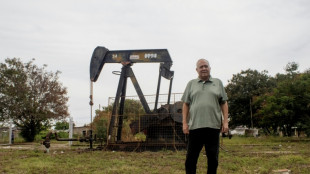
In 2024, French multinational TotalEnergies committed to investing $10.5 billion in the offshore oil field of GranMorgu in the Atlantic Ocean.
An article in the Surinamese Constitution states that "natural riches and resources are property of the nation and shall be used to promote economic, social and cultural development."
But some worry that the benefits may not find their way to all citizens, especially those who live in rural areas, Indigenous communities and Maroons -- descendants of African slaves.
"I myself am curious as to how funds and bureaucracy will be accessed by Indigenous and Maroon communities," Giovanna Montenegro, director of the Latin American and Caribbean Studies Program at Binghamton University in New York State, told AFP.
L.K.Baumgartner--CPN