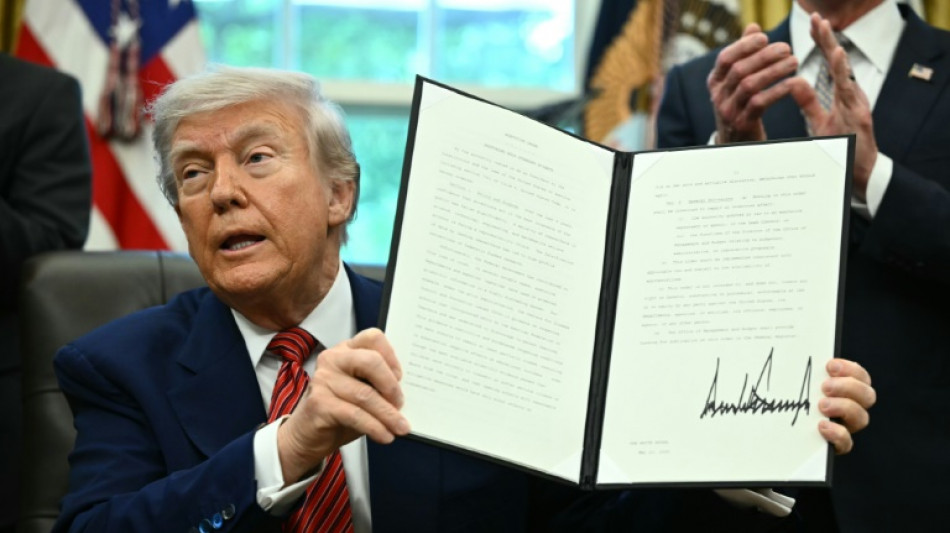
Trump signs orders to boost US nuclear energy / Photo: Mandel NGAN - AFP

 S.African women runners arm themselves after string of killings

 Indonesia fires threatens critically-endangered orangutan: IUCN

 Iran proposes Hormuz plan, Trump reportedly refuses
 El Nino rewrites the menu in the world's top restaurants

 Jay-Z rape accuser says she made 'false accusations'

 Trump's photo of Xi greeting carries signs of AI

 First US trial against TikTok to open Monday

 French literary prize removes novel from longlist after AI claims
 Trump accuser E. Jean Carroll finally has her damages
 Heavy fighting, internet disruption as Ethiopia conflict rages

 Asian markets mixed after oil gains

 UN approves resolution on dealing with rising sea levels

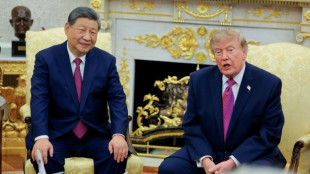 Global stocks mostly fall as oil prices and bond yields rise

 Starbucks to close 250 more cafes in North America

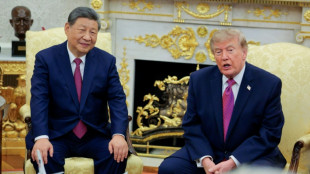 Stocks fall as oil prices rise and bonds back under pressure
 Top ECB official to resign to take up IMF role

 Eviction of pensioner puts Spain housing crisis in spotlight
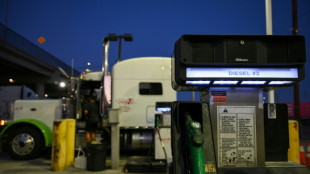
 Average EU diesel price hits record 2.23 euros a litre: AFP analysis

 Whitetip Investments Marks 10 Years of Regulation, Transparency & Responsible Trading

 Stocks fall, oil prices rise as global bonds under pressure
 Hungary detects invasive spotted lanternfly for first time in EU

 Forex Expo Dubai 2026 Breaks Guinness World Record Again With 23,816 Attendees

 Asian markets fall on US-China jitters as leaders meet

 As Moscow steps up attacks, Kyiv residents brace for harsh winter

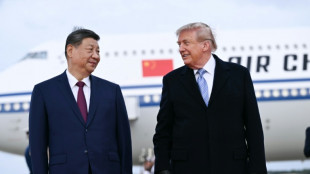
 Markets mixed as China's Xi arrives for US talks

President Donald Trump signed a series of executive orders Friday to boost nuclear energy in the United States, including by rolling back regulatory processes on a still divisive technology.
"We're signing tremendous executive orders today that really will make us the real power in this industry," Trump told reporters as he penned the four orders in the Oval Office.
Trump's orders aim to speed up the building of new reactors and to boost domestic mining and enriching of uranium, with the United States relying on imports for most of the crucial fuel.
The US president said the focus would be on building smaller reactors, such as those required by tech and artificial intelligence companies that have huge energy needs.
The orders will also overhaul the US nuclear watchdog so that it pushes through decisions on building new reactors within 18 months, amid reports that the White House found the regulator too risk averse.
Trump denied that speeding up the regulation process could compromise nuclear safety.
"We're going to get it very fast and very safe," Trump said. "It's time for nuclear and we're going to do it very big."
The move comes with growing interest in nuclear energy in the United States, despite being expensive to build and still politically sensitive in the wake of the 2011 Fukushima disaster.
"President Trump is taking truly historic action to usher in the American nuclear renaissance," Michael Kratsios, Director for the White House Office of Science and Technology Policy, told reporters earlier.
- 'Energy emergency' -
A senior White House official said the administration hopes to "test and deploy" new reactors before the end of Trump's second term in January 2029.
Trump's order "fundamentally rehauls" the Nuclear Regulatory Commission, which grants permission for new reactors, by "lowering regulatory burdens and shortening the licensing timeline."
Republican Trump declared an "energy emergency" on his first day back in office to expand drilling for oil and gas and to roll back Democratic predecessor Joe Biden's climate policies,
But he is now also looking at nuclear to meet growing demand.
Much of the demand is fueled by US tech giants, with some including Amazon, Microsoft and Google having recently signed deals for nuclear power as they seek carbon-free electricity sources.
Two US energy companies are also preparing to bring nuclear stations back online, including Three Mile Island -- the site in 1979 of the worst commercial nuclear power accident in US history.
Trump's drive to boost mining and enrichment also reflects the fact that the United States imports most of the uranium that is needed to fuel nuclear power stations.
The US imported most from Canada, Australia, Russia, Kazakhstan, and Uzbekistan in 2023 but in 2024 it banned uranium imports from Russia over Moscow's invasion of Ukraine.
Nuclear power has been undergoing a resurgence in recent years as countries look for carbon-free energy and confront rising prices, fueled by the war in Ukraine.
It suffered a major downturn after Fukushima when a huge tsunami caused a meltdown at a Japanese power station, with Germany in particular turning its back on nuclear.
Y.Tengku--CPN