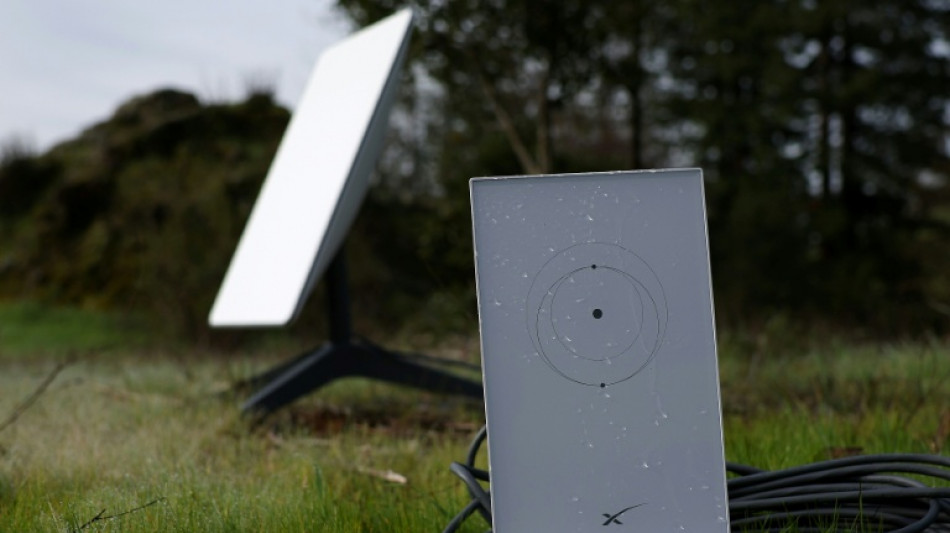
S.Africa moves to ease black empowerment law under Starlink pressure / Photo: JUSTIN SULLIVAN - GETTY IMAGES NORTH AMERICA/AFP/File

 S.African women runners arm themselves after string of killings

 Indonesia fires threatens critically-endangered orangutan: IUCN

 Iran proposes Hormuz plan, Trump reportedly refuses

 El Nino rewrites the menu in the world's top restaurants

 Jay-Z rape accuser says she made 'false accusations'

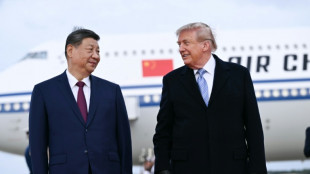
 Trump's photo of Xi greeting carries signs of AI

 First US trial against TikTok to open Monday

 French literary prize removes novel from longlist after AI claims

 Trump accuser E. Jean Carroll finally has her damages

 Heavy fighting, internet disruption as Ethiopia conflict rages

 Asian markets mixed after oil gains

 UN approves resolution on dealing with rising sea levels
 Global stocks mostly fall as oil prices and bond yields rise

 Starbucks to close 250 more cafes in North America

 Stocks fall as oil prices rise and bonds back under pressure

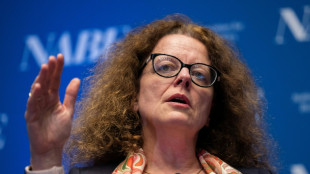 Top ECB official to resign to take up IMF role

 Eviction of pensioner puts Spain housing crisis in spotlight
 Average EU diesel price hits record 2.23 euros a litre: AFP analysis

 Whitetip Investments Marks 10 Years of Regulation, Transparency & Responsible Trading

 Stocks fall, oil prices rise as global bonds under pressure
 Hungary detects invasive spotted lanternfly for first time in EU

 Forex Expo Dubai 2026 Breaks Guinness World Record Again With 23,816 Attendees

 Asian markets fall on US-China jitters as leaders meet
 As Moscow steps up attacks, Kyiv residents brace for harsh winter

 Markets mixed as China's Xi arrives for US talks
South Africa's government is moving towards easing its black ownership laws in the telecoms sector -- a policy change that would smooth the way for Elon Musk's Starlink to enter the local market.
The directive came days after South African President Cyril Ramaphosa met his US counterpart Donald Trump for tense talks on deteriorating ties between the two countries.
Telecoms companies operating in South Africa, including those with foreign investment, are currently required to provide 30 percent equity to historically disadvantaged groups -- a policy created to mitigate the legacy of racial inequality left by apartheid.
South Africa-born Elon Musk has refused ceding ownership, calling the black empowerment policy "openly racist" and blaming it for delays in licensing his satellite internet service in the country.
On Friday, Communications and Digital Technologies Minister Solly Malatsi published a draft policy that would allow the country's telecoms regulator to accept equity equivalent programmes as an alternative to the 30 percent ownership law.
The draft policy is now open to public comments for a 30-day period.
- Attracting investment -
The policy change would allow multinationals like Starlink to meet empowerment obligations through alternatives to the 30 percent ownership law, such as investing in local suppliers, creating jobs or funding small businesses owned by black people.
It "seeks to provide the much-needed policy certainty to attract investment into the Information and Communication Technologies (ICT) sector, and specifically with regards to licensing for broadcasters, internet service providers, mobile networks, or fixed and mobile networks," the communications ministry said.
Equity equivalents have already been approved in Africa's most industrialised nation for many multinationals, including US-based Microsoft and Hewlett Packard and South Korean tech giant Samsung Electronics.
South Africa offered a similar deal to the automotive industry in 2019.
Ties between Washington and Pretoria have nosedived since Trump took office in January, with the US leader cutting aid, expelling the South African ambassador and threatening tariff hikes.
Both sides met in Washington on Wednesday and agreed "to strengthen bilateral trade ties, increase investments for mutual benefit and forge collaboration in technological exchanges," the South African presidency has said.
A presidency spokesman told AFP that while there had been discussions about Starlink at the meeting, the draft law was aimed at benefiting the whole sector.
In April, South Africa's neighbour Lesotho granted a licence to Starlink hours after denying it was fast-tracking the process as part of US tariff concessions.
A.Agostinelli--CPN