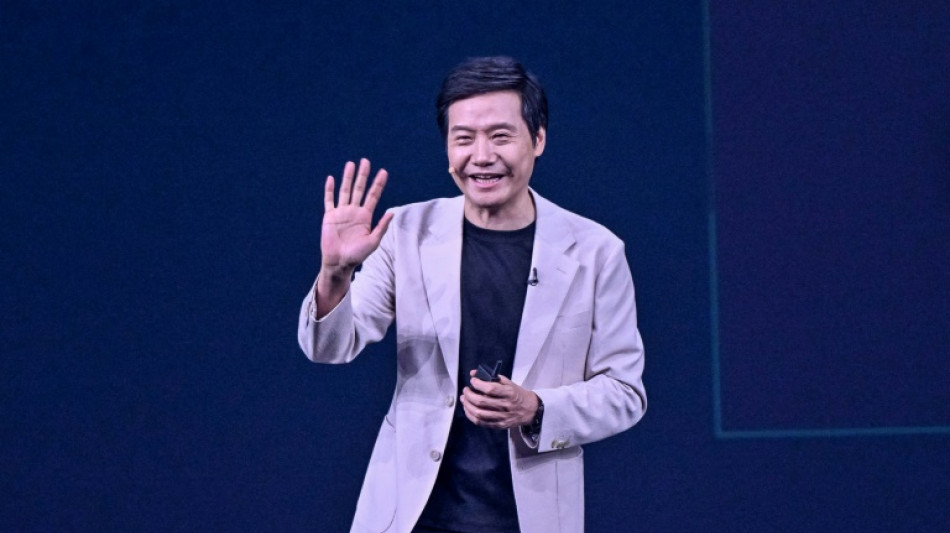
Xiaomi launches new advanced in-house mobile chip / Photo: ADEK BERRY - AFP

 S.African women runners arm themselves after string of killings

 Indonesia fires threatens critically-endangered orangutan: IUCN

 Iran proposes Hormuz plan, Trump reportedly refuses

 El Nino rewrites the menu in the world's top restaurants

 Jay-Z rape accuser says she made 'false accusations'

 Trump's photo of Xi greeting carries signs of AI

 First US trial against TikTok to open Monday

 French literary prize removes novel from longlist after AI claims

 Trump accuser E. Jean Carroll finally has her damages

 Heavy fighting, internet disruption as Ethiopia conflict rages

 Asian markets mixed after oil gains

 UN approves resolution on dealing with rising sea levels

 Global stocks mostly fall as oil prices and bond yields rise

 Starbucks to close 250 more cafes in North America

 Stocks fall as oil prices rise and bonds back under pressure

 Top ECB official to resign to take up IMF role

 Eviction of pensioner puts Spain housing crisis in spotlight
 Average EU diesel price hits record 2.23 euros a litre: AFP analysis

 Whitetip Investments Marks 10 Years of Regulation, Transparency & Responsible Trading

 Stocks fall, oil prices rise as global bonds under pressure

 Hungary detects invasive spotted lanternfly for first time in EU

 Forex Expo Dubai 2026 Breaks Guinness World Record Again With 23,816 Attendees

 Asian markets fall on US-China jitters as leaders meet

 As Moscow steps up attacks, Kyiv residents brace for harsh winter

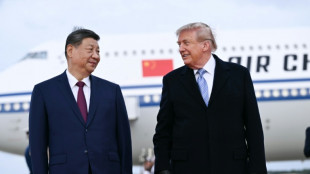 Markets mixed as China's Xi arrives for US talks

Tech giant Xiaomi unveiled a new advanced in-house mobile chip on Thursday, a significant milestone for the company as Chinese firms shift resources towards home-grown technology against a bleak international trade backdrop.
Xiaomi, which sells goods from smartphones to vacuum cleaners and electric vehicles (EVs), is one of China's most prominent consumer electronics firms.
With the XRING O1, it becomes only the second smartphone brand globally after Apple to mass produce its own 3-nanometre chips, among the most advanced on the market.
This despite being a latecomer to the chip industry, Xiaomi founder Lei Jun said at a launch event on Thursday, joking that the feat had been "harder than ascending to heaven".
Xiaomi took early steps into semiconductors for smartphones with the launch of the firm's first in-house chip, the Surge S1, in 2017.
But the group was forced to halt production of the chip due to technical and financial obstacles.
Lei said the journey to developing the XRING O1 had taken over a decade.
"How much hardship, how much sweat, how much untold pain have been involved in these 11 years? How much courage and determination did it take to make this decision?" he said.
The XRING O1 will first be deployed in Xiaomi's new 15S Pro flagship smartphone and the Pad 7 Ultra tablet, which were also launched Thursday along with a preview of the firm's first electric SUV.
- 'Step to self-sufficiency' -
A number of Chinese firms are racing to develop their own chips with the aim of freeing themselves from reliance on foreign suppliers.
Xiaomi is only the fourth smartphone brand globally to have developed its own system-on-chip, with Huawei the only domestic competitor.
"This represents yet one more step toward China reaching self-sufficiency in this crucial industry –- as well as in broader ICT and electronics supply chains," Stephen Ezell from US-based think tank Information Technology and Innovation Foundation (ITIF) told AFP.
Over the past few years, Washington has sharply tightened export controls on advanced chip technology to China, citing national security concerns.
Chinese chip foundries are restricted from accessing foreign equipment needed for cutting-edge chip production -- meaning that firms have to rely on overseas foundries for 5nm-process and below.
Xiaomi has not confirmed which company is manufacturing the XRING O1, though Lei said it uses the same second generation 3nm-process technology as Apple's latest chips.
Apple contracts Taiwanese chipmaking titan TSMC for its fabrication.
The chip is a "significant" achievement for Xiaomi, and allows it to reduce "its reliance on external designers" such MediaTek and Qualcomm, Washington-based semiconductor and technology analyst Ray Wang told AFP.
"Longer term, owning its SoC (system-on-chip) roadmap will insulate Xiaomi's devices from the US–China geopolitical tensions and help mitigate global supply-chain disruptions," he said.
U.Ndiaye--CPN