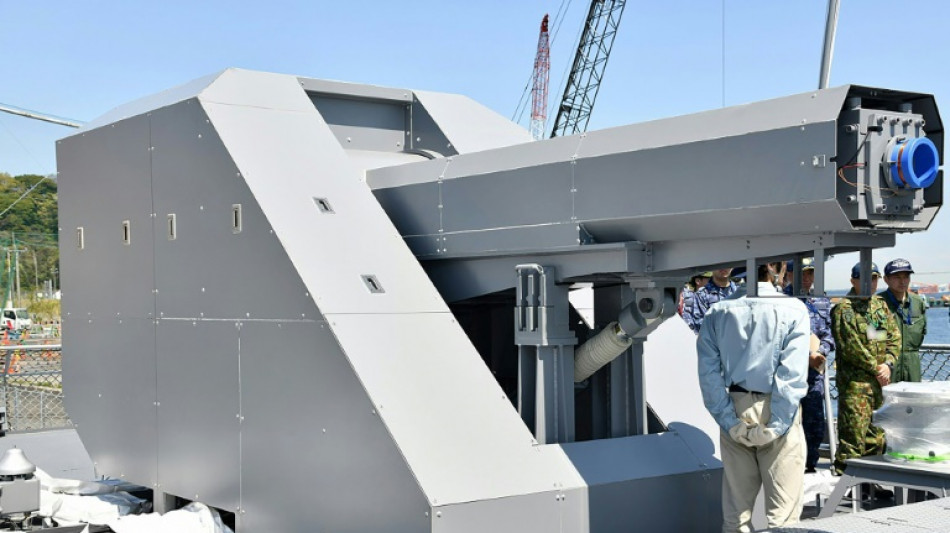
Japan shows off futuristic 'railgun' at defence expo / Photo: Handout - Japan Maritime Self-Defense Force/AFP

 S.African women runners arm themselves after string of killings

 Indonesia fires threatens critically-endangered orangutan: IUCN

 Iran proposes Hormuz plan, Trump reportedly refuses

 El Nino rewrites the menu in the world's top restaurants

 Jay-Z rape accuser says she made 'false accusations'
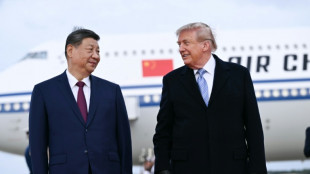
 Trump's photo of Xi greeting carries signs of AI

 First US trial against TikTok to open Monday

 French literary prize removes novel from longlist after AI claims

 Trump accuser E. Jean Carroll finally has her damages

 Heavy fighting, internet disruption as Ethiopia conflict rages

 Asian markets mixed after oil gains

 UN approves resolution on dealing with rising sea levels

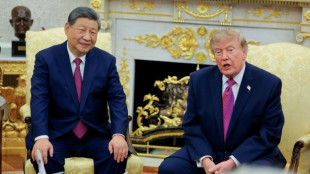 Global stocks mostly fall as oil prices and bond yields rise

 Starbucks to close 250 more cafes in North America
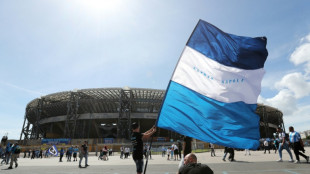
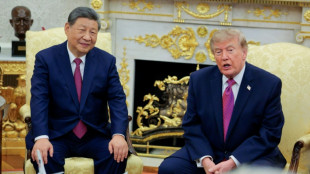 Stocks fall as oil prices rise and bonds back under pressure
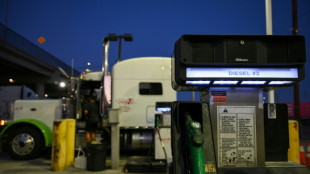
 Top ECB official to resign to take up IMF role

 Eviction of pensioner puts Spain housing crisis in spotlight
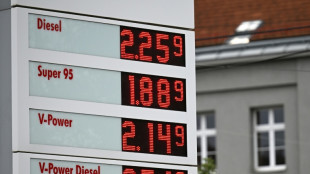 Average EU diesel price hits record 2.23 euros a litre: AFP analysis

 Whitetip Investments Marks 10 Years of Regulation, Transparency & Responsible Trading

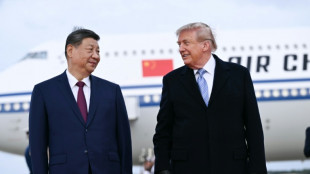 Stocks fall, oil prices rise as global bonds under pressure

 Hungary detects invasive spotted lanternfly for first time in EU

 Forex Expo Dubai 2026 Breaks Guinness World Record Again With 23,816 Attendees

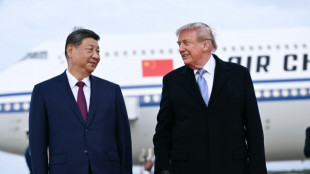 Asian markets fall on US-China jitters as leaders meet

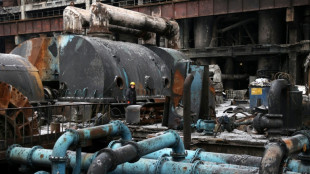 As Moscow steps up attacks, Kyiv residents brace for harsh winter

 Markets mixed as China's Xi arrives for US talks

As Japan's biggest defence exhibition kicked off this week, visitors got a close-up look at a model of its futuristic "railgun" that its makers hope will be able to shoot down hypersonic missiles.
Instead of gunpowder, railgun technology uses electromagnetic energy to fire a projectile along a set of rails at ultra-high velocity.
The round will then in theory destroy the target, which could be an enemy ship, drone or incoming ballistic missile, solely with its vast kinetic energy.
Other countries, including the United States, China, France and Germany, are also developing the technology, but Japan's navy last year claimed a world first by test-firing a railgun on a ship.
"A railgun is a gun of the future that fires bullets with electrical energy, unlike conventional artillery," an official from the Acquisition, Technology and Logistics Agency (ATLA) within Japan's Ministry of Defence told AFP.
"It is expected that threats that can only be dealt with by railguns will emerge in the future," said the official, who did not want to be named.
The three-day DSEI Japan Conference defence fair, which began on Wednesday, comes as Japan adopts a more assertive defence policy and looks to sell more military equipment to other countries.
In particular, Japan's Mitsubishi Heavy Industries (MHI) and Germany's Thyssen Krupp Marine Systems (TKMS) are competing for a major contract to supply the Australian navy with new warships.
Winning the multi-billion-dollar Project Sea 3000 contract to supply Australia with Mogami-class frigates would be Japan's largest postwar military export order, according to Japanese media.
A.Mykhailo--CPN