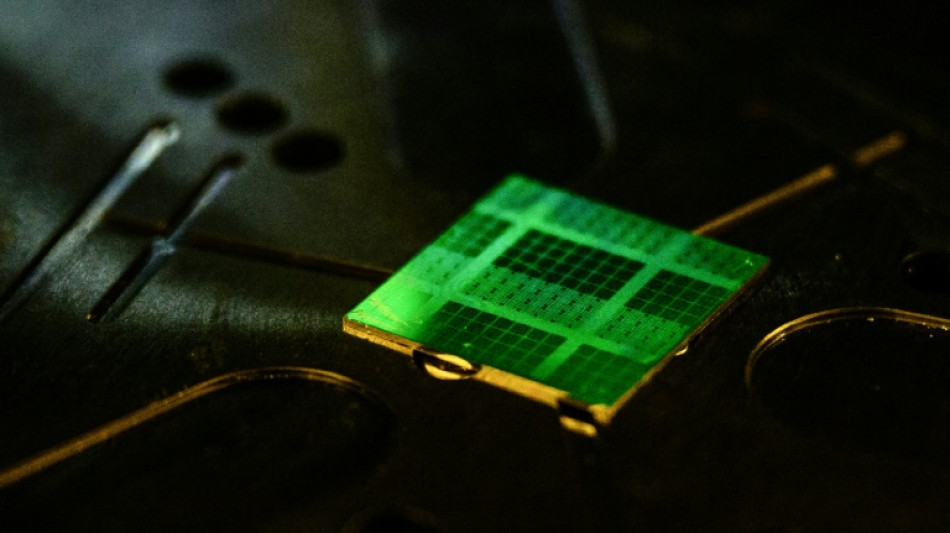
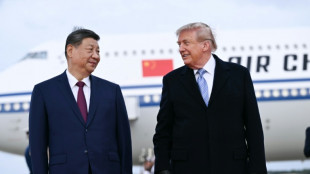
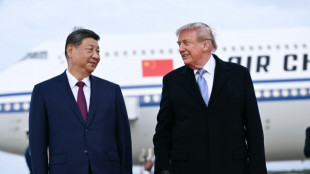
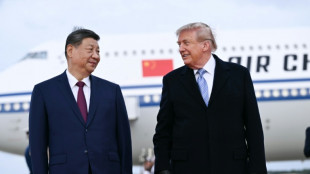
China slams US 'bullying' over new chip warnings / Photo: ANTHONY WALLACE - AFP

 S.African women runners arm themselves after string of killings

 Indonesia fires threatens critically-endangered orangutan: IUCN

 Iran proposes Hormuz plan, Trump reportedly refuses

 El Nino rewrites the menu in the world's top restaurants

 Jay-Z rape accuser says she made 'false accusations'

 Trump's photo of Xi greeting carries signs of AI

 First US trial against TikTok to open Monday

 French literary prize removes novel from longlist after AI claims
 Trump accuser E. Jean Carroll finally has her damages
 Heavy fighting, internet disruption as Ethiopia conflict rages

 Asian markets mixed after oil gains

 UN approves resolution on dealing with rising sea levels

 Global stocks mostly fall as oil prices and bond yields rise

 Starbucks to close 250 more cafes in North America

 Stocks fall as oil prices rise and bonds back under pressure

 Top ECB official to resign to take up IMF role

 Eviction of pensioner puts Spain housing crisis in spotlight
 Average EU diesel price hits record 2.23 euros a litre: AFP analysis

 Whitetip Investments Marks 10 Years of Regulation, Transparency & Responsible Trading

 Stocks fall, oil prices rise as global bonds under pressure

 Hungary detects invasive spotted lanternfly for first time in EU

 Forex Expo Dubai 2026 Breaks Guinness World Record Again With 23,816 Attendees

 Asian markets fall on US-China jitters as leaders meet

 As Moscow steps up attacks, Kyiv residents brace for harsh winter

 Markets mixed as China's Xi arrives for US talks

Beijing condemned on Wednesday new US warnings on the use of AI chips made in China, vowing it would take steps against "bullying" efforts to restrict access to high-tech semiconductors and supply chains.
Washington has sought in recent years to curb exports of state-of-the-art chips to China, concerned that they could be used to advance Beijing's military systems and otherwise undermine American dominance in AI.
US President Donald Trump's administration last week rescinded some export controls on advanced computing semiconductors, answering calls by countries that said they were being shut out from crucial technology needed to develop artificial intelligence.
Some US lawmakers feared the restrictions would have incentivized countries to go to China for AI chips, spurring the superpower's development of state-of-the-art technology.
But Washington also unveiled fresh guidelines warning firms that using Chinese-made high-tech AI semiconductors, specifically tech giant Huawei's Ascend chips, would put them at risk of violating US export controls.
In a statement Wednesday, Beijing's commerce ministry described the warnings as "typical unilateral bullying and protectionism, which seriously undermine the stability of the global semiconductor industry chain and supply chain".
China accused the US of "abusing export controls to suppress and contain China".
"These actions seriously harm the legitimate rights and interests of Chinese enterprises and endanger China's development interests," the commerce ministry said.
It also warned that "any organization or individual that enforces or assists in enforcing such measures" could be in violation of Chinese law.
And it vowed to take "firm steps to safeguard its legitimate rights and interests" in response.
The United States warned last week about the potential consequences of allowing US AI chips to be used for training Chinese AI models.
The commerce department said its policy was aimed at sharing American AI technology "with trusted foreign countries around the world, while keeping the technology out of the hands of our adversaries".
Previous US rules divided countries into three tiers, each with its own level of restrictions.
Top-tier countries like Japan and South Korea faced no export restrictions, while countries in the second tier, which included Mexico and Portugal, saw a cap on the chips they could receive.
Chipmakers including Nvidia and AMD lobbied against the tiered restrictions and saw their share prices rise when the Trump administration indicated it would rethink the rule.
O.Ignatyev--CPN