Flash flooding hits US parks, southern states in latest weather disasters / Photo: MARK RALSTON - AFP/File

 Lights out in Laos as electricity exports surge

 Steven Strogatz weighs AI mathematics advances and their consequences for researchers

 Anthropic boss calls for AI slowdown, Altman and Musk agree

 French IT giant Capgemini sells subsidiary after row over ICE links

 Quebec Brokerage Qubit Insurance Announces New Data on Coverage Shortfalls as Rebuilding Costs Rise

 Lady Gaga welcomes first child with fiance: US media

 Bhutan business bets on hazelnuts for farming future

 'Widow's Bay' and 'The Pitt' are favorites for Emmys night

 Coastal erosion forces cancellation of California music festival

 Argentina's Dirty War rears its head in Venice film

 UK lawmakers throw out bill to legalise assisted dying

 US inflation steady in August, fueling Fed rate hike expectations

 New York marks 25th anniversary of 9/11 attacks

 Nepal flood reconstruction bill to be $4.78 bn: foreign ministry

 JUMO and Standard Bank launch Social Finance Framework to scale inclusive finance in Africa

 Doomsday tech: could AI really kill us all?

 French comedy show 'Call my agent' makes film comeback

 It's all coming back: Celine Dion fans gear up for Paris return

 Researchers eye AI revolution in natural disaster forecasts

 US braces for inflation report that may push Fed to hike rates

 Musk threatens legal action over documentary

 Latin America fact-check group asks Meta not to replace verification practice

 AI Risks to Enter 60–80% of Liability and Cyber Insurance Underwriting by 2028, ScienceSoft Predicts

 Tribal Launches Campfire, Letting Business and Technical Teams Build on Salesforce Together

 Stocks fall as fresh oil surge fans inflation fears

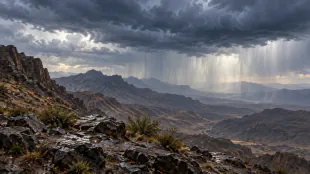
A hiker swept away in flash floods and torrential rain was still missing Monday as a weekend of storms forced hundreds to evacuate in the latest weather disasters to hit national parks in the United States.
Heavy rains were also causing havoc in parts of Texas on Monday as forecasters predicted more precipitation throughout the southern part of the country for the rest of the week.
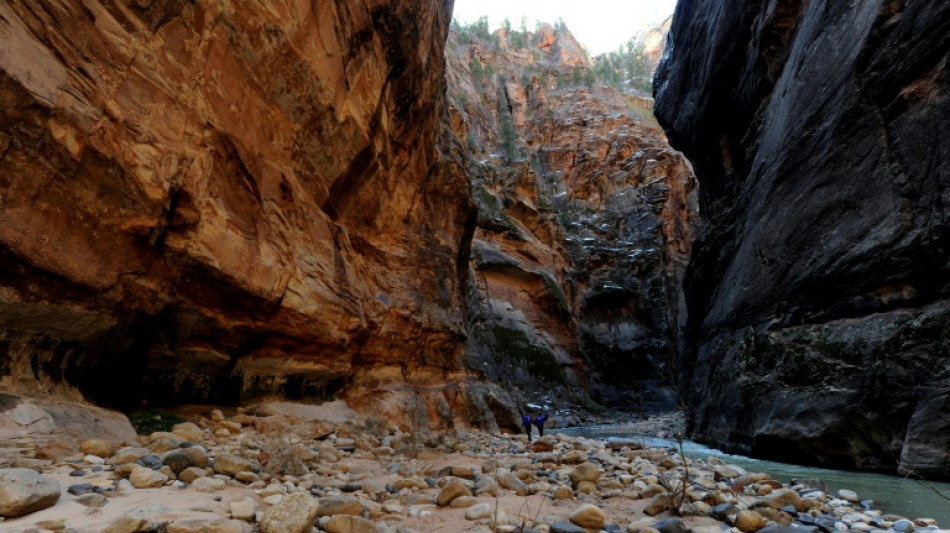
Jetal Agnihotri, who park officials said they were still searching for Monday, was one of a number of hikers hit by surging waters Friday when flash floods tore through an area of Zion National Park in Utah called the Narrows, known for red rock cliffs and towering canyons.
One injured hiker was carried hundreds of yards (meters) downstream by the sudden inundation, while others were left stranded until rangers reached them, the National Park Service said.
In New Mexico's Carlsbad Caverns National Park, around 200 people had to be evacuated after being trapped for several hours by rising waters.
No one was injured in that incident.
The flash flooding came after heavy rains pummeled the drought-hit southwest, with several inches (centimeters) falling in a short space of time.
The downtown area of Moab, Utah was left under three feet of water by the rains, the New York Times quoted a city spokeswoman as saying.
"We had water that came through in a huge rush along with lots of debris and some full-sized trees," Lisa Church said, adding the river had overflowed its banks in three places.
Elsewhere, footage showed children in Arizona being rescued from a school bus stranded by rising waters.
The National Weather Service (NWS) said northern Texas was expected to be walloped this week with up to seven inches of rain, with parts of the state of Mississippi also expected to be affected.
"Much of this rainfall will be beneficial and welcome due to the effects of an ongoing drought," the agency said.
"But the potential still exists for instances of flash flooding in urban areas and places with poor drainage."
Flash flood warnings were in effect around Dallas on Monday, with forecasters predicting difficult conditions on the roads, and videos showed vehicles becoming submerged in floodwaters while driving in the city overnight.
"Turn around, don't drown when encountering flooded roads. Most flood deaths occur in vehicles. Be aware of your surroundings and do not drive on flooded roads," the NWS said.
- Worsening drought -
The western United States is more than 20 years into a painful drought that has left rivers and reservoirs badly depleted, and the countryside tinder-dry.
But sudden, intense downpours are often unhelpful.
"If the water all comes down over a very quick period of time, it'll run off," Chris Rasmussen, an NWS meteorologist in Tucson, Arizona, told AFP last week.
"It doesn't get a chance to really soak into the ground, as you would like to see.
"It's always nicer to have good, moderate amount of rains over a long period of time."
Human activity, specifically the runaway use of fossil fuels over the last century, has caused the Earth's average temperature to rise.
This has altered weather patterns, worsening droughts in some parts of the world, and intensifying storms in other areas.
Much of Europe has baked under an intense heatwave over the last few months, with record-low rainfall emptying rivers and leaving the countryside vulnerable to wildfire.
Chinese authorities said Monday they were powering down key landmarks to save energy as faltering rivers send hydroelectric plants dark.
X.Cheung--CPN