Spain, Portugal dryness 'unprecedented' in 1,200 years / Photo: Josep LAGO - AFP/File

 Lights out in Laos as electricity exports surge

 Steven Strogatz weighs AI mathematics advances and their consequences for researchers

 Anthropic boss calls for AI slowdown, Altman and Musk agree

 French IT giant Capgemini sells subsidiary after row over ICE links

 Quebec Brokerage Qubit Insurance Announces New Data on Coverage Shortfalls as Rebuilding Costs Rise

 Lady Gaga welcomes first child with fiance: US media

 Bhutan business bets on hazelnuts for farming future

 'Widow's Bay' and 'The Pitt' are favorites for Emmys night

 Coastal erosion forces cancellation of California music festival

 Argentina's Dirty War rears its head in Venice film

 UK lawmakers throw out bill to legalise assisted dying

 US inflation steady in August, fueling Fed rate hike expectations

 New York marks 25th anniversary of 9/11 attacks

 Nepal flood reconstruction bill to be $4.78 bn: foreign ministry

 JUMO and Standard Bank launch Social Finance Framework to scale inclusive finance in Africa

 Doomsday tech: could AI really kill us all?

 French comedy show 'Call my agent' makes film comeback

 It's all coming back: Celine Dion fans gear up for Paris return

 Researchers eye AI revolution in natural disaster forecasts

 US braces for inflation report that may push Fed to hike rates

 Musk threatens legal action over documentary

 Latin America fact-check group asks Meta not to replace verification practice

 AI Risks to Enter 60–80% of Liability and Cyber Insurance Underwriting by 2028, ScienceSoft Predicts

 Tribal Launches Campfire, Letting Business and Technical Teams Build on Salesforce Together

 Stocks fall as fresh oil surge fans inflation fears

Parts of Portugal and Spain are the driest they have been in a thousand years due to an atmospheric high-pressure system driven by climate change, according to research published Monday, warning of severe implications for wine and olive production.
The Azores High, an area of high pressure that rotates clockwise over parts of the North Atlantic, has a major effect on weather and long-term climate trends in western Europe.
But in a new modelling study published in the journal Nature Geoscience, researchers in the United States found this high-pressure system "has changed dramatically in the past century and that these changes in North Atlantic climate are unprecedented within the past millennium".
Using climate model simulations over the last 1,200 years, the study found that this high-pressure system started to grow to cover a greater area around 200 years ago, as human greenhouse gas pollution began to increase.
It expanded even more dramatically in the 20th century in step with global warming.
The authors then looked at evidence of rainfall levels preserved over hundreds of years in Portuguese stalagmites, and found that as the Azores High has expanded, the winters in the western Mediterranean have become drier.
The study cites projections that the level of precipitation could fall a further 10 to 20 percent by the end of this century, which the authors say would make Iberian agriculture "some of the most vulnerable in Europe".
They warn that the Azores High will continue to expand during the 21st century as greenhouse gas levels rise, leading to an increasing risk of drought on the Iberian Peninsula and threatening key crops.
"Our findings have important implications for projected changes in western Mediterranean hydroclimate throughout the twenty-first century," the authors said.
- Wither vines -
The Azores High acts as a "gatekeeper" for rainfall into Europe, according to the study, with dry air descending in the summer months to cause hot, arid conditions in much of Portugal, Spain and the western Mediterranean.
In the cool, wetter winter period, the high-pressure system swells, sending westerly winds carrying rain inland.
This winter rain is "vital" for both the ecological and economic health of the region, but it has been decreasing, particularly over the second half of the 20th century.
While previous research had not untangled the effects of natural variability on the Azores High, the authors said their findings show its expansion during the industrial era is linked to the rise of atmospheric greenhouse gas concentrations.
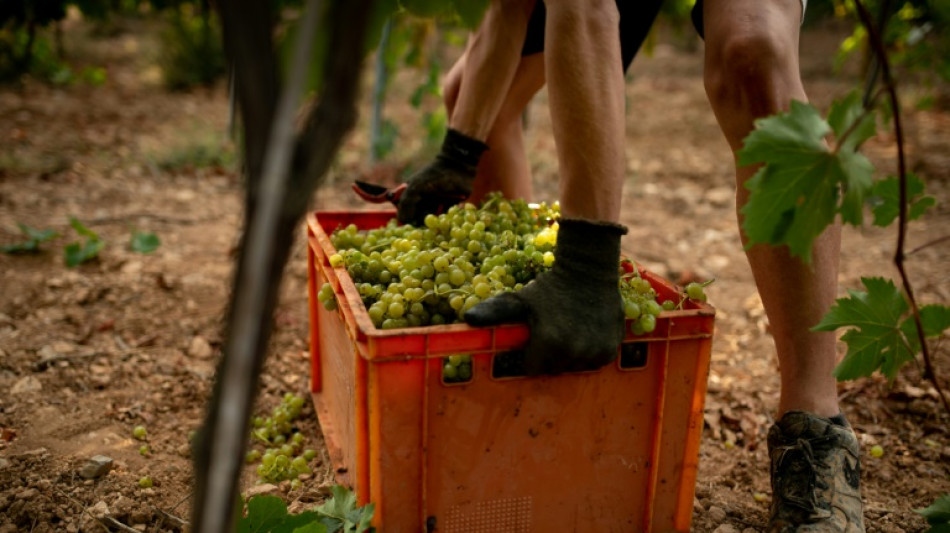
A study cited in the latest research estimates that the area suitable for grape growing in the Iberian Peninsula could shrink by at least a quarter and potentially vanish almost completely by 2050 because of severe water shortages.
Meanwhile, researchers have predicted a 30-percent drop in production for olive regions in southern Spain by 2100.
Winemakers are already looking for ways to adapt to the changing climate, such as moving vineyards to higher altitudes and experimenting with more heat-tolerant varieties.
Last year, scientists found that a severe spring frost that ravaged grape vines in France was made more likely by climate change, with the plants budding earlier and therefore more susceptible to damage.
D.Philippon--CPN