
'Human-induced' climate change behind deadly Sahel heatwave: study / Photo: Frederic J. BROWN - AFP

 Kenya's economy faces climate change risks: World Bank
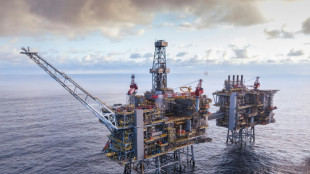 British oil giant BP aims to sell North Sea business

 China factory activity slides as leaders seek spending boost

 Tech rebound fuels record-breaking rally in South Korean stocks
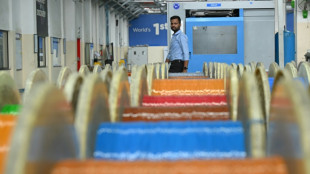 Cables and cooling bring AI windfall to Indian suppliers

 Anthropic's models gained unauthorized 'real-world' access during testing

 Apple tops estimates in CEO Cook's final quarter, but shares fall

 Milei demands expulsion of foreigners expressing 'hate' against Argentina

 Italy's Po River valley on drought alert

 Prada profits pinched as growth hard to chase

 Stocks climb on earnings and rates, oil retreats

 US economic growth slows in second quarter, missing expectations

 Russia adds Telegram founder Durov to 'terrorist' blacklist

 Stocks diverge on earnings, as oil steadies

 Eurozone economy grows despite Middle East war

 Singapore group will develop 'most promising' Ebola vaccine

 Shell profit surges as Mideast war fuels oil prices

 Car maker Stellantis says back in profit in second quarter

 Samsung quarterly operating profit up 1,800% on AI boom

 South Korean stocks bounce after rout, oil holds gains on Mideast woes

 South Korea's women web sleuths fight AI deepfake porn

 Anything but programmable: New cost-efficient EC-power-supply-series for the DIN rail by CAMTEC PS
 Meta misses profit expectations, sticks to massive AI spending

 Campari - king of the spritz - hopes to conquer American heartland
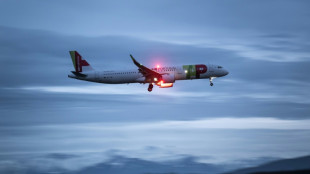 Air France-KLM and Lufthansa bid for Portugal's TAP airline

The deadly heatwave that hit Africa's Sahel region in early April would not have occurred without human-induced climate change, according to a study by the World Weather Attribution (WWA) group published Thursday.
The West African nations of Mali and Burkina Faso experienced an exceptional heatwave from April 1 until April 5, with soaring temperatures above 45 degrees Celsius (113 degrees Fahrenheit) triggering many deaths.
Observations and climate models used by researchers at the WWA showed that "heatwaves with the magnitude observed in March and April 2024 in the region would have been impossible to occur without the global warming of 1.2C to date", which scientists attribute to human-induced climate change.
While periods of high temperatures are common in the Sahel at this time of year, the report said that the April heatwave would have been 1.4C cooler "if humans had not warmed the planet by burning fossil fuels".
It added that the five days of extreme heat was a once-in-a-200-year event, but that "these trends will continue with future warming".
The length and severity of the extreme heat led to an increase in the number of deaths and hospitalisations in the two countries, despite their populations being acclimatised to high temperatures, the WWA said.
- Deaths in heatwave -
A lack of data in the affected countries made it impossible to know the exact number of deaths, the WWA said, adding there were likely hundreds, if not thousands, of other heat-related casualties.
"From April 1 to 4, we saw an increase in the use of services," Djibo Mahamane Diango, head of anaesthesia at Gabriel Toure hospital in the capital Bamako, told reporters on April 5.
He said the hospital had seen the arrival of 102 bodies -- more than half of them people aged over 60 -- during the first four days of this month.
That compares with 130 for the whole of the month of April the previous year, he added.
The April heatwave in Mali -- where the temperature spiked at 48.5 degrees Celsius -- and neighbouring Burkina Faso coincided with the holy month of Ramadan when Muslims fast from dawn until dusk.
It also came during power outages which restricted the use of fans and air conditioning and affected health services.
The national blood transfusion centre in Bamako had called on medical centres to suspend any non-essential transfusions because of daily power shutdowns lasting more than 12 hours a day.
Mali often suffers from electricity cuts partly due to the state of disrepair of its power stations.
Countries in the Sahel region have had to contend with drought since the 1970s, as well as periods of intense rainfall from the 1990s.
The dwindling availability of water and pasture, compounded by the development of agricultural land, has disrupted the lives of pastoral populations and encouraged the emergence of armed groups that have extended their hold over vast swathes of territory in Mali, Burkina Faso and Niger.
Y.Jeong--CPN